
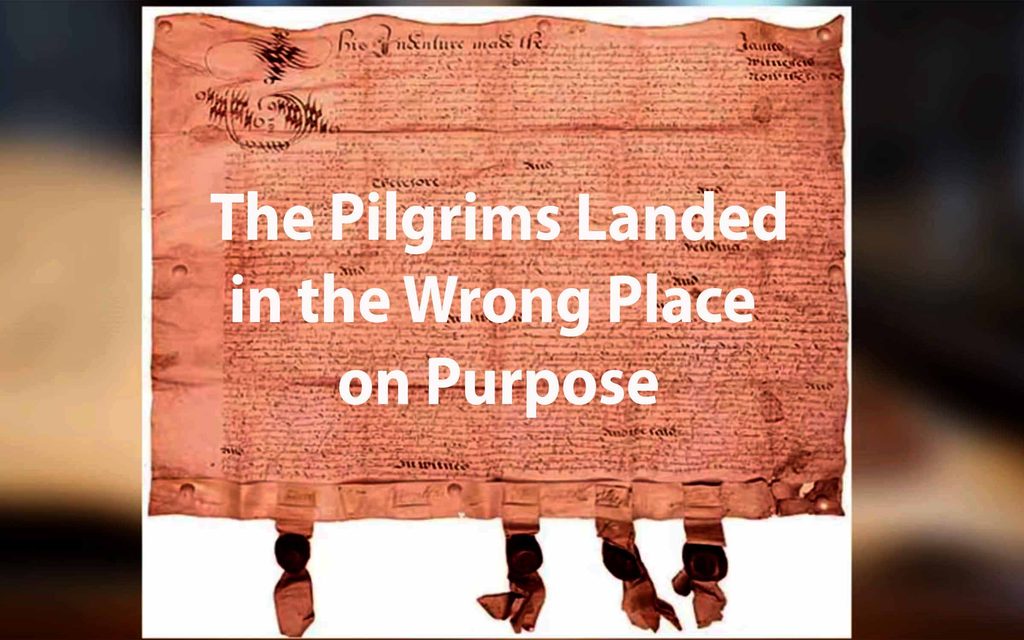
A parchment with four brown wax seals sits in Plymouth, Massachusetts. It granted every legal acre the Mayflower colonists ever owned. The document everyone remembers could make laws but never granted land, and for 173 years it had no name at all. Two documents covered the same coast: one carried signatures, the other carried seals, and only one could survive when the colony died. Click here for 20-minute AI-generated video about the King’s Patent and the Mayflower Compact posted on October 5, 2026 by Of Ages Past.
In the Pilgrim Hall Museum in Plymouth, Massachusetts, a sheet of parchment carries four brown wax seals. It is the oldest surviving government document in New England. Its job was simple. It handed out land measured in acres to people who were already living on that land when the ink was inscribed.
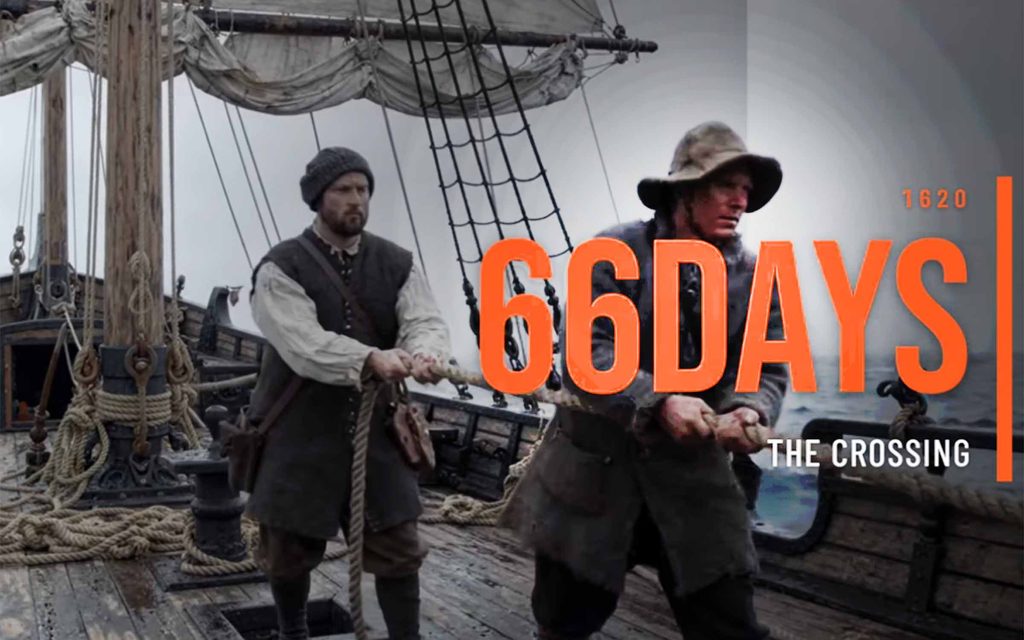
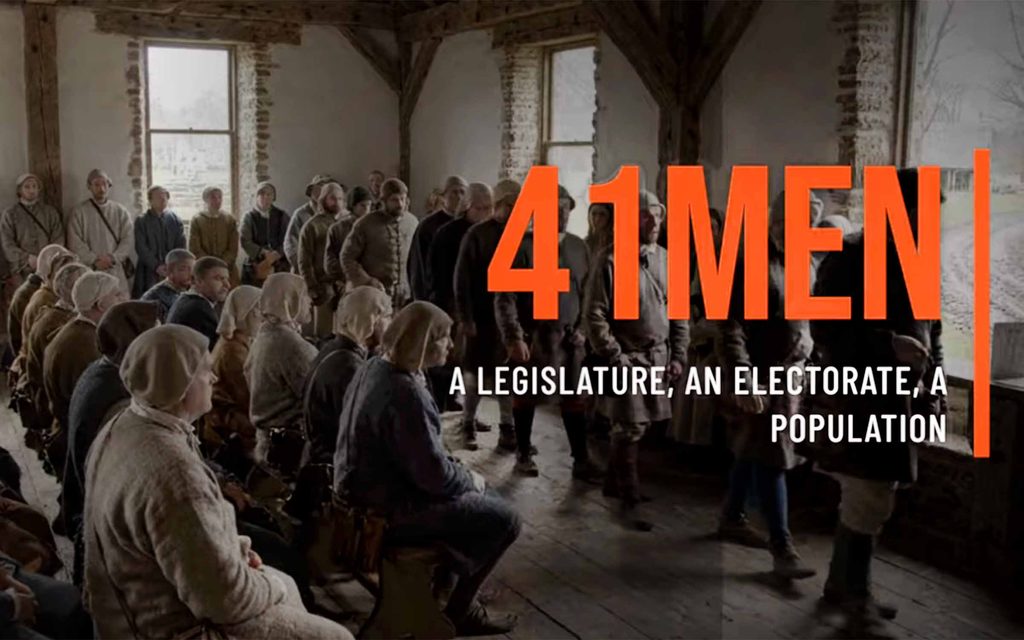
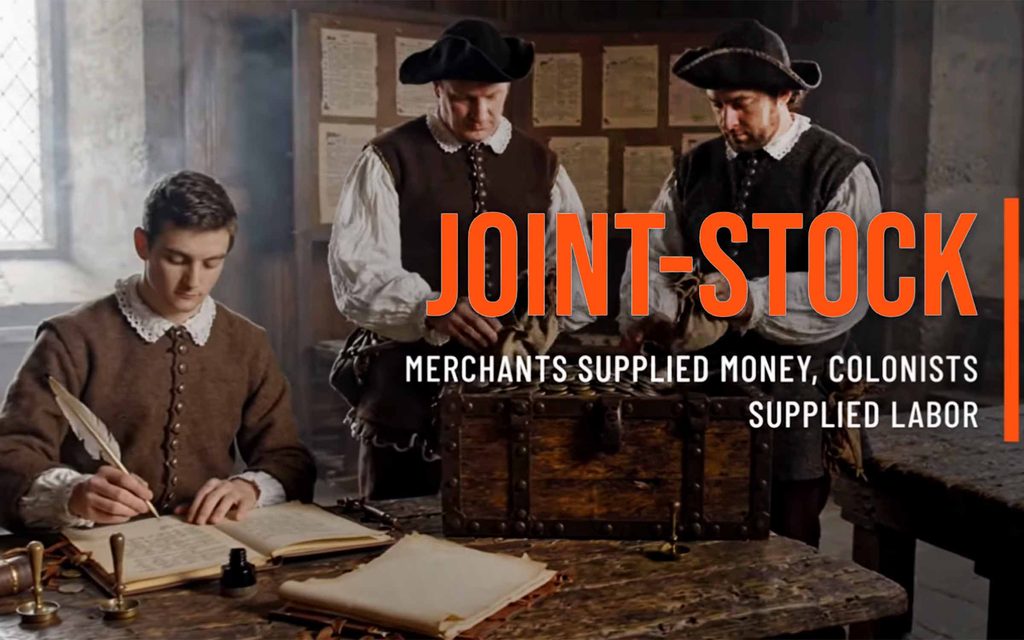
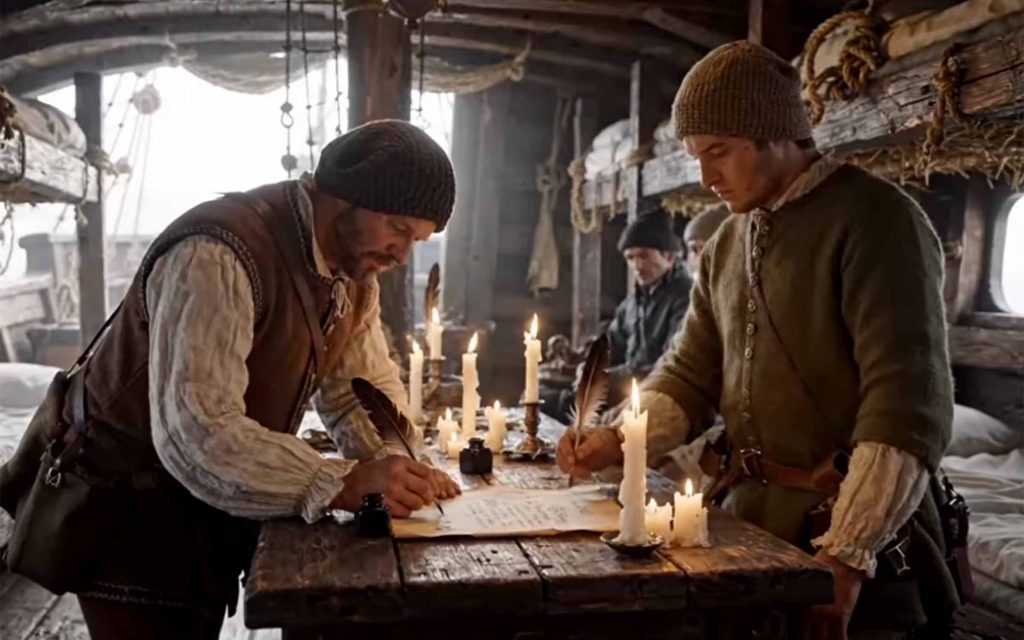
After 66 days at sea on a ship with 102 passengers, 41 men wrote their names under a few lines, promising to obey whatever laws they would later make together. One group was held together by a church. The other was held together by the stock. The usual account treats those lines as the moment a people chose to govern themselves.
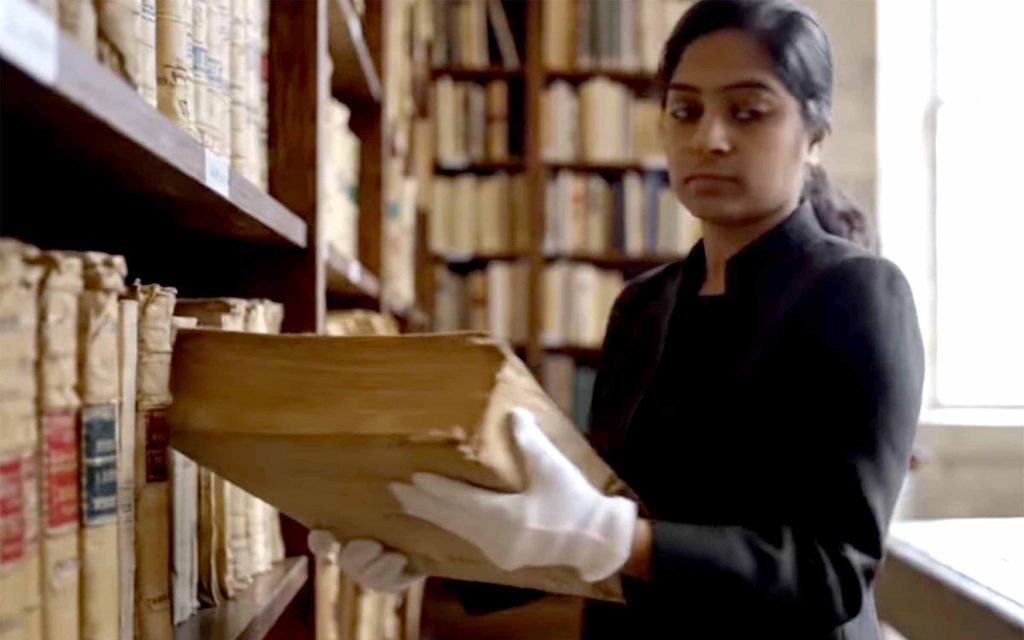
William Bradford‘s original manuscript, Of Plymouth Plantation, bound in vellum with 290 leaves of handmade rag paper holds one of the three surviving 17th century versions of the agreement. It has been kept at the State Library of Massachusetts since May 26th, 1897 when it was handed to the governor of Massachusetts before a joint session of the legislature.