
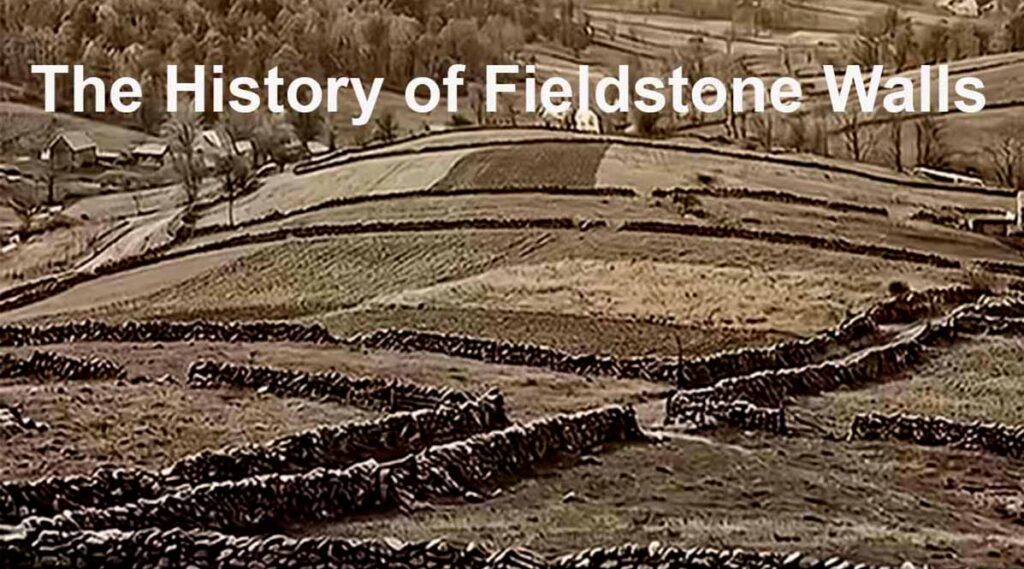
Nearly 240,000 of stone walls stretch across the hills of New England. That is enough rock to circle the entire planet nearly 10 times. How did New England end up with the largest handmade rock barrier in human history? This video traces the story from the Ice Age and glacial till to sheep fever, deforestation, abandoned farms, and the silent stone walls still winding through the forests today. A forgotten piece of American industrial and agricultural history, built one stone at a time. This landscape evolution reflects broader historical and economic shifts in New England, transforming simple field clearing into an enduring architectural legacy that remains hidden within modern forests. Click here for the 24-minute video posted on May 31, 2026 by Kronoset that explores how glacial shifts and colonial-era deforestation led to the accumulation of stones, compelling generations of farmers to build massive wall systems.
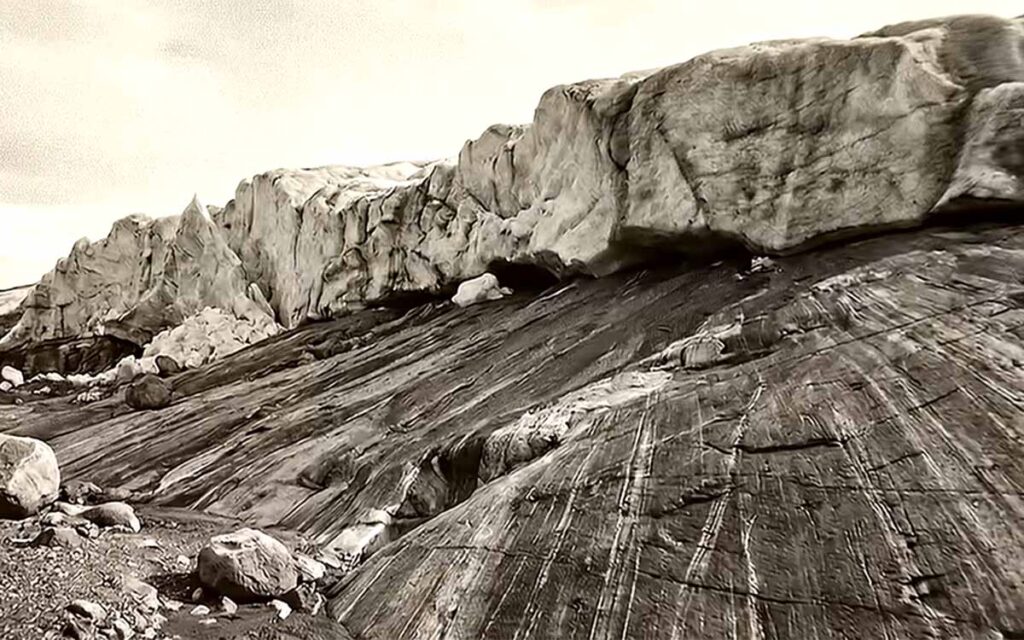
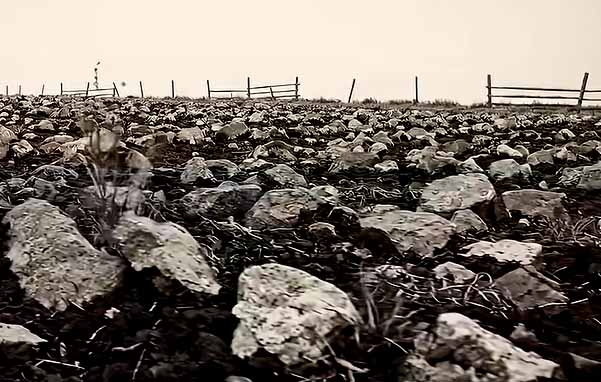
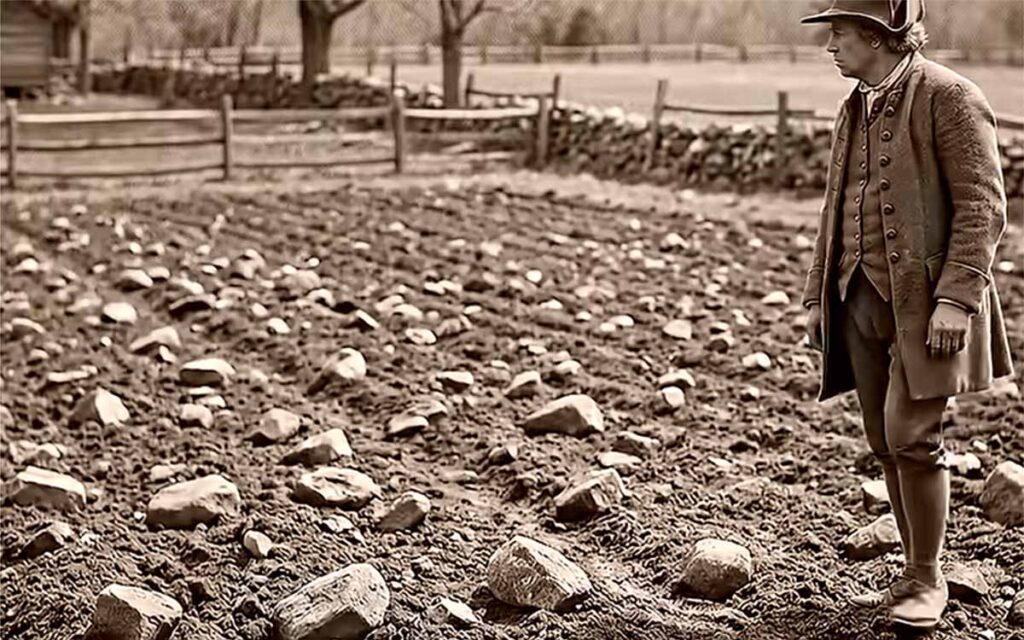
Twenty thousand years ago, the Laurentide ice moved slowly southward across the landscape like a frozen bulldozer. As it traveled, it scraped across ancient mountain bedrock, breaking off chunks of granite, shist, and dozens of other hard crystalline rocks. The result was a landscape absolutely loaded with rock from top to bottom. For the first century and a half of European settlement most of the region’s fencing was made of wood, not stone. Everything changed when the settlers started cutting down the trees. Deforestation stripped away the root systems and organic matter that had been keeping the soil together and the stones buried. It exposed the bare ground to a process called frost heave, pushing stones upward. The result is that every single year the ground pushes a fresh crop of rocks to the surface.
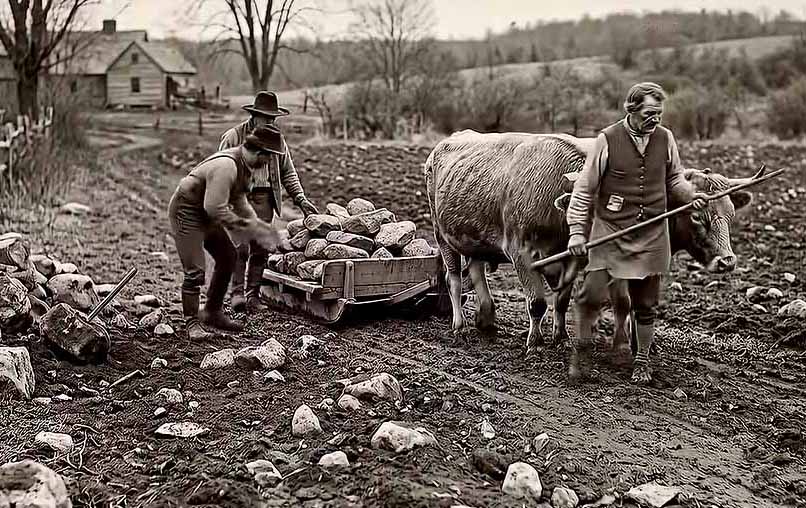
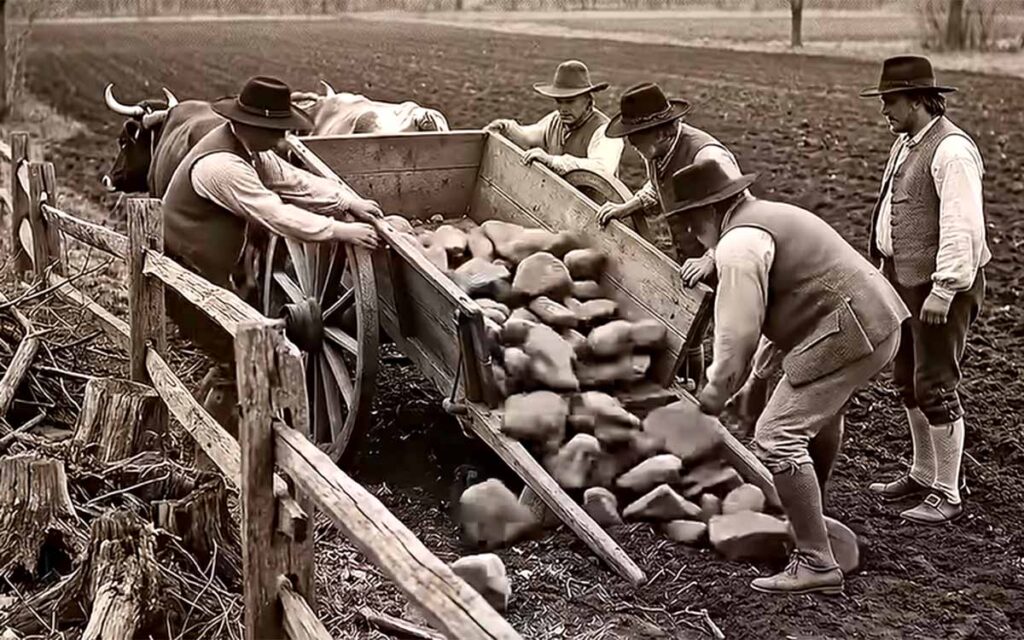
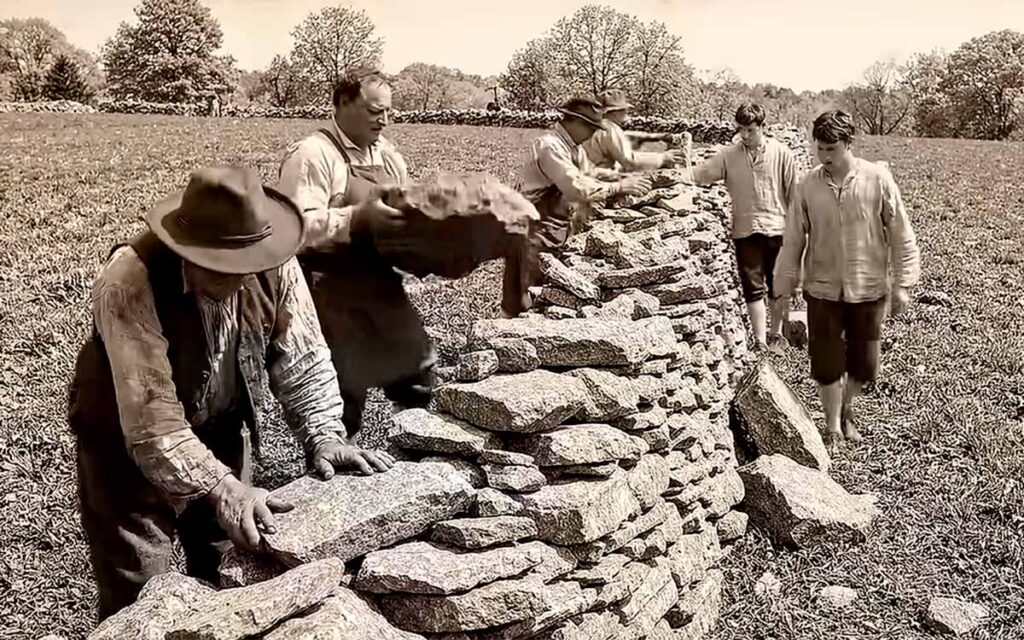
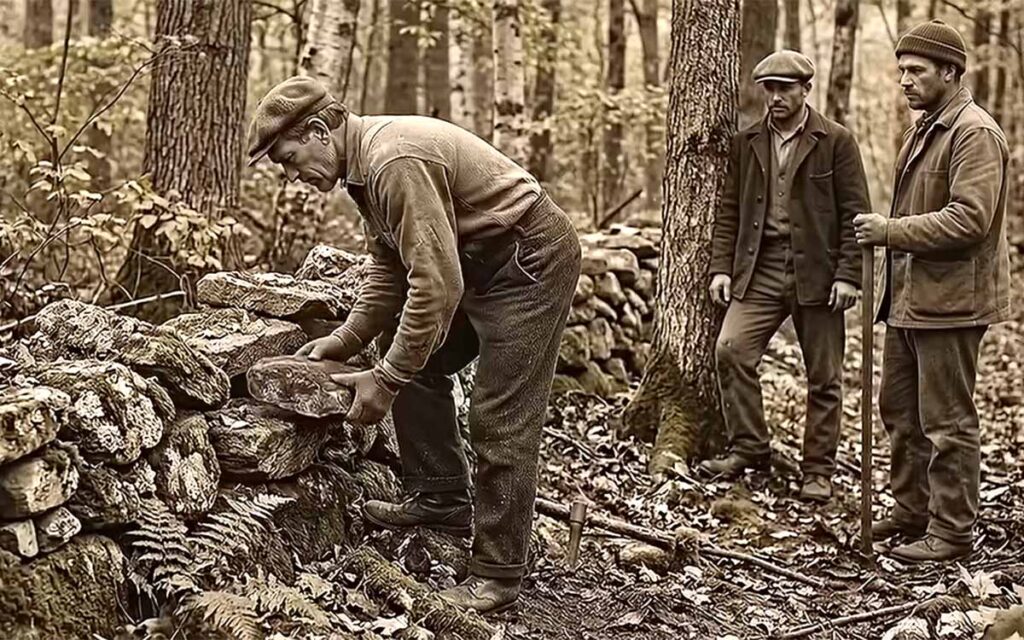
In order to clear fields for planting, Farmers dragged stones to the edges of their fields using ox-drawn sleds called stone boats, flat wooden platforms that could slide over rough ground without tipping. Smaller stones were carried by hand or rolled. Slowly, the piles became ridges. and the ridges became recognizable walls.
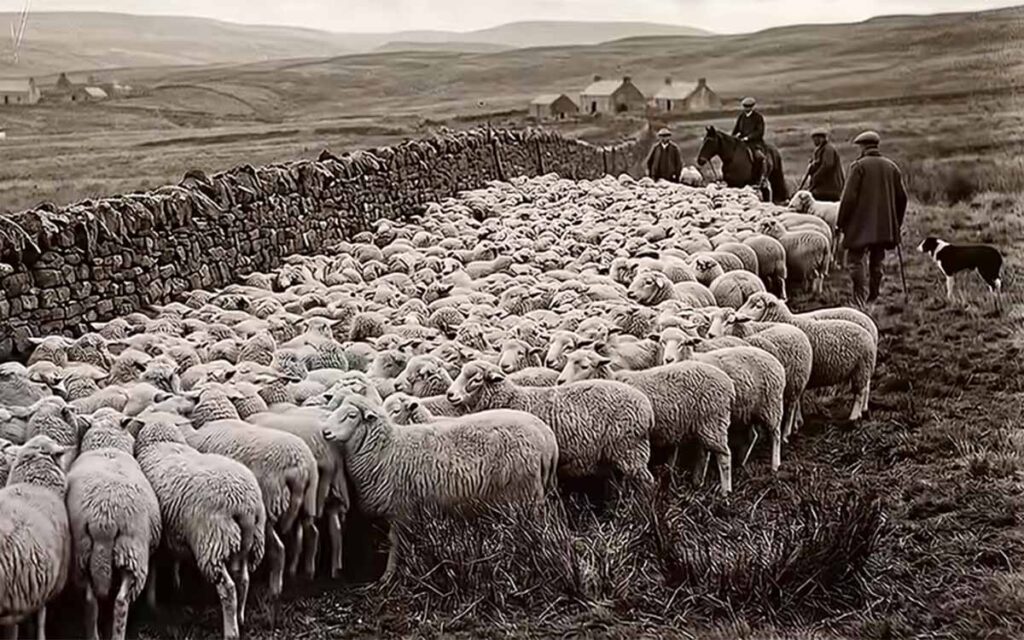
Thousands of imported Merino sheep reshaped the entire New England landscape. New England farmers responded by converting from crops to sheep at a staggering rate. But between 1835 and 1840, wool prices dropped by more than half, and the cotton gin and the labor of enslaved people made cotton a cheaper alternative to Merino wool. In some Vermont towns, the population dropped by half or more within a single generation, leaving behind nothing but cellar holes, overgrown orchards, and miles of stone walls leading to nowhere. What was once open, rolling farmland as far as the eye could see, is now unbroken forest canopy laced with ancient stone walls from a bygone generation.