
Men, women, and children – anyone who was Indigenous, could be captured, enslaved and sold by English colonists as a systematic weapon of King Philip’s War, says Brown University historian Linford Fisher. This important presentation, given at the Colonial Society of Massachusetts on April 8, 2026, describes the terror of “selling away,” the cost of families wrenched apart, and the fate of captives sold into slavery thousands of miles from home. Click here for a 71-minute presentation posted on YouTube by the Partnership for Historic Bostons.
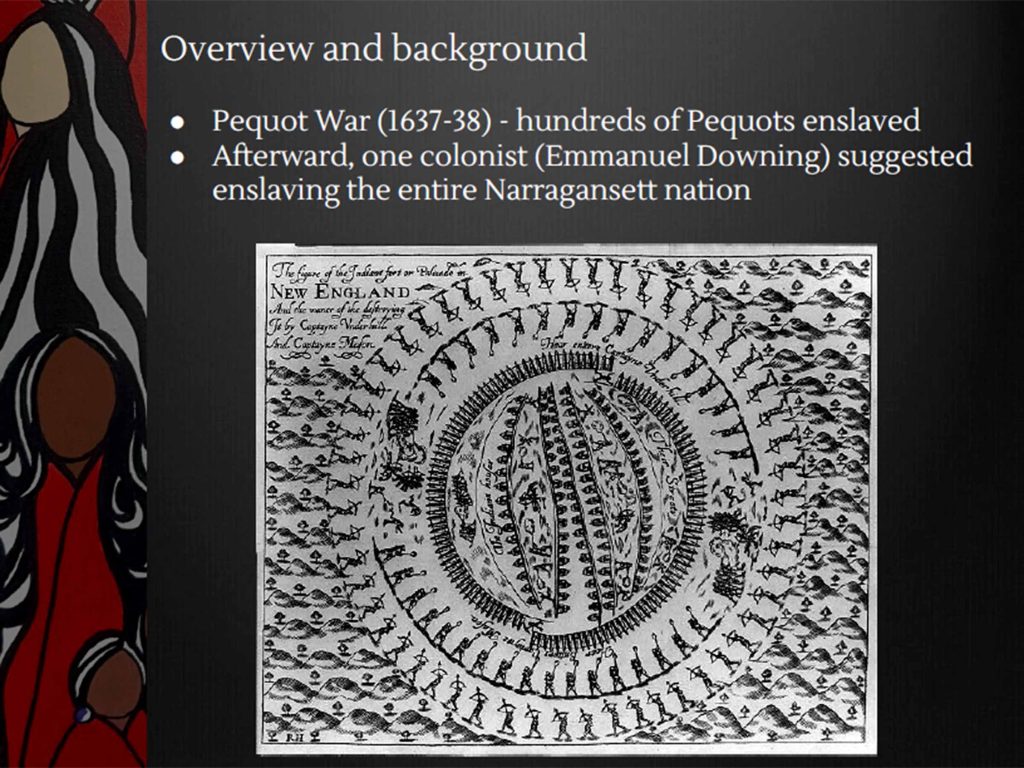
One of the lesser-known aspects of the War for New England (King Philip’s War) was the intentional campaign to enslave Native peoples. The war unleashed multiple attempts to capture and force into servitude Indigenous men, women, and children alike. Native men who armed themselves to defend their homelands were included, but it also involved were non-combatants, women, youth, and children, who were often just going about their business or trying to stay out of the War. Even worse, colonial governments offered clemency for Natives who surrendered, but instead of providing protection, either shipped them out of the region as slaves or parceled them off into English households for a set period of servitude, sometimes until the age of 25 or 30.
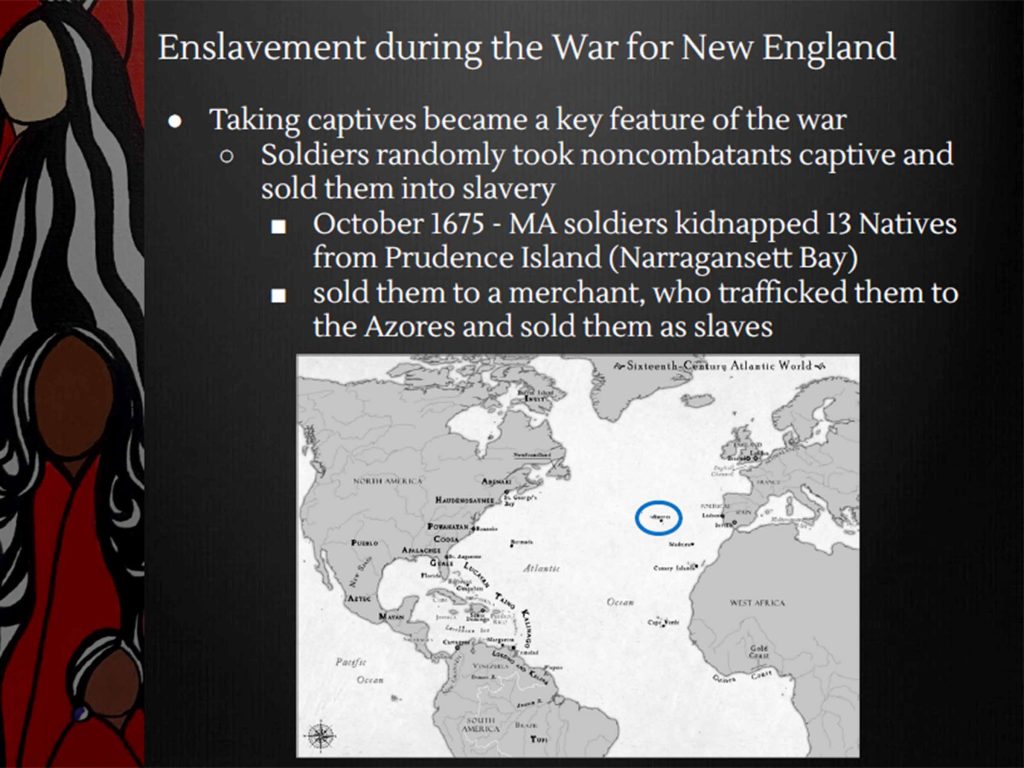
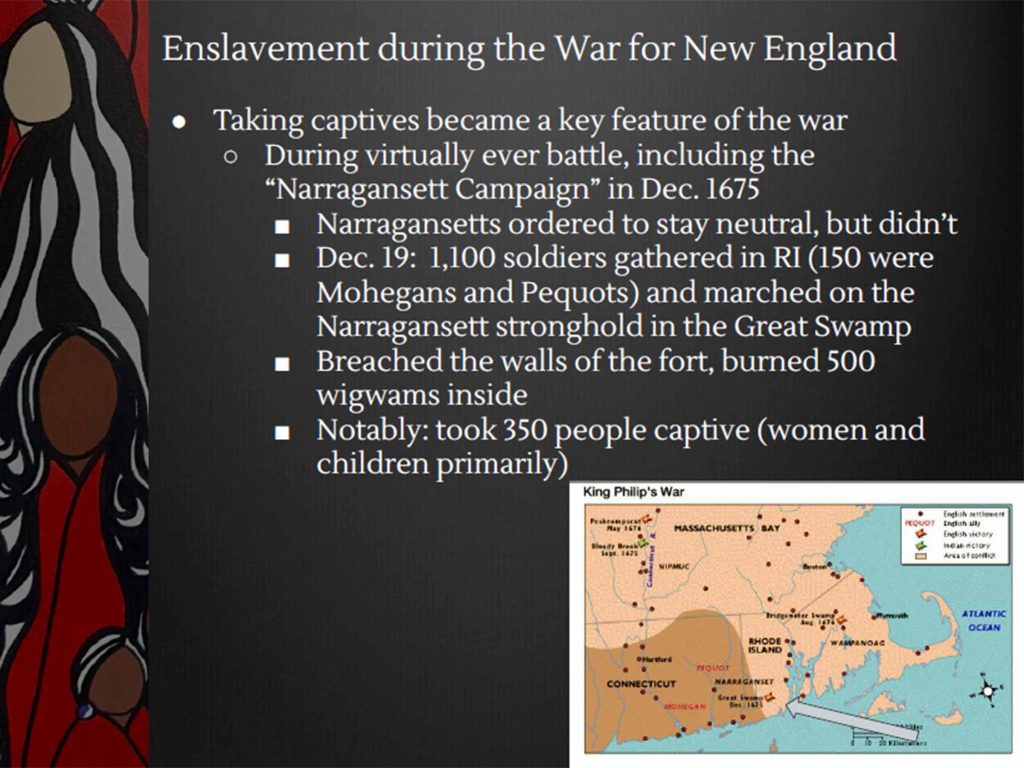
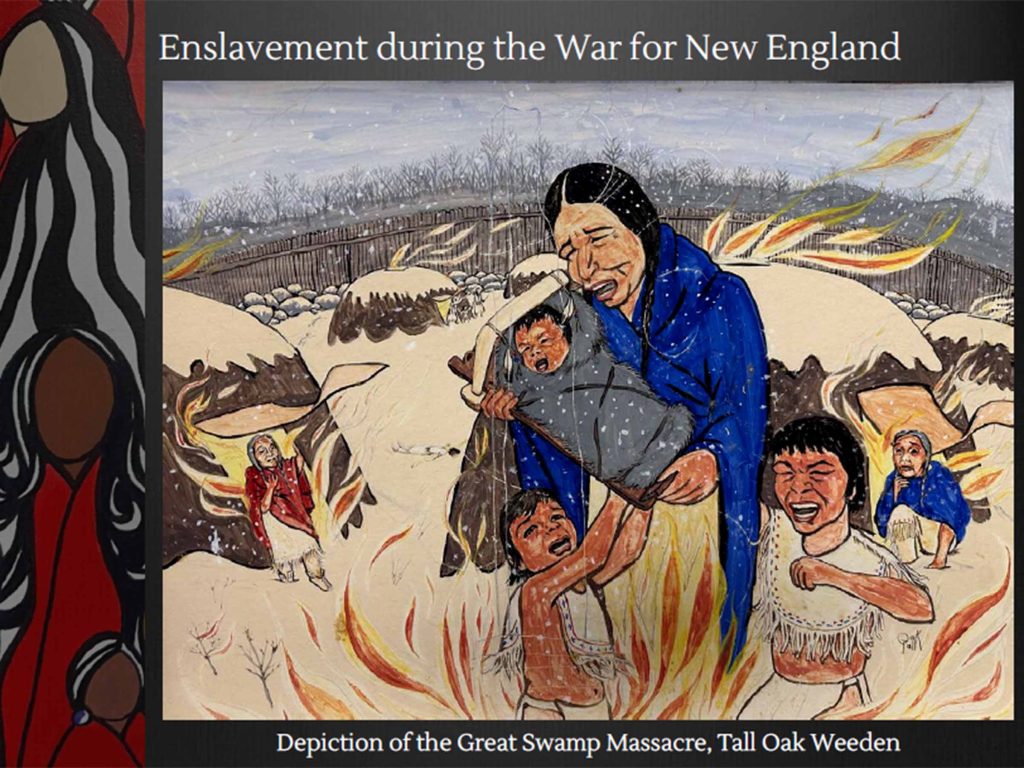
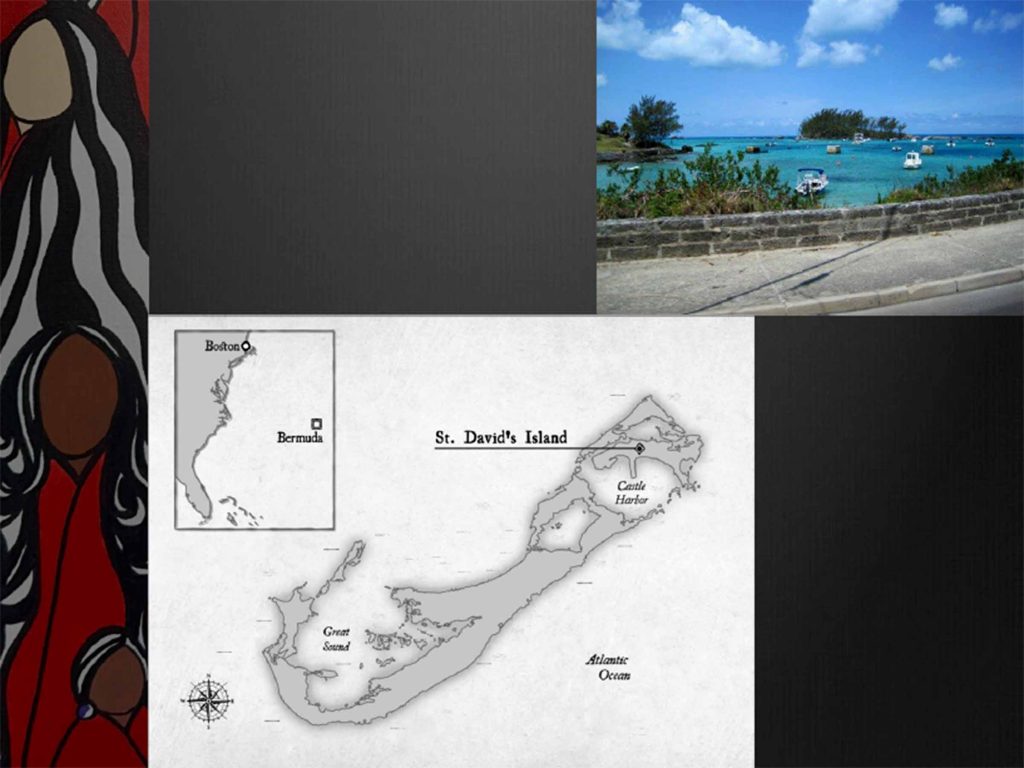
His presentation explores the realities of Native families and communities through the horrors of family separation, enslavement, and being trafficked out of the region. Individuals – fathers, mothers, sons, daughters – were shipped overseas to destinations such as Barbados, Jamaica, the Azores, and even Tangier in North Africa.
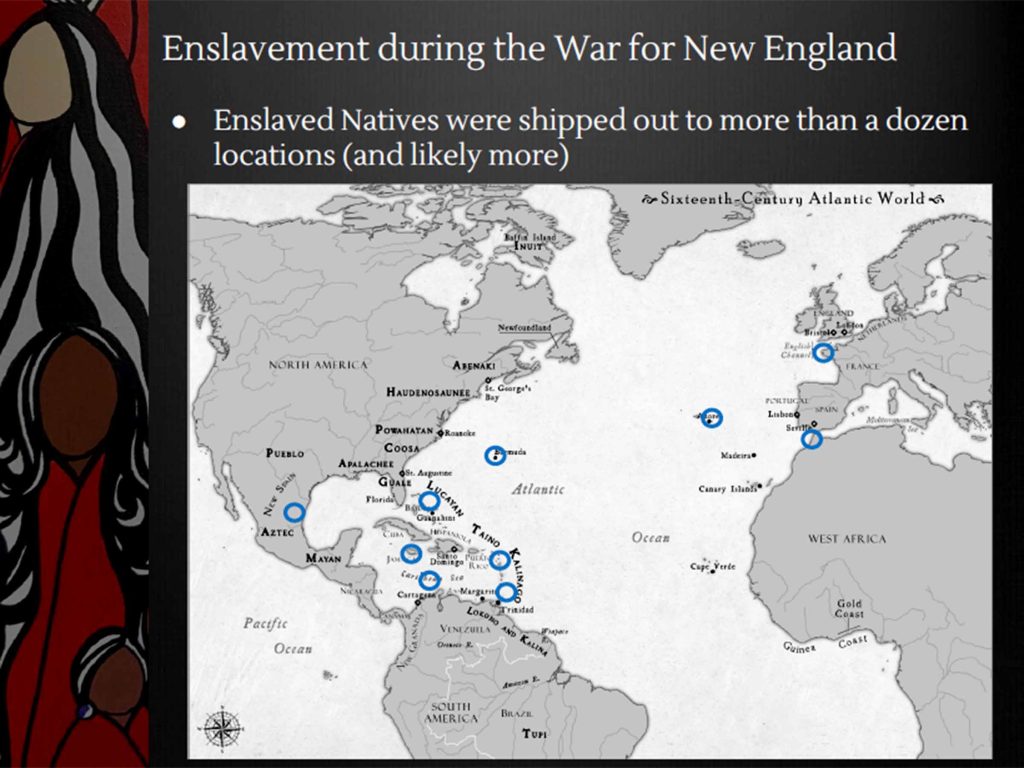
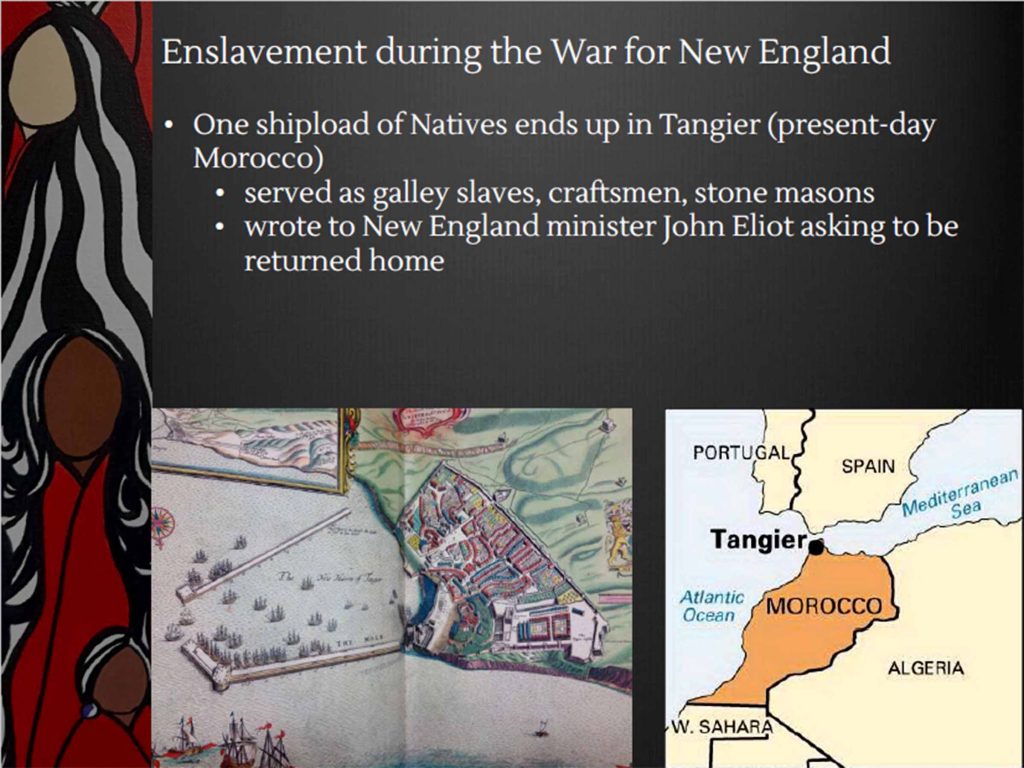
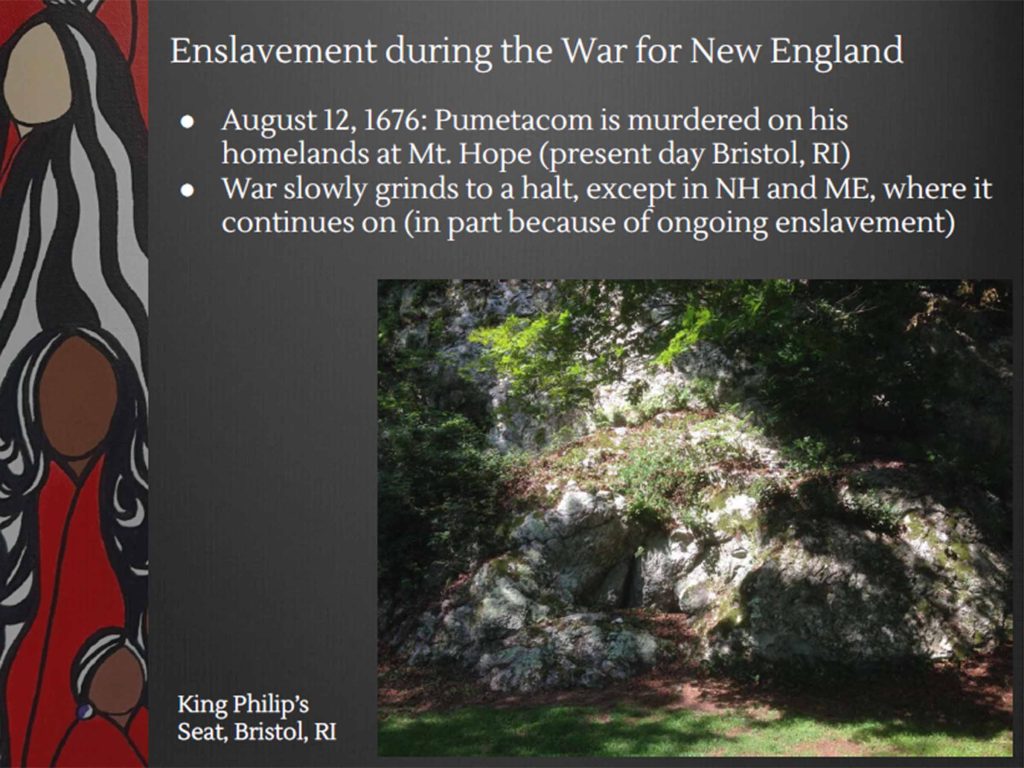
Some enslaved people attempted to return home, and in rare cases colonial leaders were able to facilitate the return of those who had been sold into foreign slavery. But in most cases, families and communities felt the loss of these individuals for generations, even as colonial governments used the reduced numbers of Natives as an excuse to take over even more land. These same Native communities continued to press for their sovereignty. They remain here today, although the shadow of these events continue to loom large.