
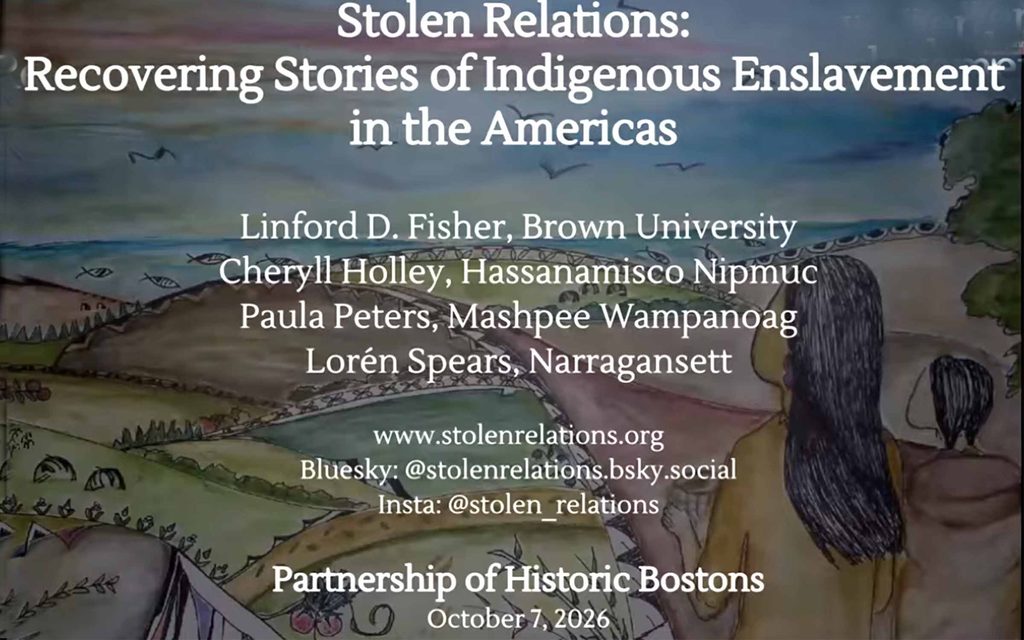
To help shed greater light on Indigenous history, the groundbreaking project, Stolen Relations: Recovering Stories of Indigenous Enslavement in the Americas, is recovering the history and stories of Indigenous individuals who were enslaved in North America and the Caribbean between 1492 and 1900. This presentation shows how this remarkable website can be used to research the lives of enslaved people who lived all over New England, across the Americas and beyond. The result of a collaboration between researchers at Brown University and a dozen regional Native nations, at the core of the project is a database that currently contains nearly 8,000 records. It allow users of the site to learn more about the history of Native slavery and trace the stories of enslaved Indigenous people that would otherwise be nearly impossible to access. Click here for a 91-minute video posted on October 7, 2026 by the Partnership of Historic Bostons. Click here for a video about enslaved Native Americans who were sent to Bermuda.
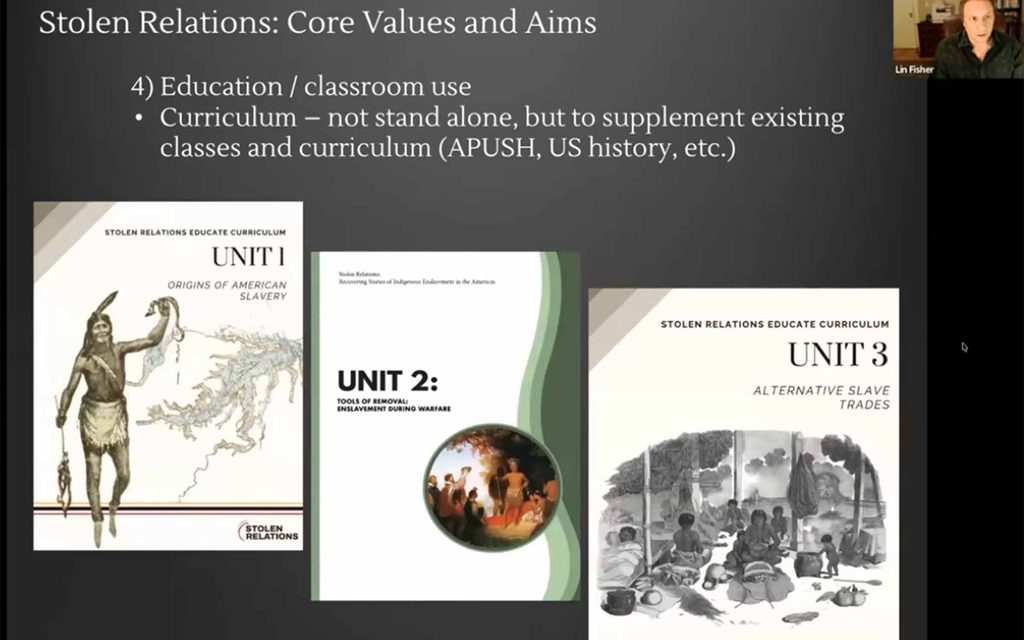
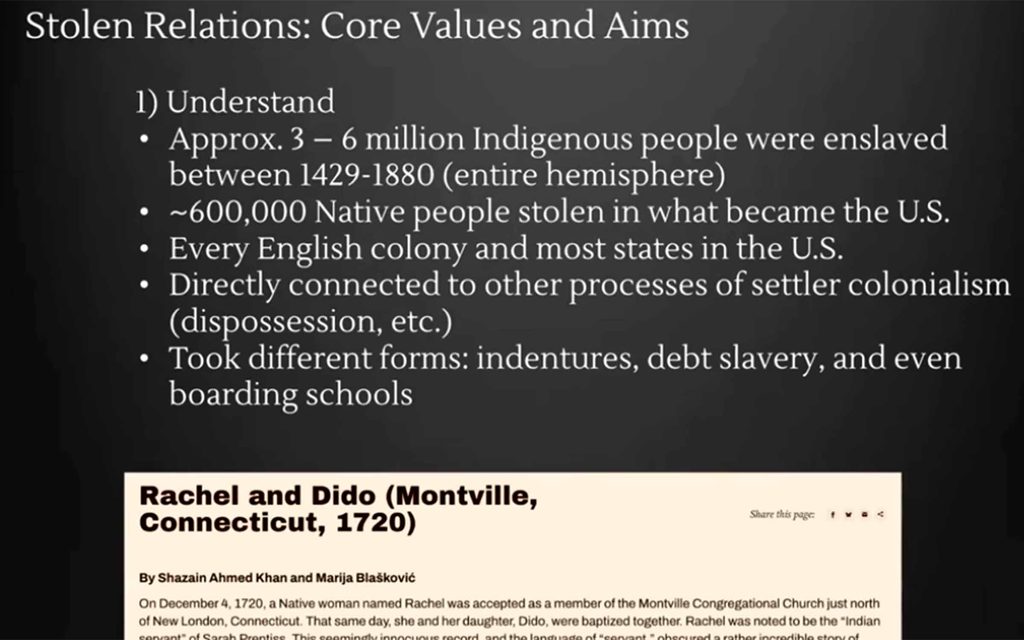
The result of a collaboration between researchers at Brown University and a dozen regional Native nations, at the core of the project is a database that currently contains records that allow users of the site to learn more about the history of Native slavery and trace the stories of enslaved Indigenous people that would otherwise be nearly impossible to access.
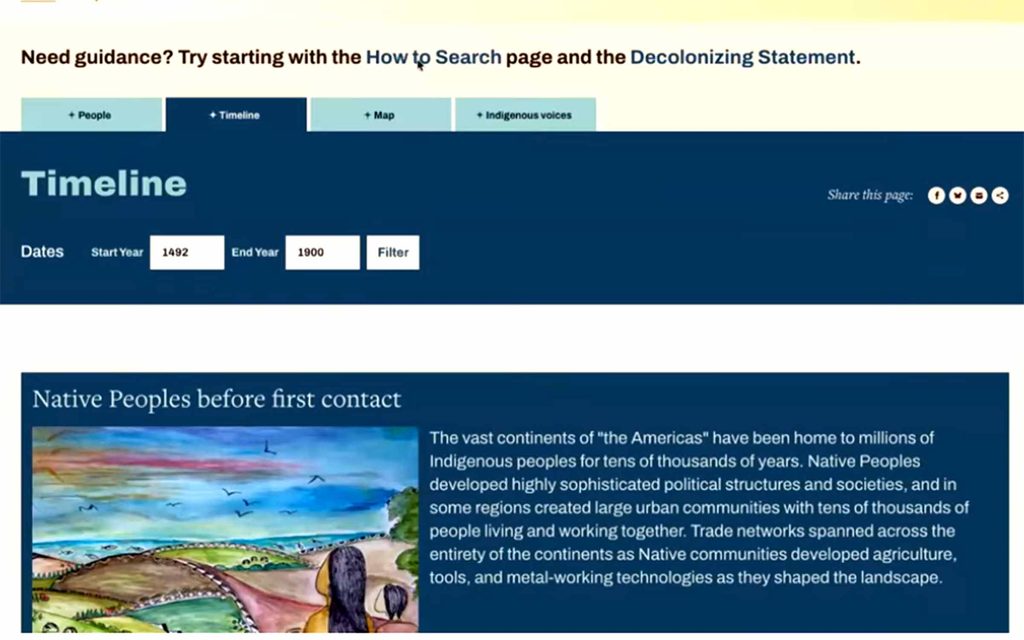
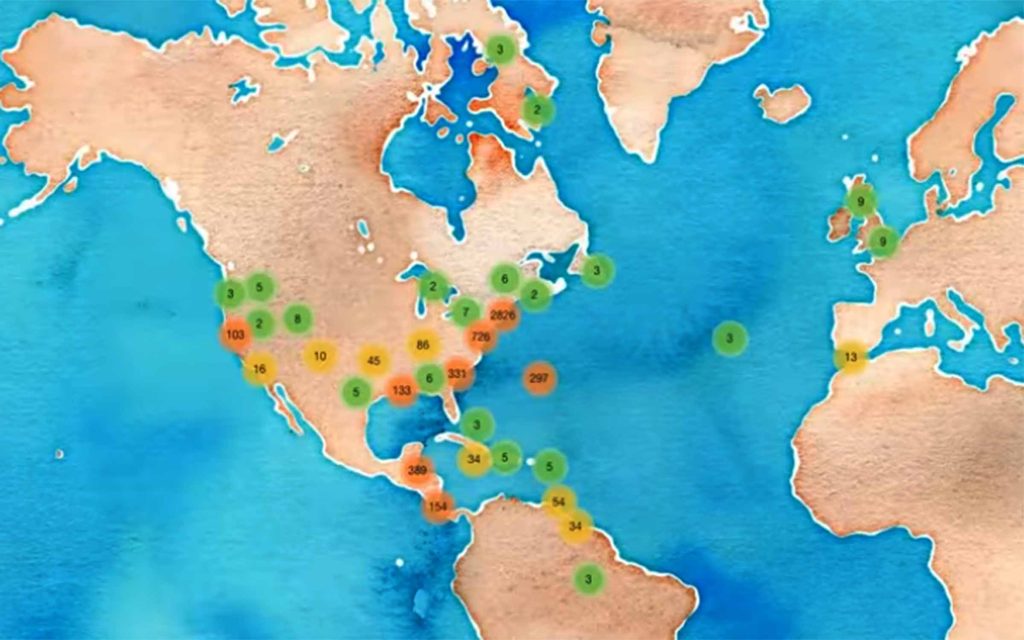
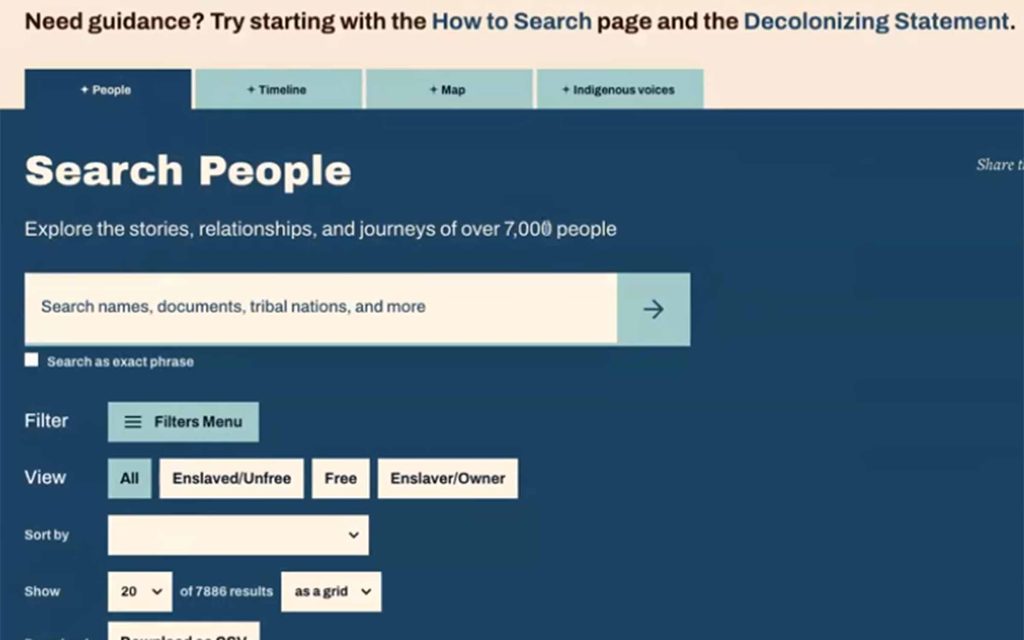
While these records are a small sample of the estimated five million Indigenous individuals who were enslaved during this period, the data set provides a rich array of archival sources that sometimes provide surprisingly intimate details about kinship connections and life experiences. Tribal representatives have been involved at every stage of its development and have shaped everything from the name of the project to the presentation of people. The website also points people to the present by showcasing contemporary community interviews and perspectives, artwork, music, and poetry.
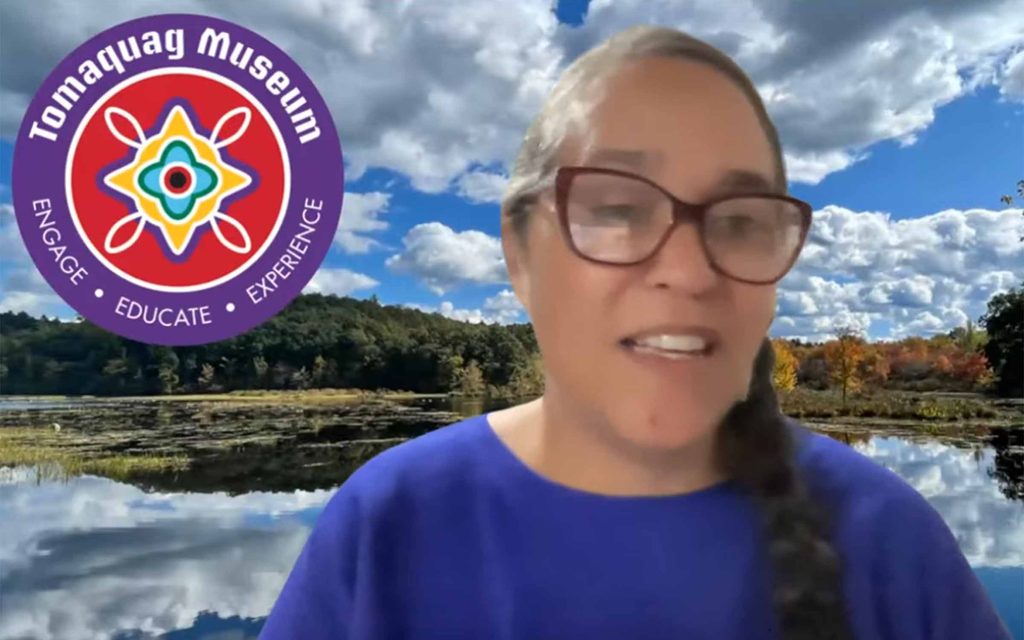
This video features presentations from some of the members of the core Stolen Relations team on the meaning of this history for tribal communities. Presenters include Linford Fisher (top row, right), Project PI and Associate Professor of history at Brown University); Lorén Spears (above, left), Narragansett, Director of the Tomaquag Museum; Paula Peters (above, center), Mashpee Wampanoag, journalist and community organizer; and Toney Holley, Hassanamisco Nipmuc, sonksq,