

A packed crowd filled the North Campus Residence Hall Great Room as students, faculty, and community members gathered for Thanksgiving Retold on November 5, 2025 as told by Jordan J. Phelan in the University news report, excerpts of which appear below. The historian-led dialogue, co-presented by Roger Williams University’s Public Humanities and Arts Collaborative (The Co-Lab), the Department of History, and the Honors Program, reconsidered one of the country’s most familiar holidays through a deeper, Indigenous-centered understanding of its origins.
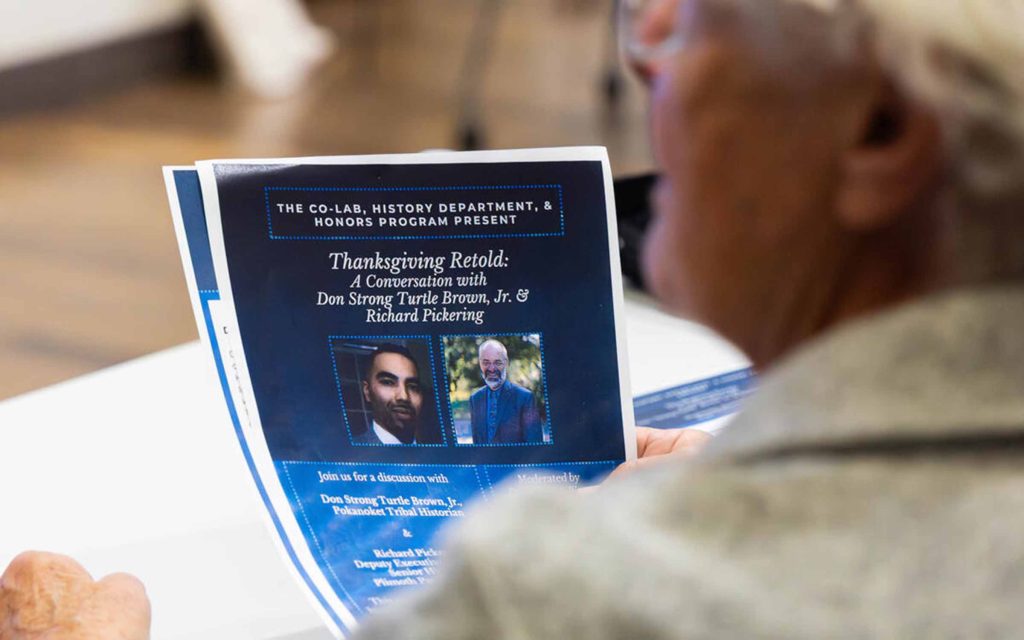
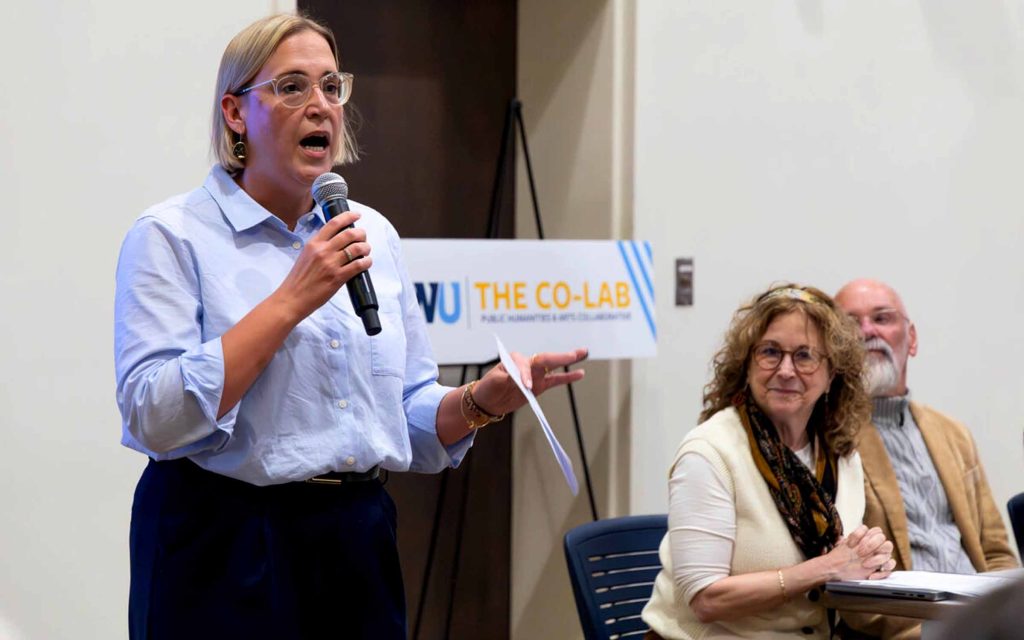
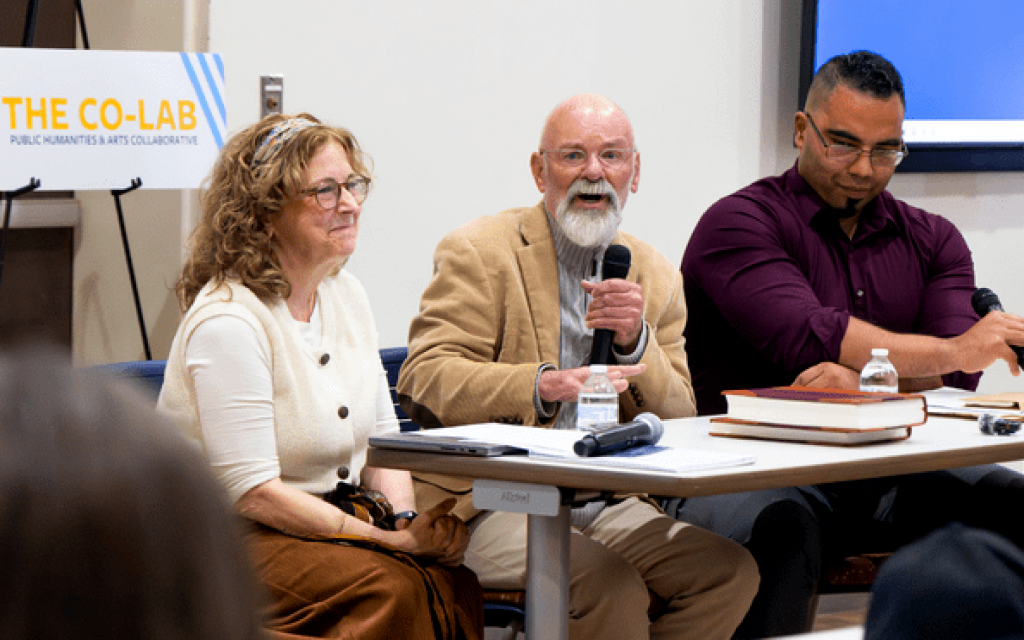
“The conversation brought together Pokanoket Tribal Historian Don “Strong Turtle” Brown, Jr. and Richard Pickering, Deputy Executive Director and Senior Historian at Plimoth Patuxet Museums. Professor of History Debra Mulligan served as moderator, guiding the pair through an examination of how national memory shapes our understanding of 1621 and what it means to approach Thanksgiving with honesty, nuance, and historical clarity.”
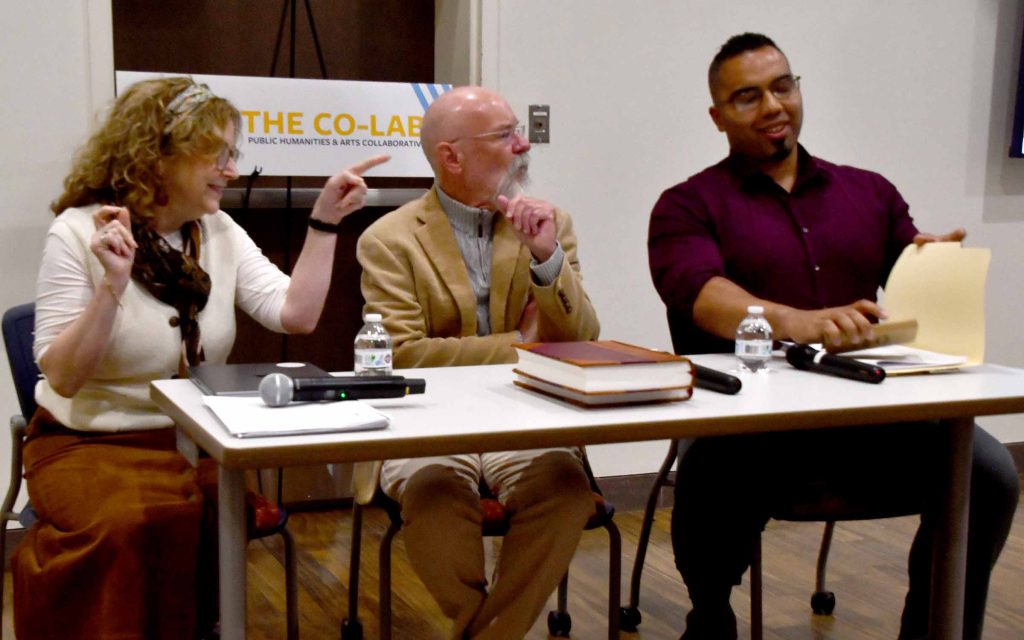
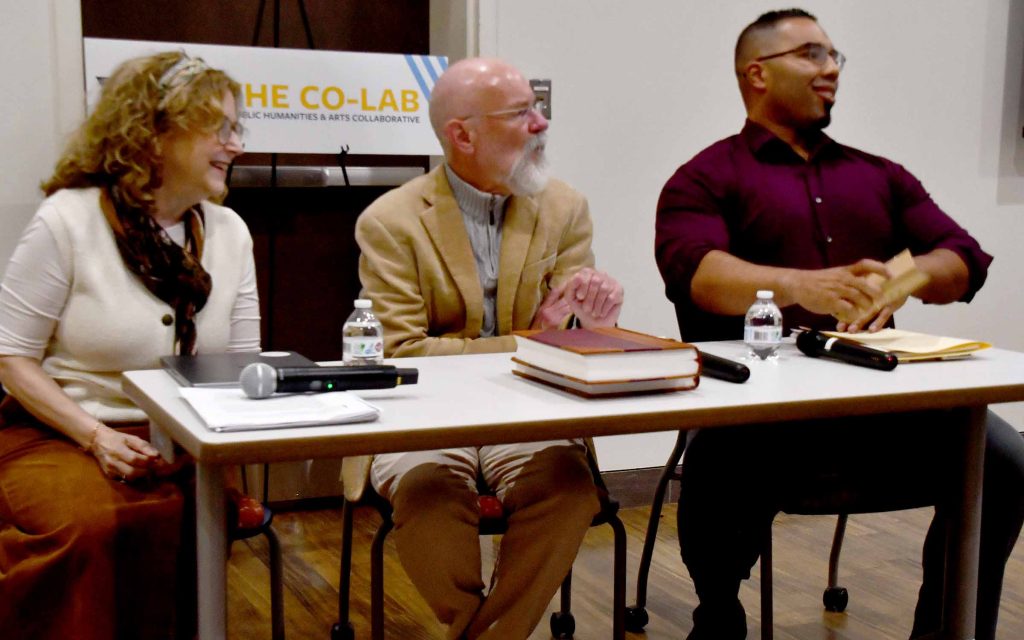
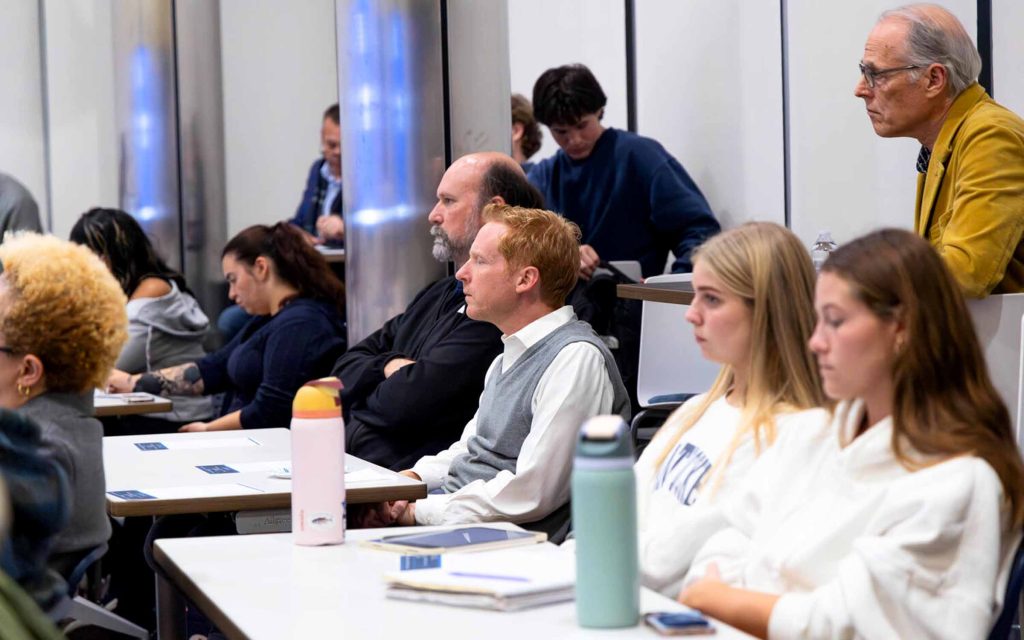
“From the start, the speakers encouraged attendees to think critically about how stories are formed and who has the power to tell them. Brown, Jr. emphasized the importance of grounding historical understanding in personal and communal identity. ‘Everyone must own their story,’ he said, ‘because if you don’t own your story and where you come from, others will say it for you.’ His call to reclaim narrative ownership set the tone for a discussion that challenged the portrayal of Thanksgiving as a harmonious moment of cross-cultural gathering.”
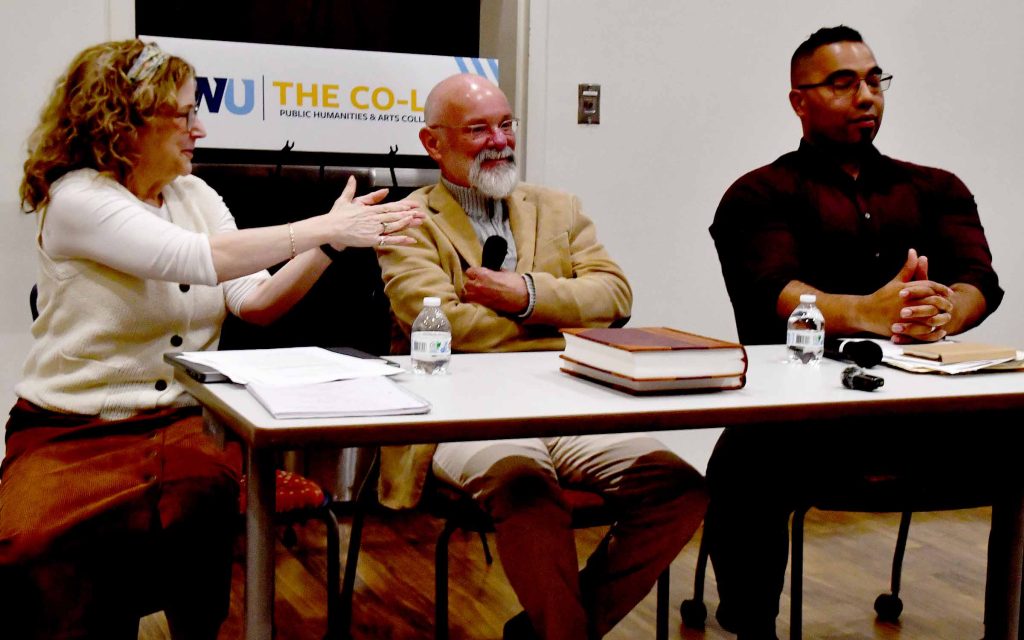
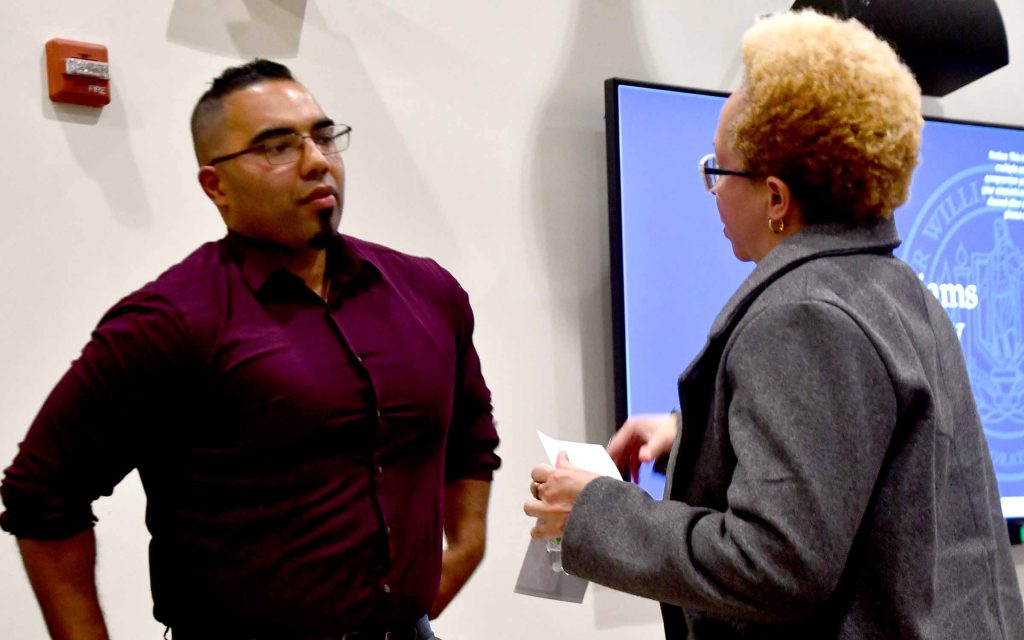
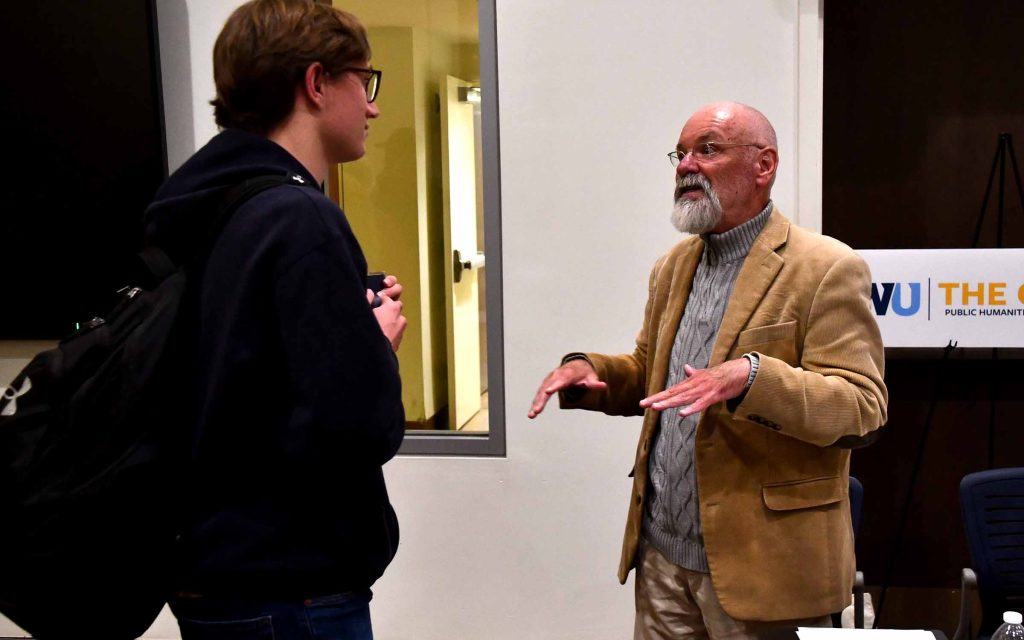
As reported by Phelan, “Brown, Jr. went on to reframe 1621 as a moment rooted in diplomacy and sovereignty, noting that Massasoit Ousamequin, leader of the Pokanoket people, held power in the region and intentionally allowed the English to remain. “It wasn’t a pact. It wasn’t this idea of friendship. It was a treaty,” he said. “The Plymouth Colony understood the primacy of maintaining a good diplomatic relationship with this one man.” He added that understanding the period requires re-centering Indigenous political authority where it truly lay. “In 1620, Plymouth Colony was not the center of power in this region; Sowams was,” he said, referring to the Indigenous seat of Massasoit Ousamequin in what is now Bristol, Warren, and Barrington. “Indigenous Peoples were not bystanders – they determined the fate of Plymouth far more than Plymouth determined the fate of the region.”
“Pickering built on this reframing by speaking to the uncertainties and limits inherent in understanding early American history. “There is so much going on that we cannot grasp,” he said. “We see through a glass darkly … and we are never going to be able to see eye to eye with what happened.” He highlighted how recent archaeological work is reshaping scholarly interpretations of Plymouth and exposing gaps and biases in the written record. For students in the room, he noted, these discoveries mark an exciting moment in the field. “I hope, in some ways, that what I’m telling you is wrong, and you will discover new things that I don’t even suspect.'”
“Pickering also reflected on the meaning of the holiday itself. ‘Thanksgiving does not mean the same thing to all Americans,’ he said. ‘For many Indigenous people, it is a day to reflect on the arrival of Europeans and the beginning of a time of monumental change. The evolution of Thanksgiving is not over. Rather, it continues each year when diverse people gather to break bread, learn from one another, and, in turn, shape the future of this American holiday.'”