
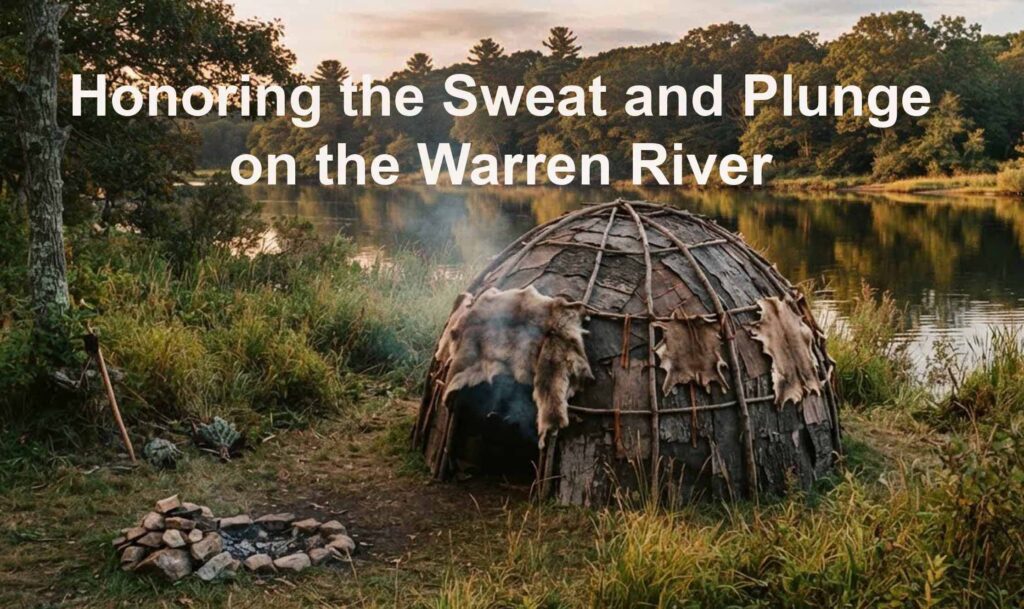
Sauna-type ceremonies for both personal hygiene and ritual or religious purposes can be traced back to prehistoric times, and are widespread among Indigenous peoples in many parts of the world, under names such as ‘purification ceremonies’,’ medicine house’ or ‘lodge’, ‘sweat house’ or just ‘sweat’. In most cases there are many traditions and rules attached to these in relation to the ceremony and its associated activities, which may include chanting, drumming, story-telling, periods of silence, or in North America, the use of tobacco, while there are often many rules as to who may participate and be let into the secrets of the ceremony and the community, and on what terms.
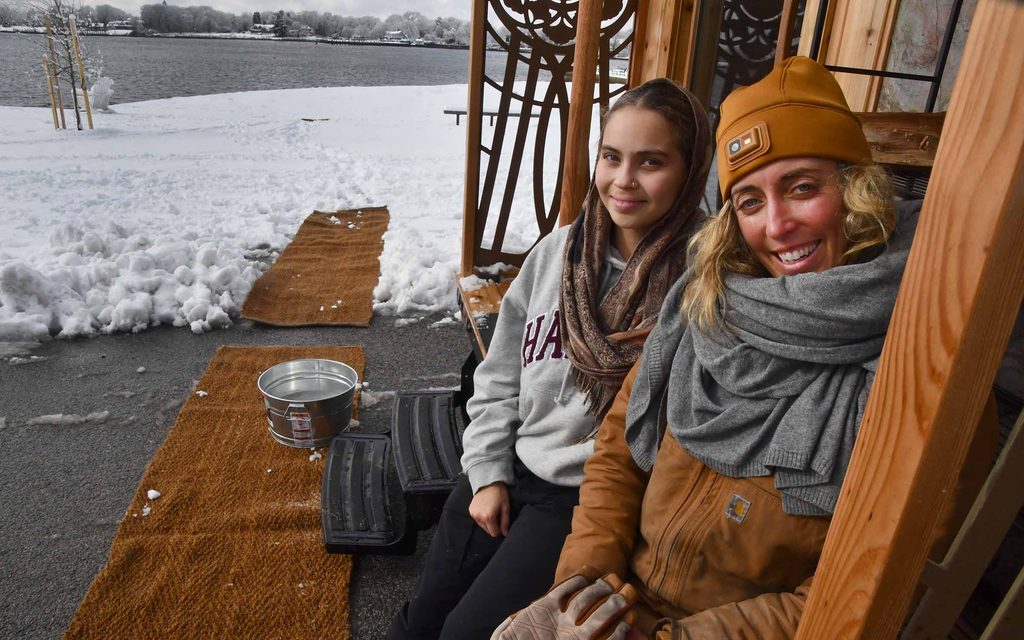
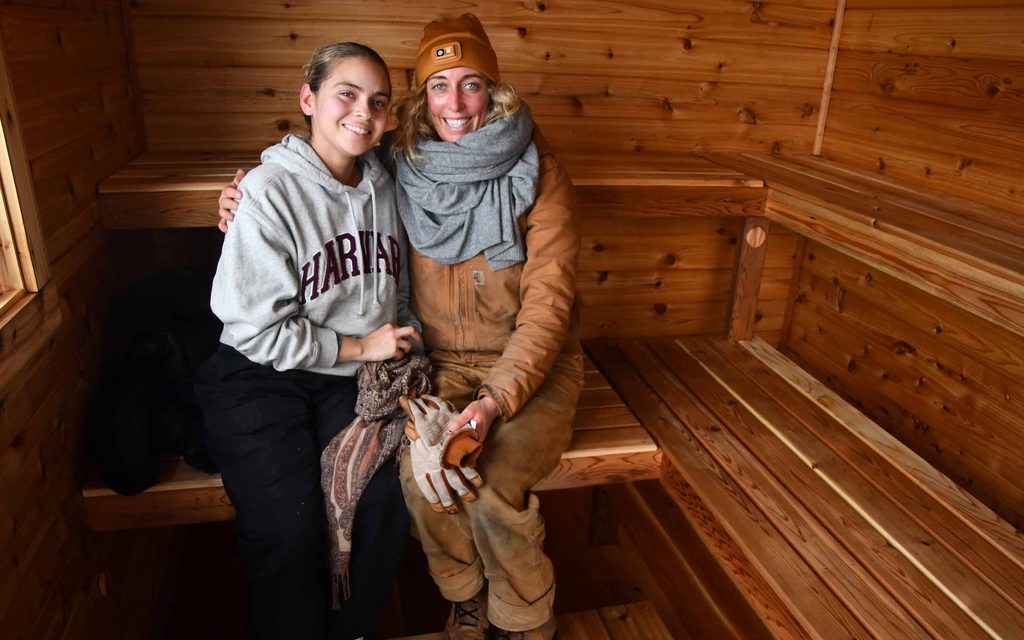
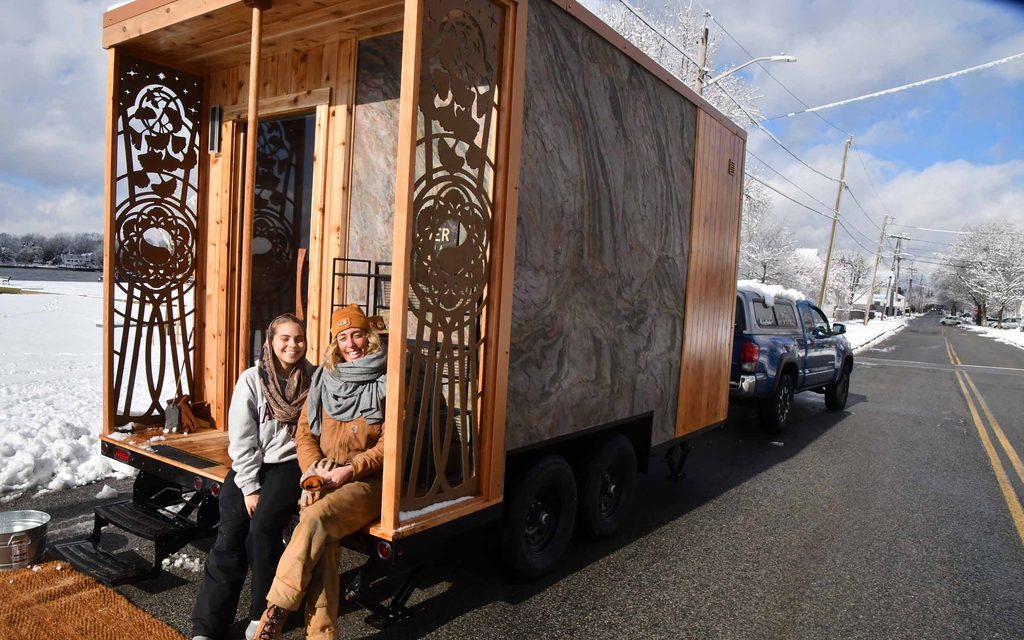
Altær is a mobile sauna consciously collaborating with nature by offering a multi-sensory experience. It is a handcrafted mobile sauna studio offering guided sessions and sound baths in Warren, RI. Founder and certified sauna master Kayla Sibilia (in the hat, above) combines authentic Finnish sauna tradition with contrast therapy and craniosacral healing. The mobile sauna can be towed to multiple locations, one of which is at Burr’s Hill Park in Warren, RI. During cold months, people are able to experience a plunge in the Warren River at the Town Beach followed by a healing sauna across from the Royal Pokanoket Burial Ground.
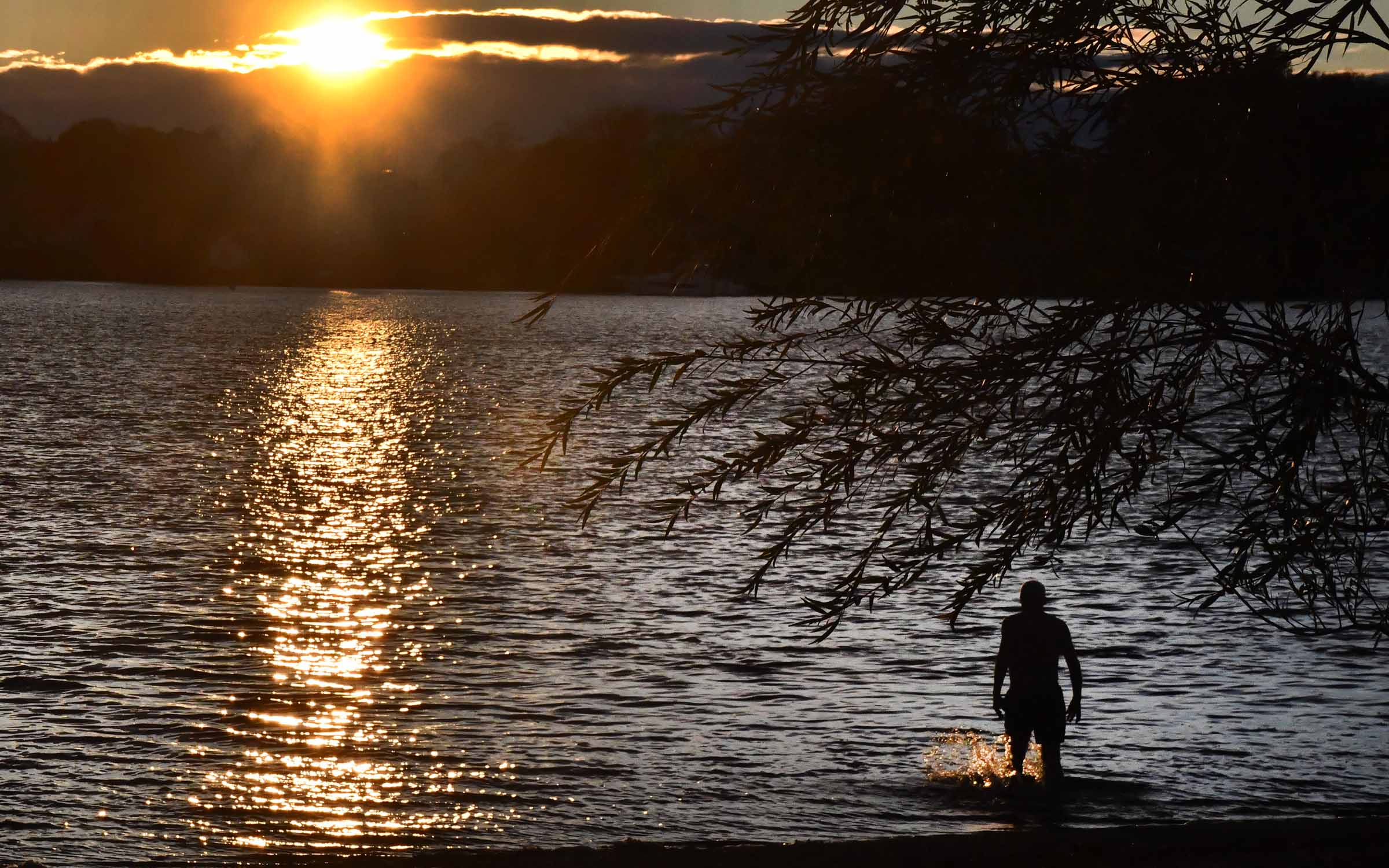
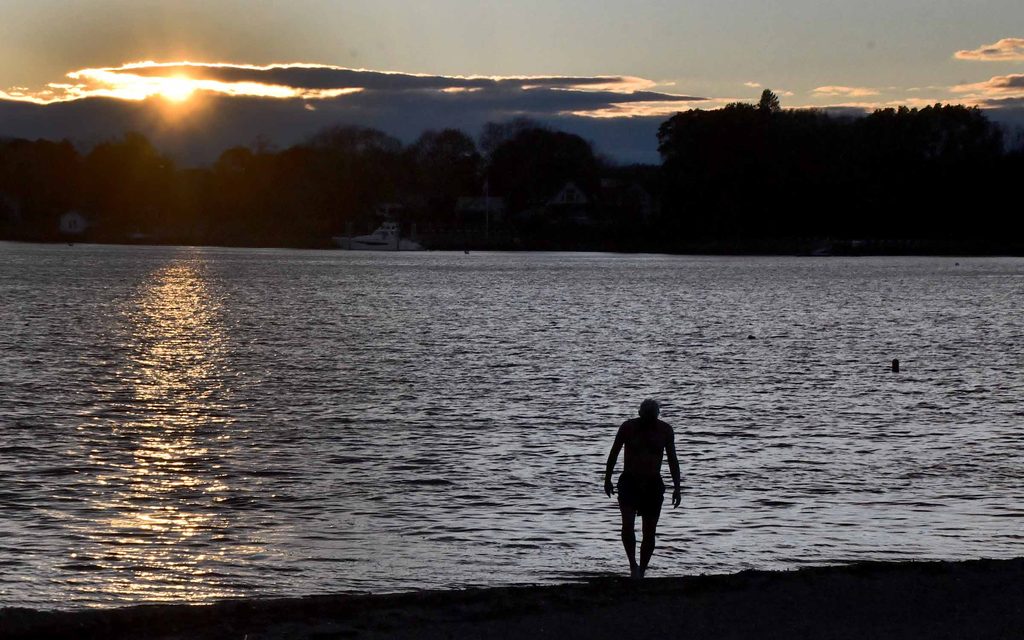
From Roger Williams’ Key into the Language of America, Sickness, p. 197): The Indians then seated themselves around the hot stones, and remained “for an hour or more,” says Roger Williams, “taking tobacco, discoursing and sweating together. After thus profusely perspiring they plunged into the water, to cool their bodies. This Hot-house is a kind of little Cell or Cave, six or eight foot over, round, made on the side of a hill (commonly by some Rivulet or Brooke) into this frequently the Men enter after they have exceedingly heated it with store of wood, laid upon an heape of stones in the middle. When they have taken out the fire, the stones keepe still a great heat: Ten, twelve, twenty more or lesse, enter at once starke naked, leaving their Coats, small breeches, (or aprons) at the doore, with one to keepe all: here doe they sit round these hot stones an houre or more, taking tobacco, discoursing and sweating together; which sweating they use for two ends: First, to cleanse their skin: Secondly, to purge their bodies, which doubtlesse is a great meanes of preserving them, and recovering them from diseases, especially from the French disease, which by sweating and some potions, they perfectly and speedily cure: when they come forth (which is matter of admiration) I have seen them runne (Summer and Winter) into the brookes to coole them, without the least hurt.”
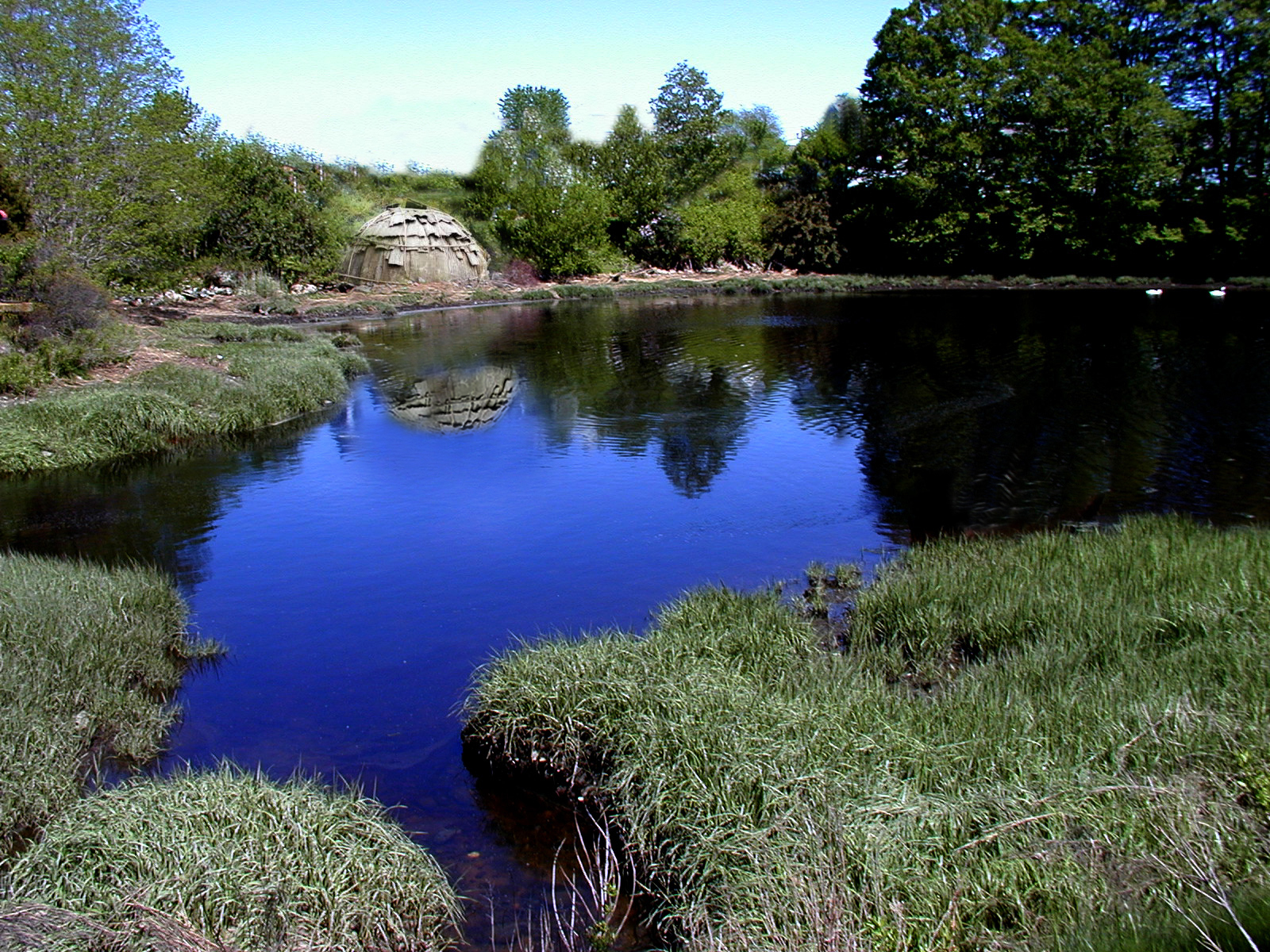
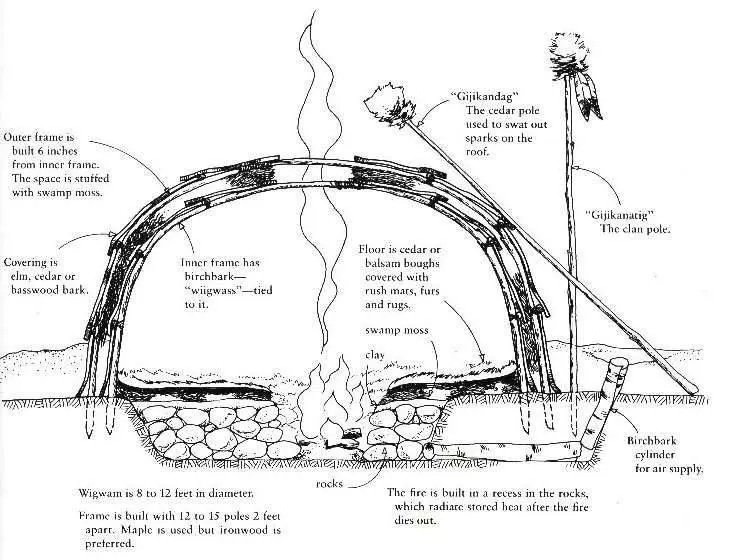
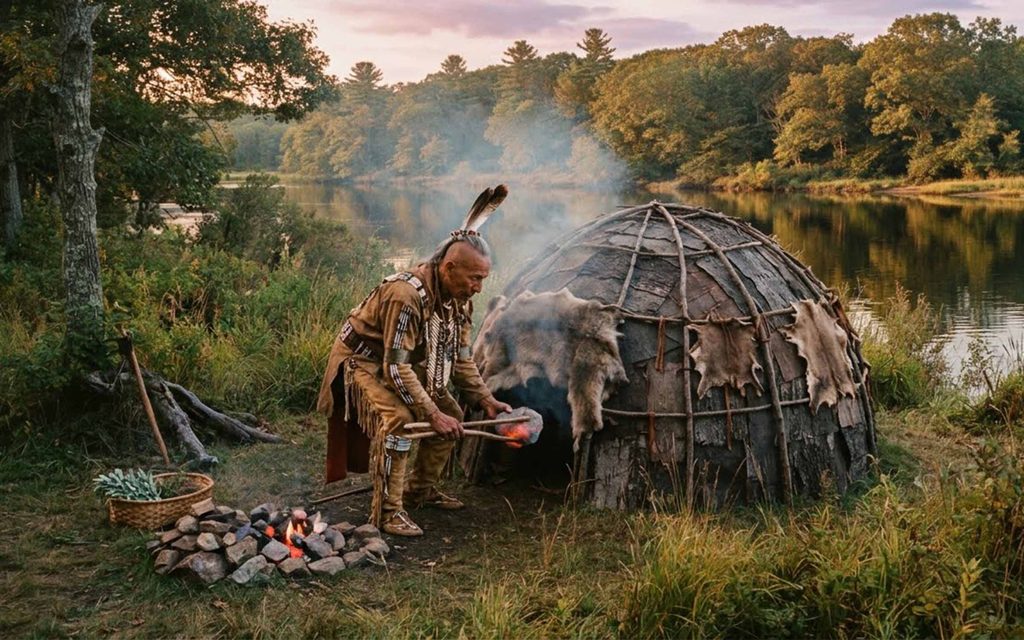
In 1904, historian and author Virginia Baker wrote in Massasoit’s Town, Sowams in Pokanoket: “On the east shore of the Kickemuit River, a few yards south of the “wading-place,” [today’s Child Street Bridge] could be seen less than a century ago, the remains of an Indian “hot-house” or sweat lodge [Pésuponck] a cell-like chamber constructed of stone and built into the river bank, having in its center, a flat bed of stone, the whole enclosure measuring about eight feet in length. The savages made use of the sweating-bath in sickness or to cleanse their skins of accumulations of dirt, paint, and grease. A huge fire was built on the rude fireplace of the “hot house,” being removed after the chamber became thoroughly heated. [Left and right illustrations above are artificial.]