
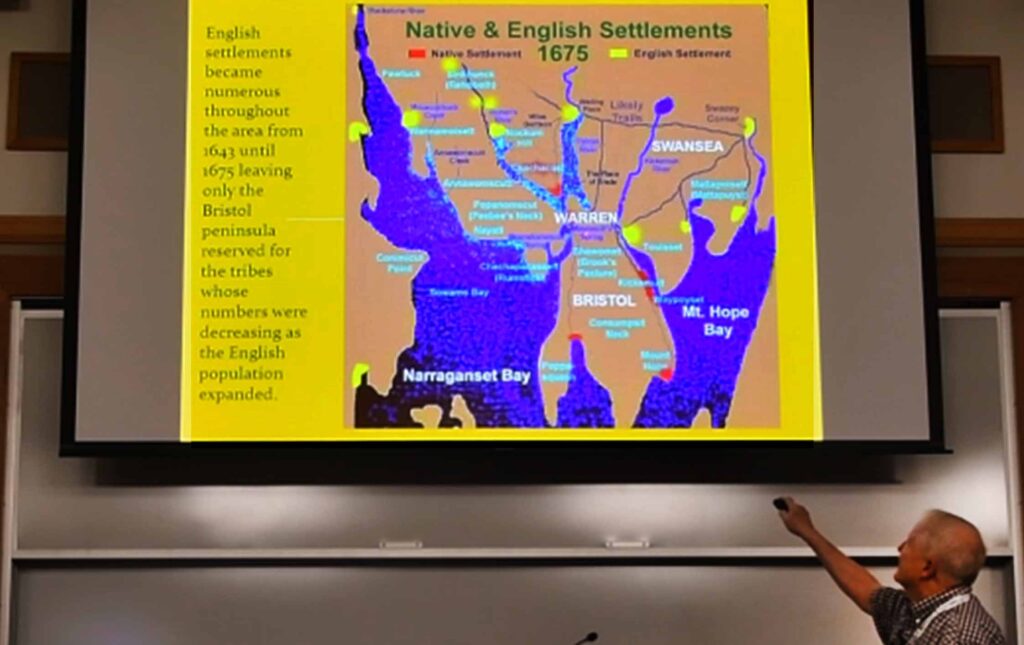
Sowams Project Historian David Weed gave a presentation to dozens of attendees at the 12th Annual History Camp gathering at Suffolk University Law School, the largest event of its kind in the nation, in downtown Boston on August 8, 2026. Speaking on “How King Philip’s War led to the Revolutionary War”, one of 55 presentations given that day, Weed first gave a synopsis of the War and then drew connections between King Philip’s War and the origins of the American Revolution. Click here for a 47-minute video of his first presentation and here for the slightly longer session that he had to repeat because more people signed up than could fit in the room! Click here for Dr. Weed’s History Camp Boston 2019 presentation on “The Untold Story of Massasoit and the Colonists”.
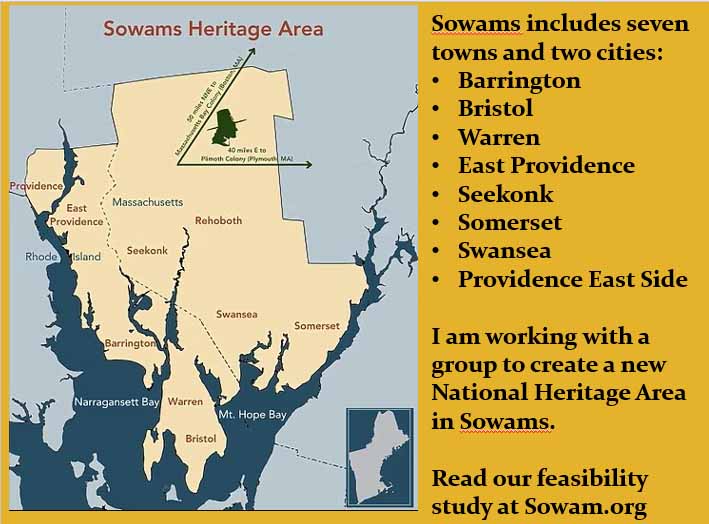
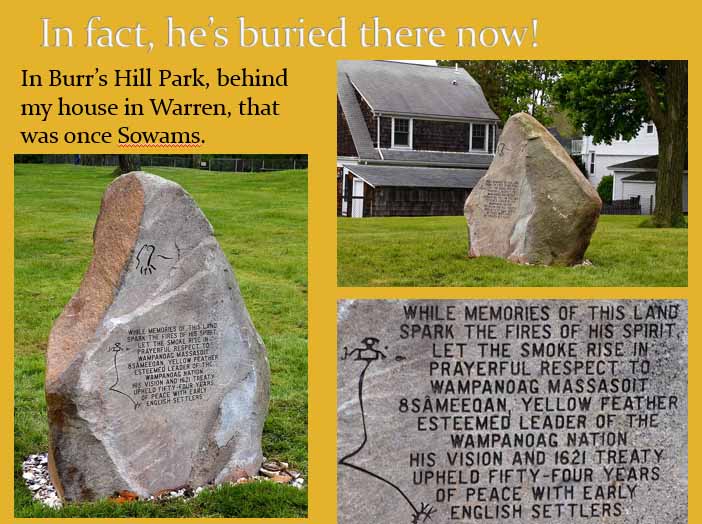
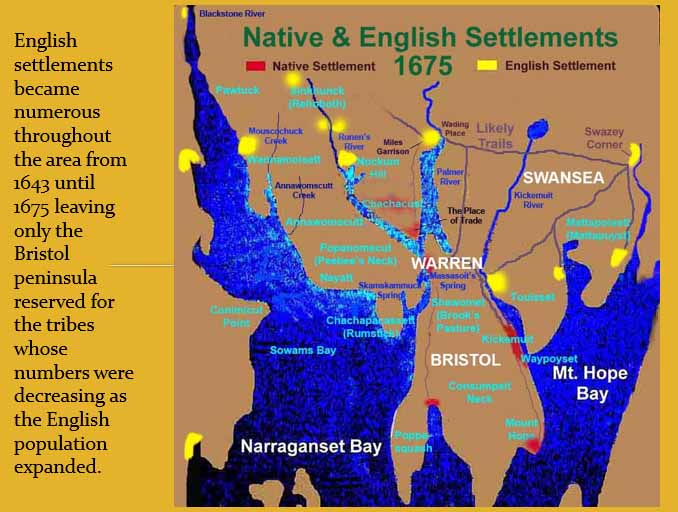
Weed began by describing Sowams, the home of the Massasoit Ousamequin who first welcomed the English Separatists in 1621. He pointed out that Ousamequin had been buried in the Royal Pokanoket Burial Ground behind his house in Warren, RI, not far from where King Philip’s War broke out in 1675.
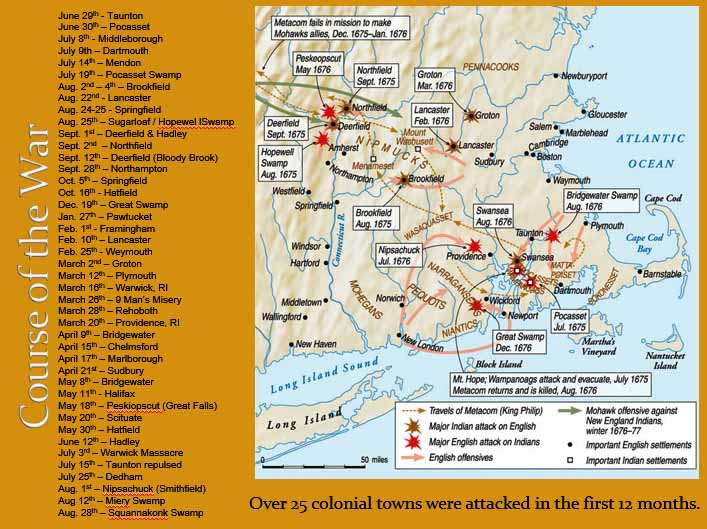
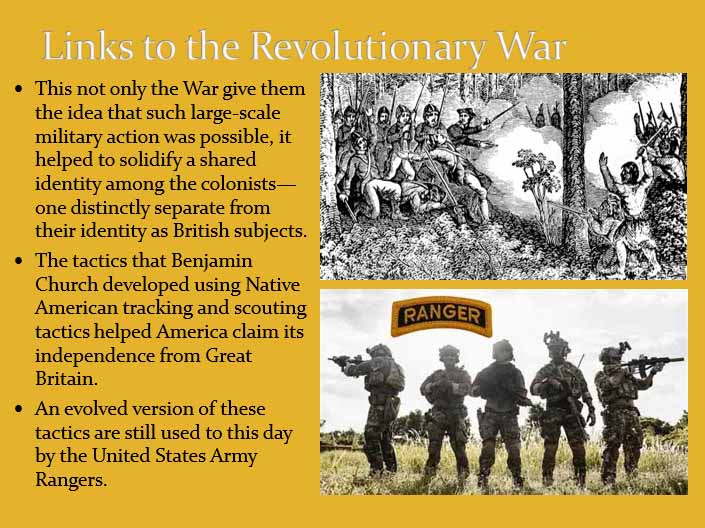
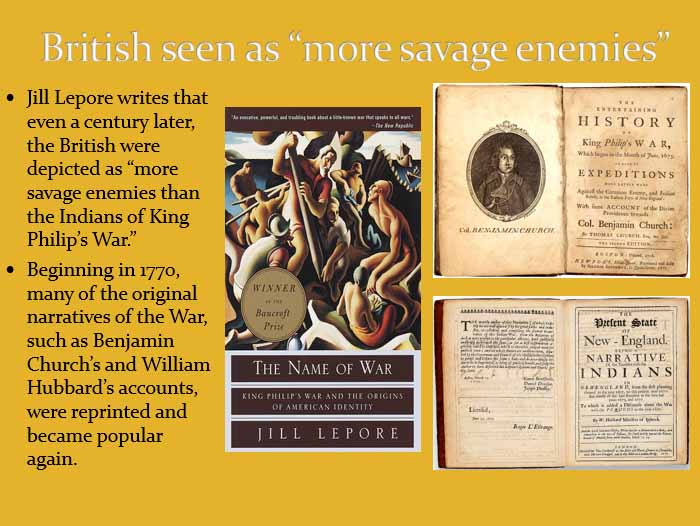
Weed briefly described the course of War that enveloped most of New England between 1675 and 1676. That War gave the colonists the idea that they could wage a war without the help of England and taught them better ways of fighting. Just prior to the Revolutionary War, books describing King Philip’s War became popular again as they depicted King Philip’s rebellion in heroic terms.
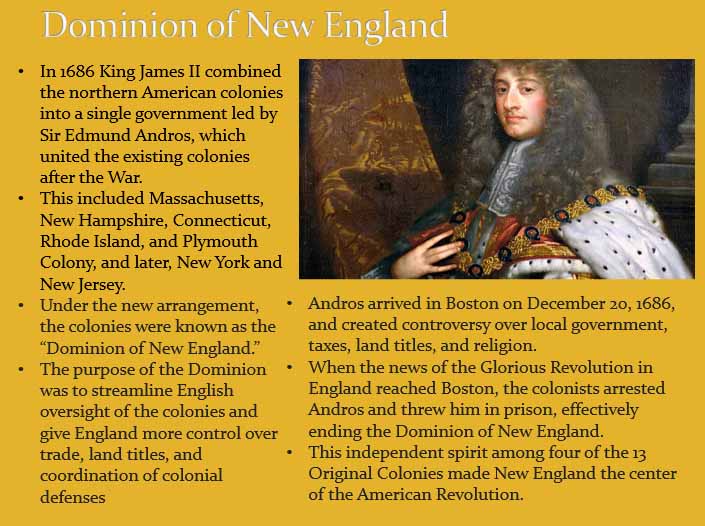
However, following the War, King James dissolved the existing charters and attempted to consolidate power under Governor Andros and the “Dominion of New England.” The colonists rebelled and jailed Governor Andros while Native people joined the colonists to fight against the British.