
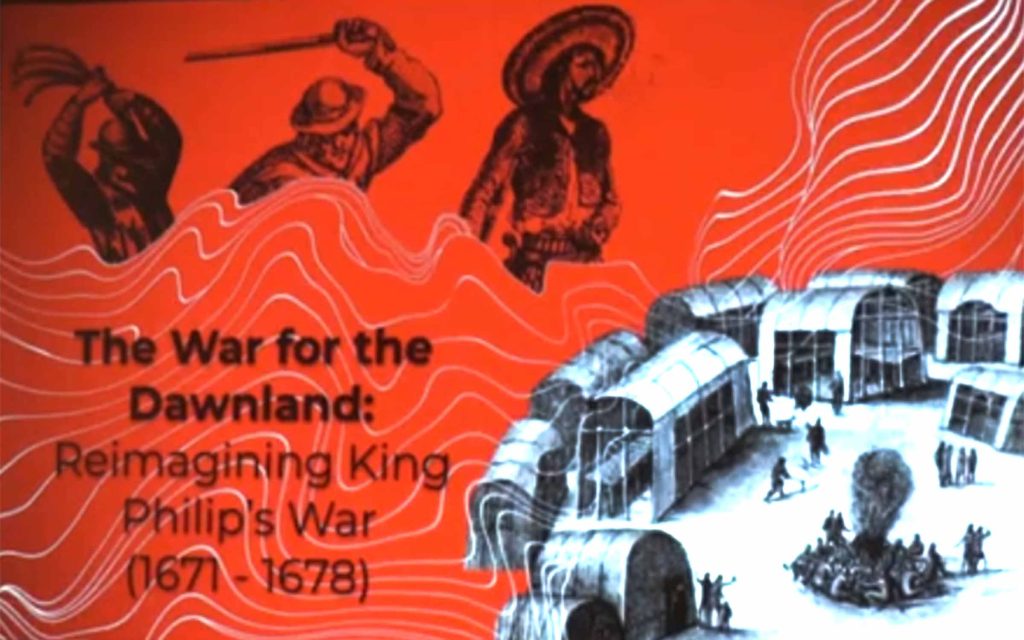
Brad Lopes is a citizen of the Aquinnah Wôpanâak Tribe who spoke to a full house about King Philip’s War from a Wampanoag perspective at a meeting of the Old Bridgewater Historical Society on May 31, 2026. Rebecca Fleisch Cordeiro arranged the lecture, and the Trustees of the Howard Funds provided funding. The Society exists to promote education and research relating to the original township of Bridgewater, its inhabitants, and its history. Click here for a 63-minute video of his talk.
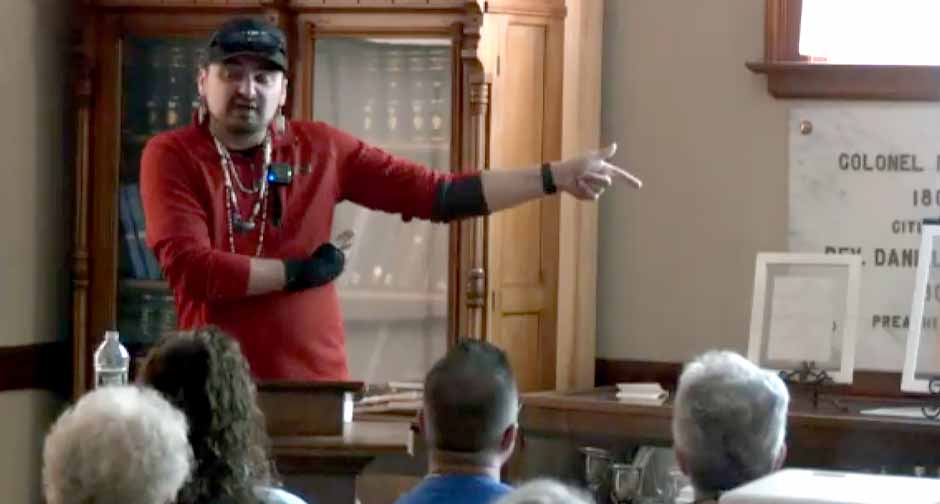
Lopes (above, left) serves as the Education & Public Programs Manager for the Aquinnah Cultural Center and Program Manager for the Native American Teacher Retention Initiative (NATRI) with the Mashpee Wampanoag Education Department. As a certified educator in Wabanaki homelands (grades 5–12), Brad provides professional development on teaching Indigenous studies and creating inclusive environments for Indigenous students and staff. He specializes in guiding educators through indigenization and decolonization practices, challenging them to expand their perspectives and approaches to teaching.
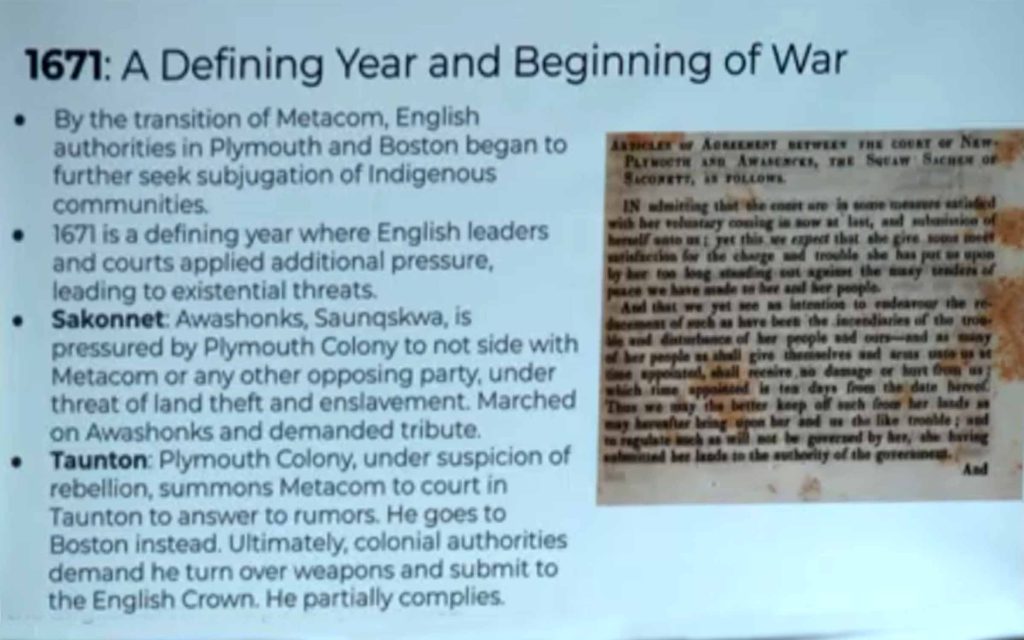
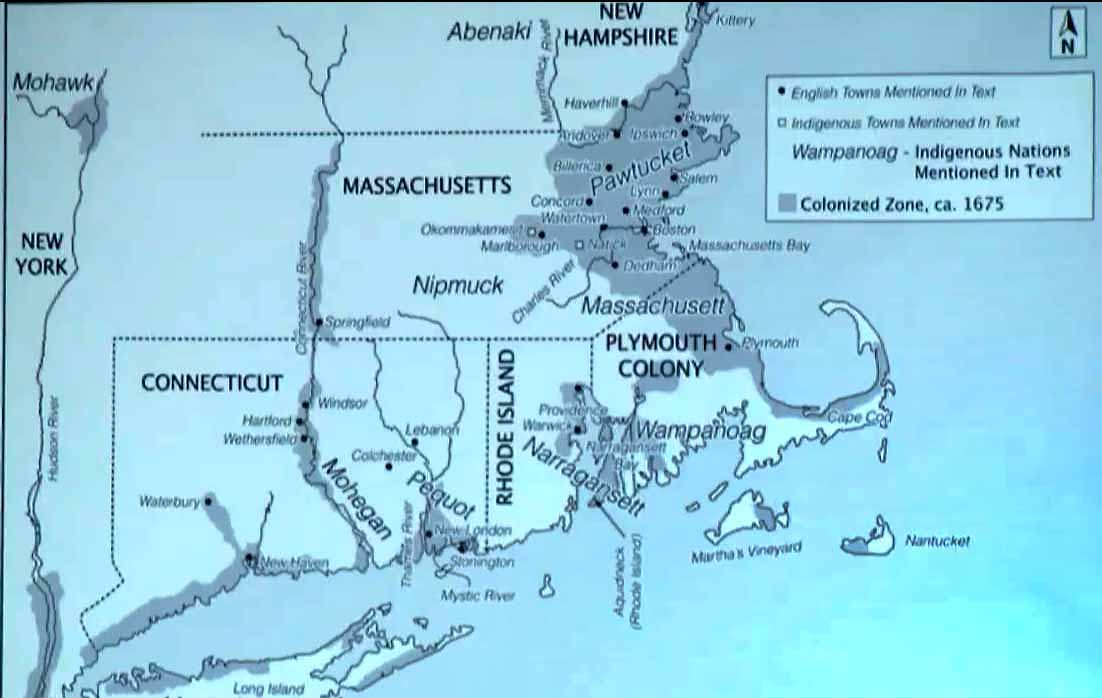
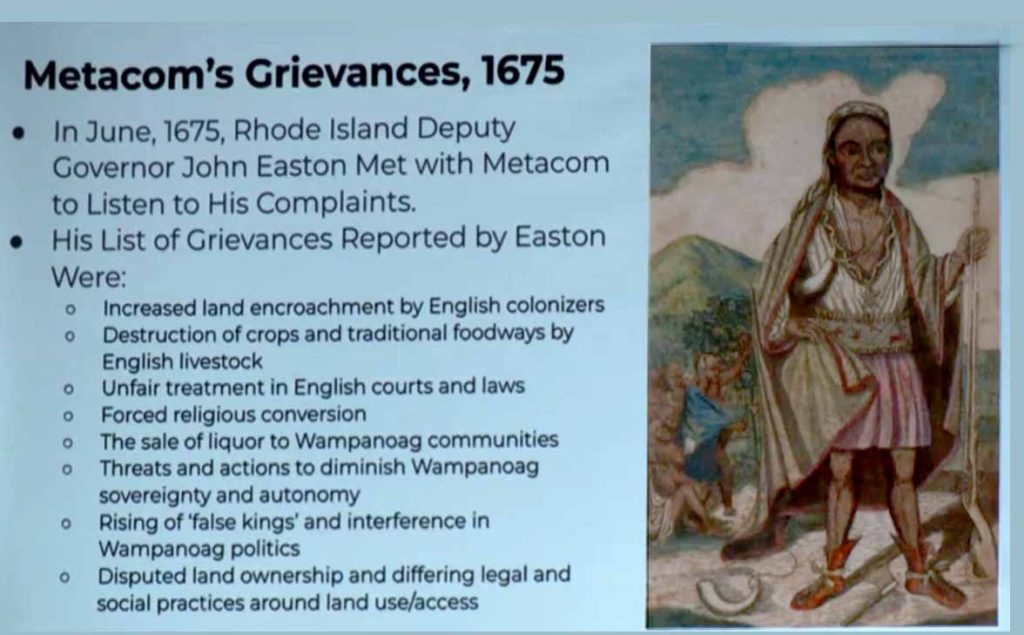
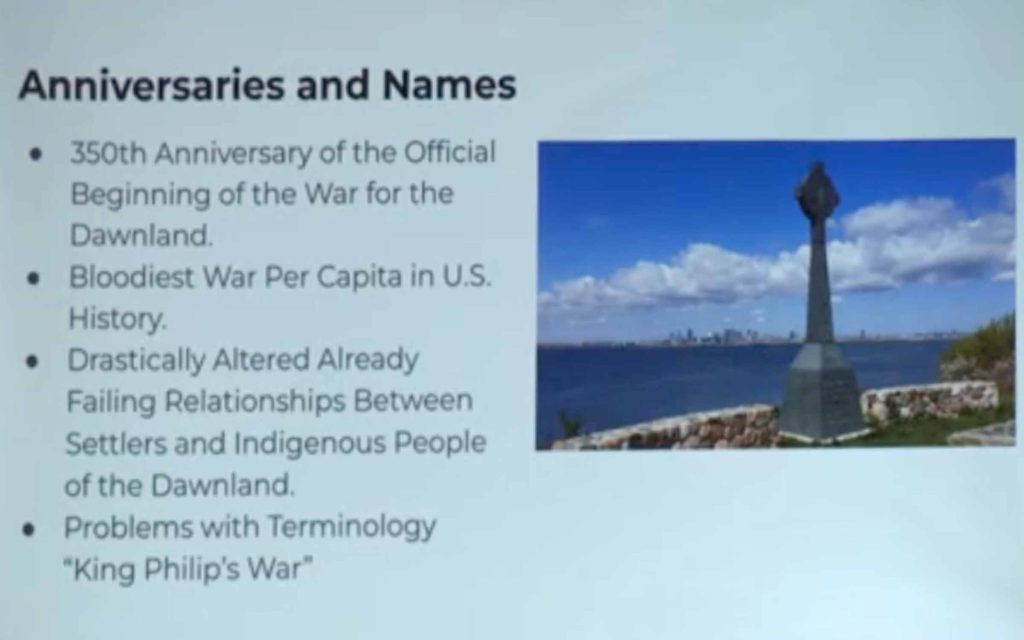
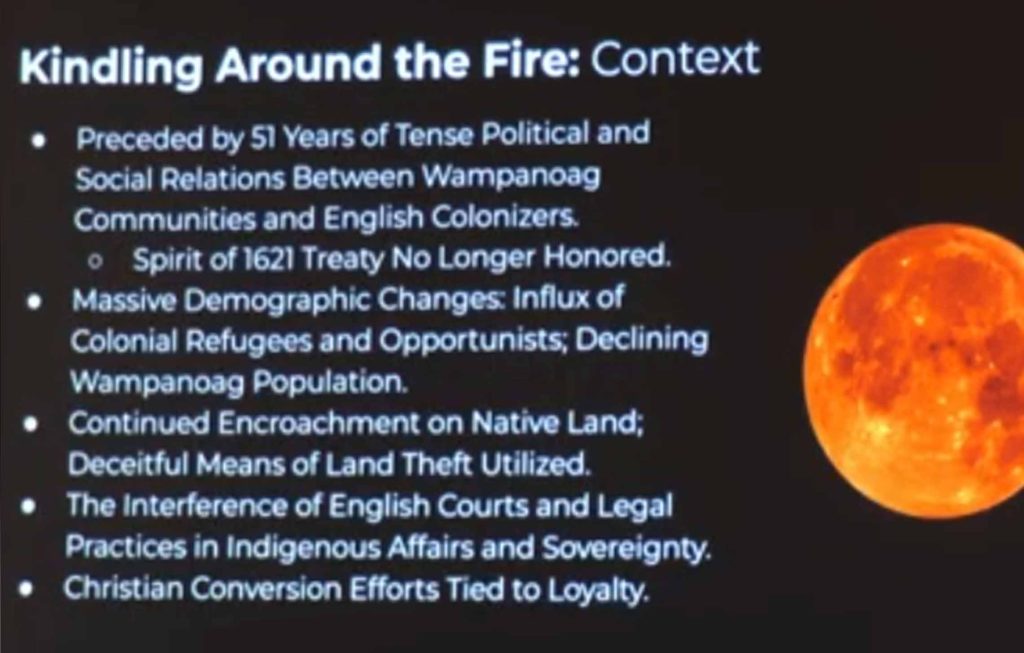
King Philip’s War (1675–1678) is most commonly told through the lens of settler-colonials. (Click on the map above to see colonized lands.) “Reimagining King Philip’s War” explores the war from a Wôpanâak/Wampanoag lens. The historical forces that shaped this period, including Indigenous resistance to English encroachment, the role of colonial courts, and the broader regional and global context of the conflict.
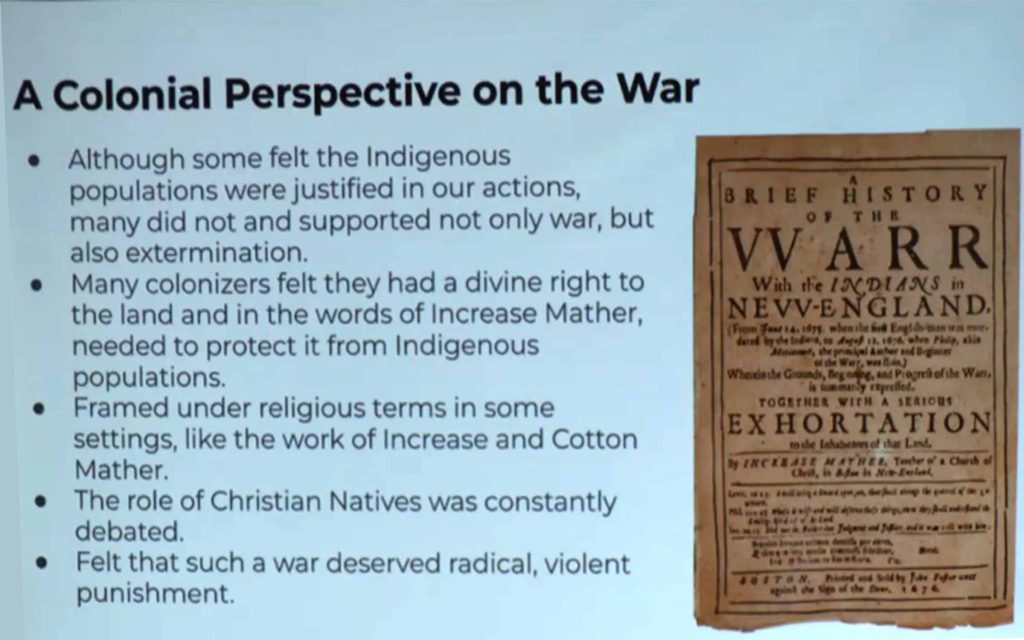
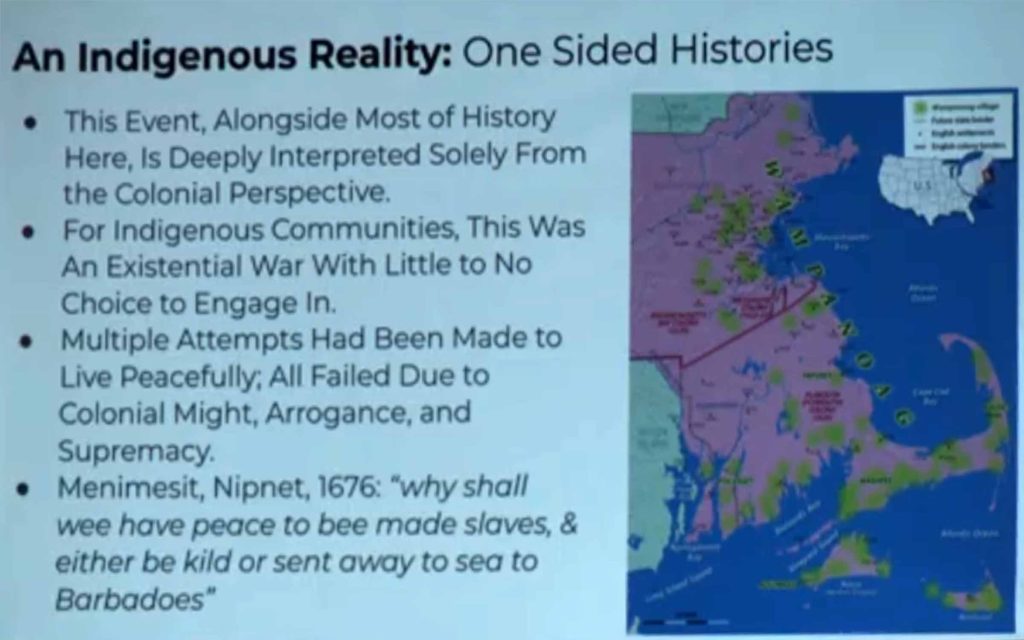
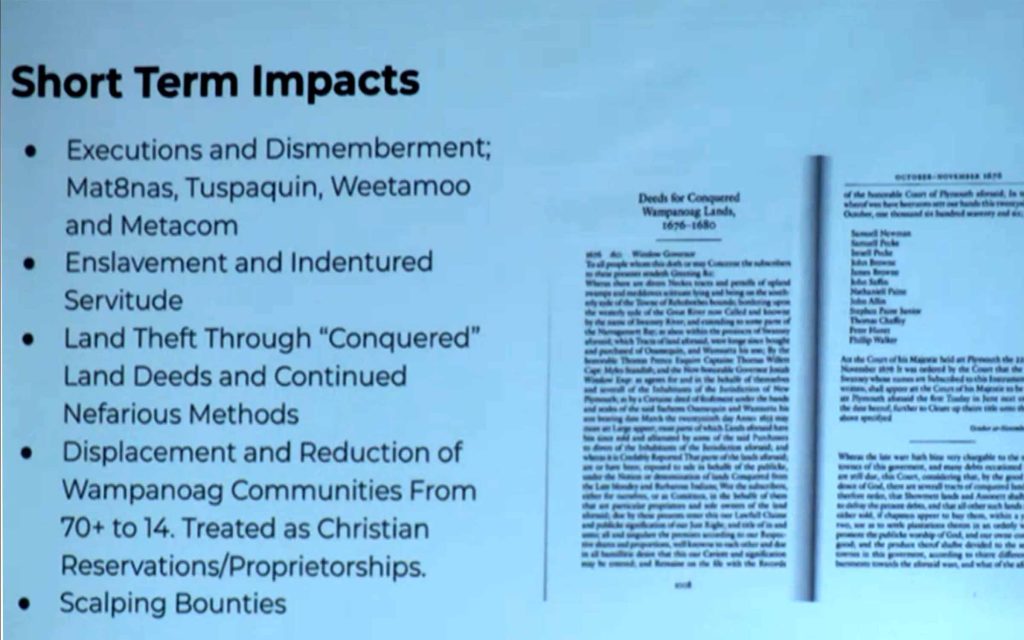
One hundred years before the American Revolution, King Philip’s War engulfed the Indigenous nations of southern New England, Pokanoket, Nipmuc, Narragansett and others, in one of the deadliest conflicts in North American history relative to population. When it ended, the colonial winners didn’t just claim the land, they also claimed the story. It is a narrative of inevitable destiny, of brave but doomed resistance, of a continent naturally passing from one civilization to the next, a story designed to be mourned, not questioned.