
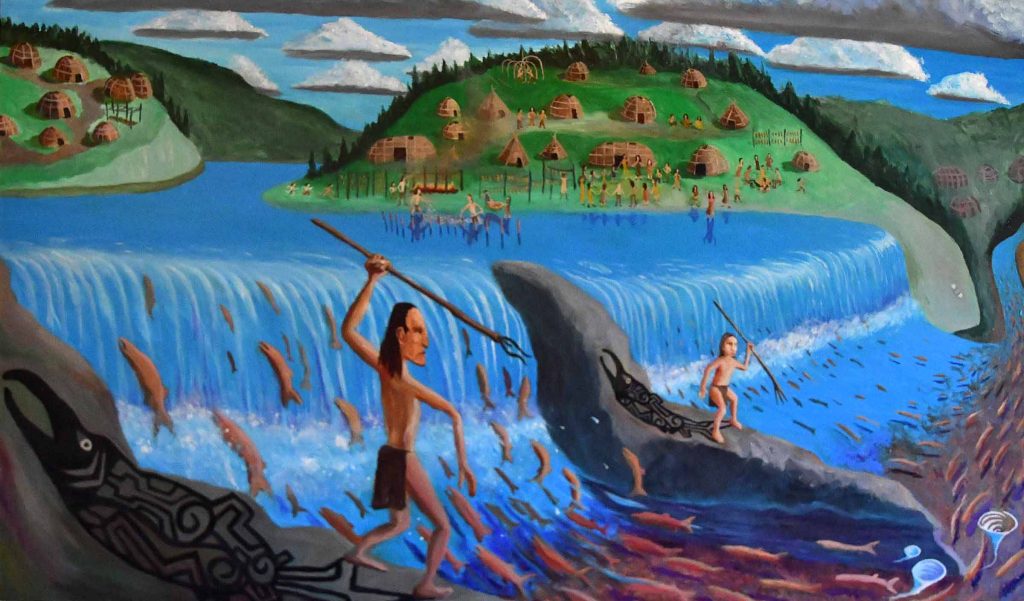
For thousands of years, Indigenous peoples from all around the Northeast gathered, fished and celebrated at Peskeompskut, now called Turners Falls, Massachusetts. On May 19, 1676, over 300 Native people – mostly women, children and elders – were killed in an attack by armed English settlers at the Great Falls. This was among the largest massacres of Indigenous people in colonial U.S. history. On May 16, 2026, Native and non-native people gathered together to honor and remember those who died In the massacre. In addition to being an acknowledgement of the past, this commemoration was also an affirmation of Indigenous resilience. (Above painting by Robert Peters)
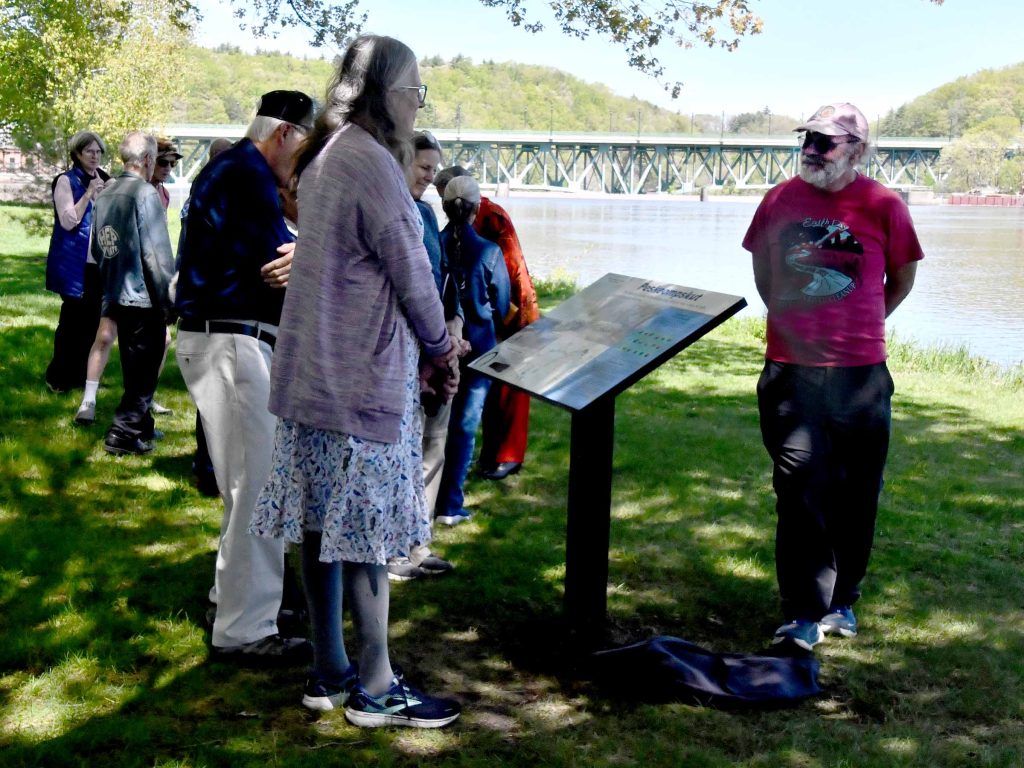
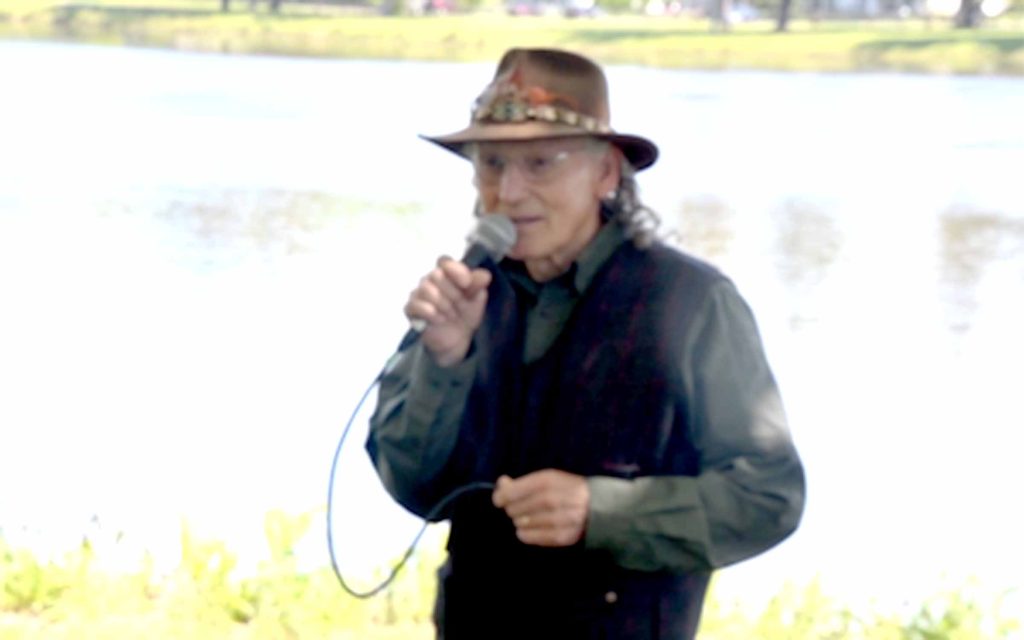
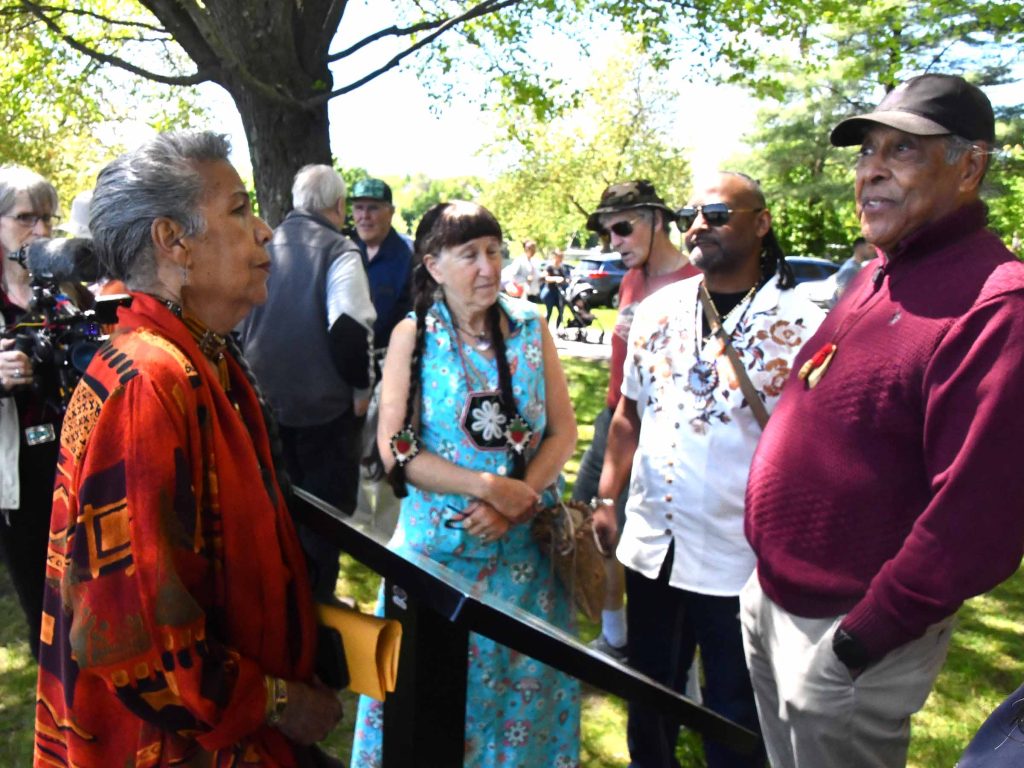
The day began with a sign dedication ceremony in Unity Park in Turners Falls , as part of a Day of Remembrance event for the 350th anniversary of the Great Falls Massacre. The signs detail the Great Falls Massacre and the 12-year battlefield study funded by an American Battlefield Protection Program (ABPP) Site Identification and Documentation grant from the National Park Service, overseen by the now former Battlefield Grant Advisory Board. (Above, center) Joe Graveline, the former president of the Nolumbeka Project, shared his thoughts about the importance of the Connecticut River. (Above, right) Nipmuc Liz Coldwind Santana-Kiser listens to Pokanoket Sagamore Winds of Thunder as he describes his tribe’s history. Click here for a seven-minute video of the second half of the ceremony.
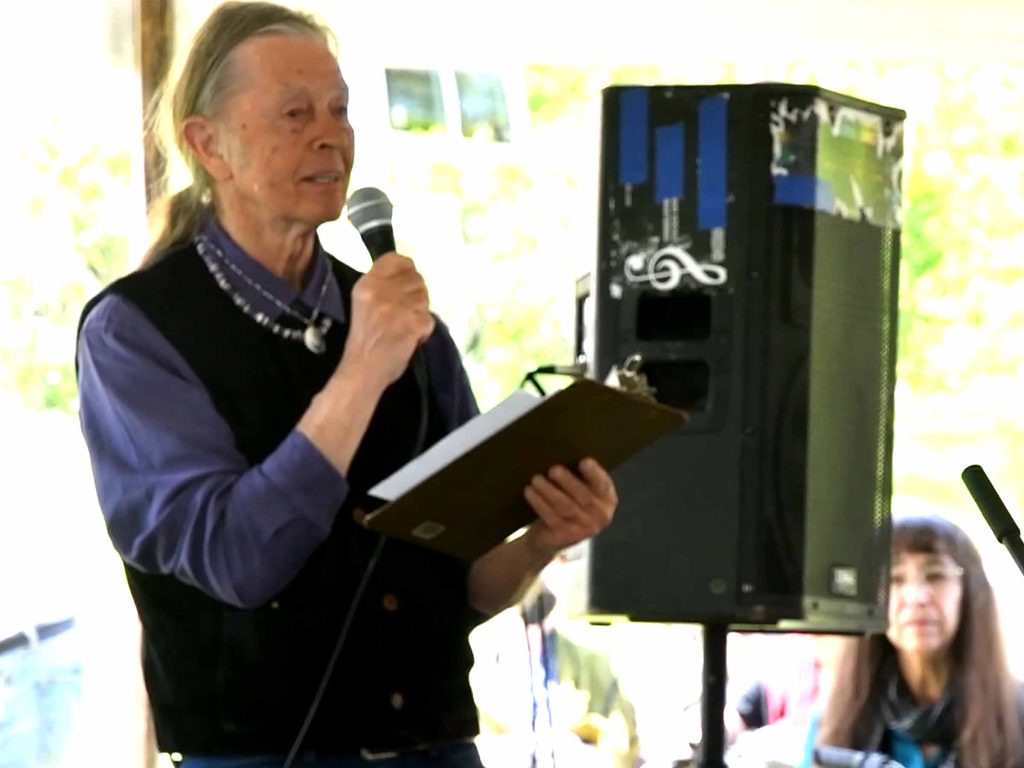
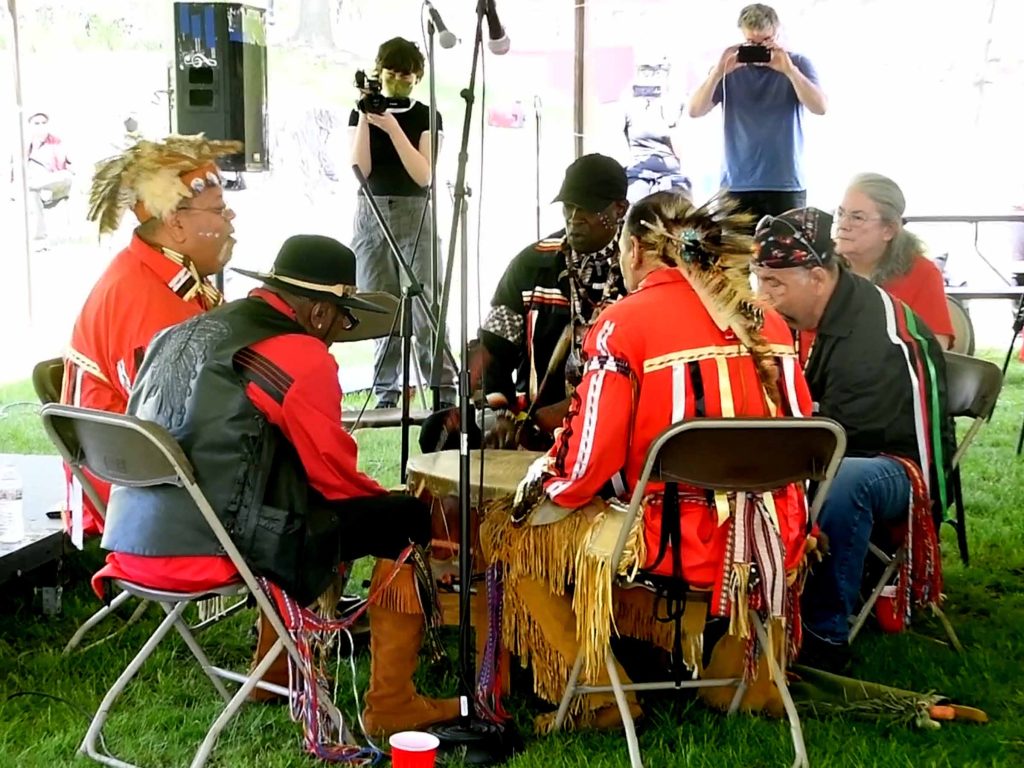
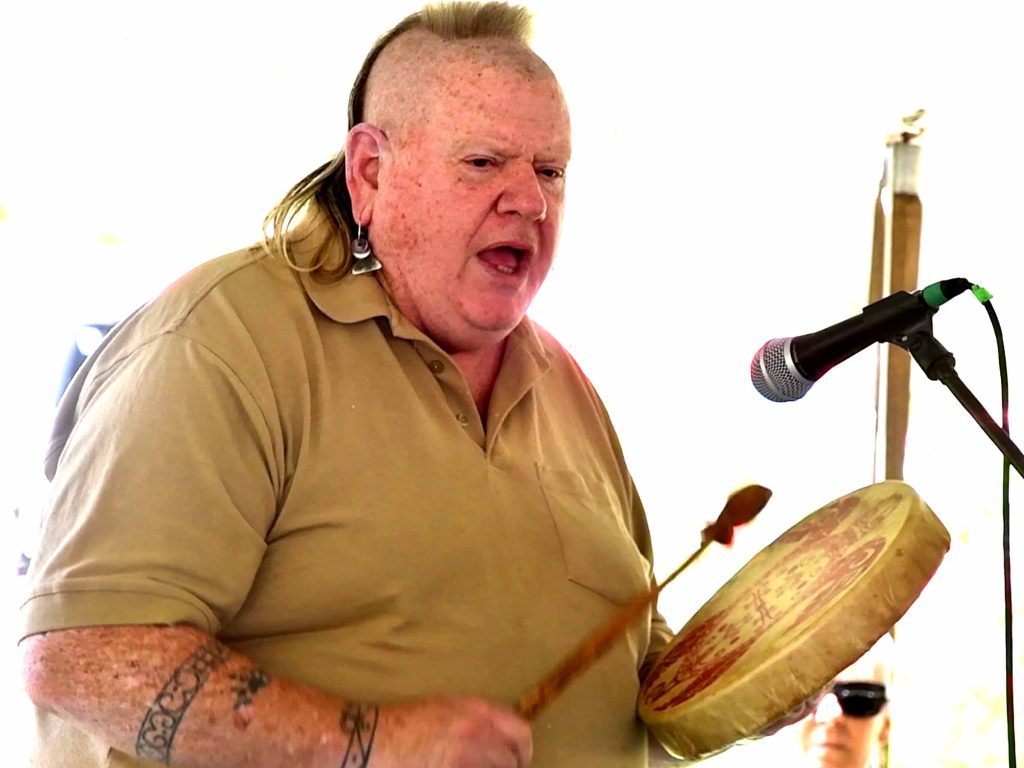
Nehantic Dave Brule emceed the event and introduced the Eastern Medicine Singers and Abenaki Chief Roger Longtoe Sheehan who performed Indigenous drumming songs. Click here for a 36-minute video of the first part of the ceremony, including the speakers below, held on the lawn of the Great Falls Discover Center.
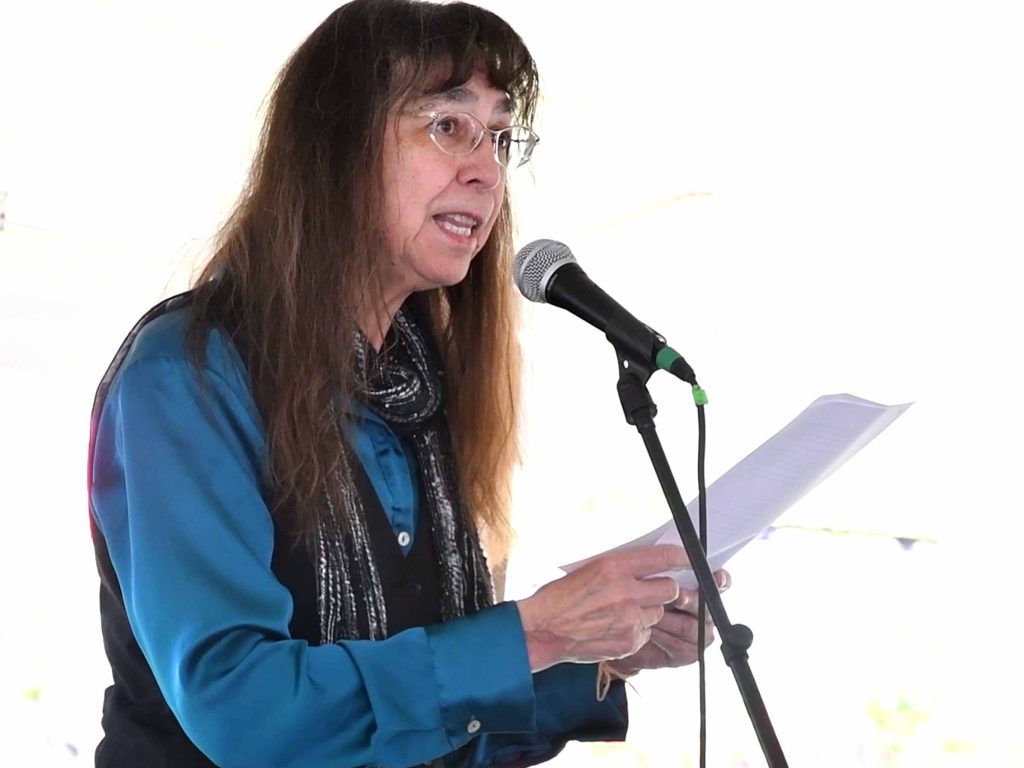
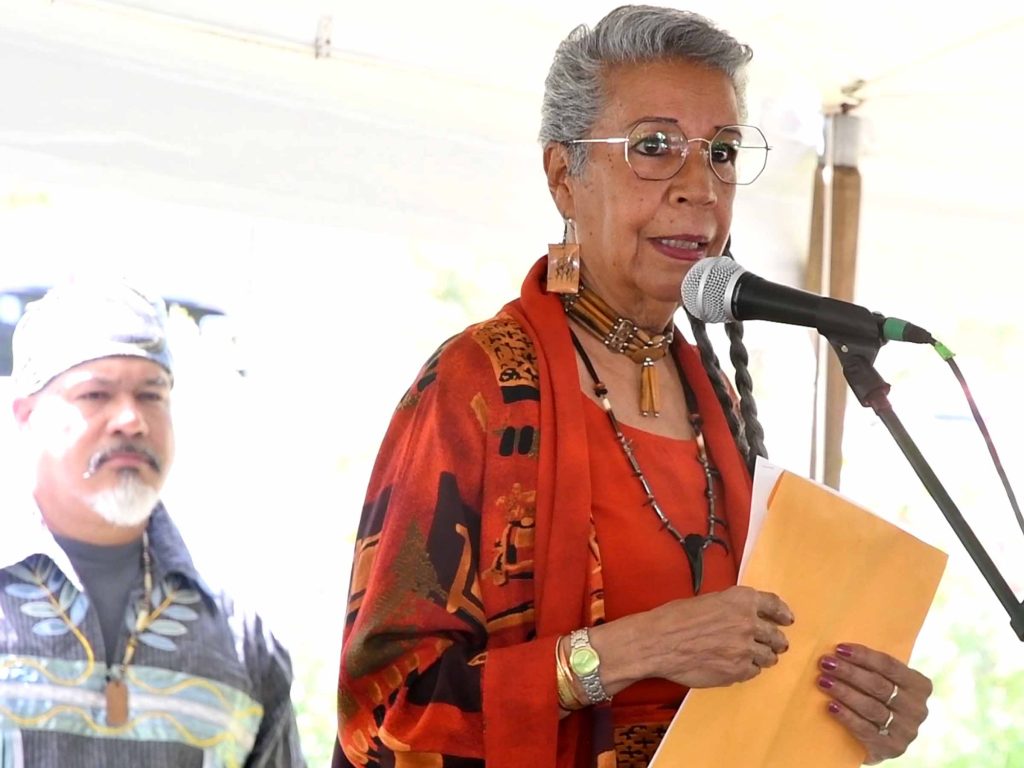
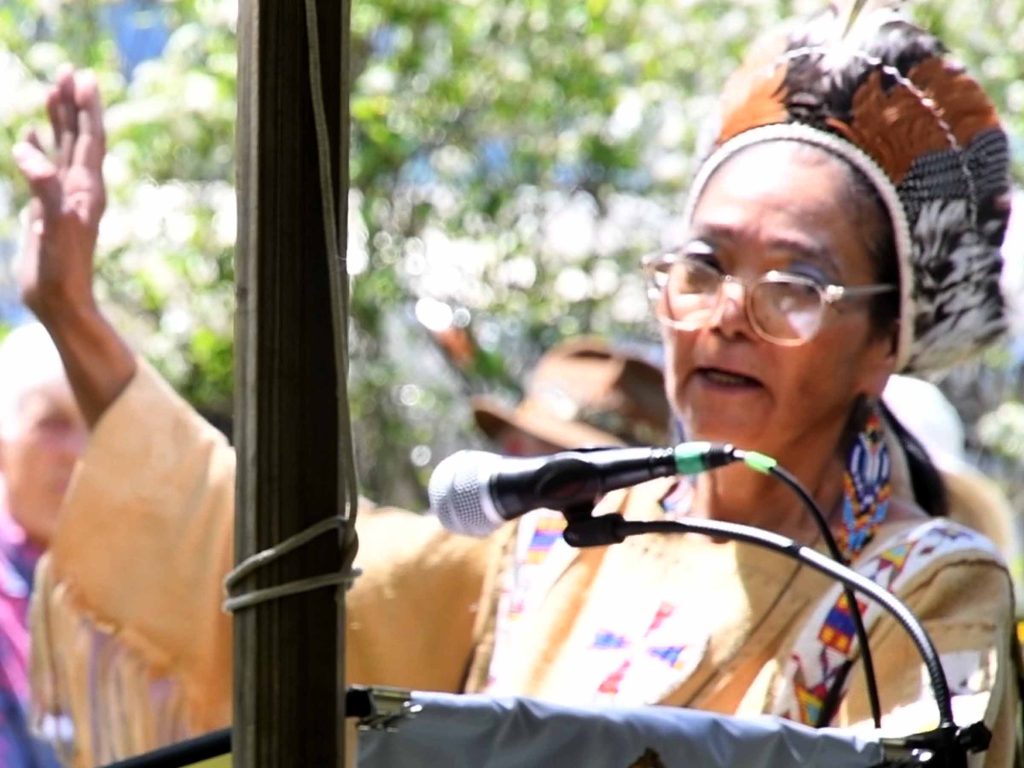
Abenaki Marge Bruchac (above, left) recounted the history of the Massacre before Nipmuc Liz Coldwind Santana-Kiser and elder Kathryn Akuahah Wheaton spoke. Click here for a 40-minute video of the second part of the ceremony.
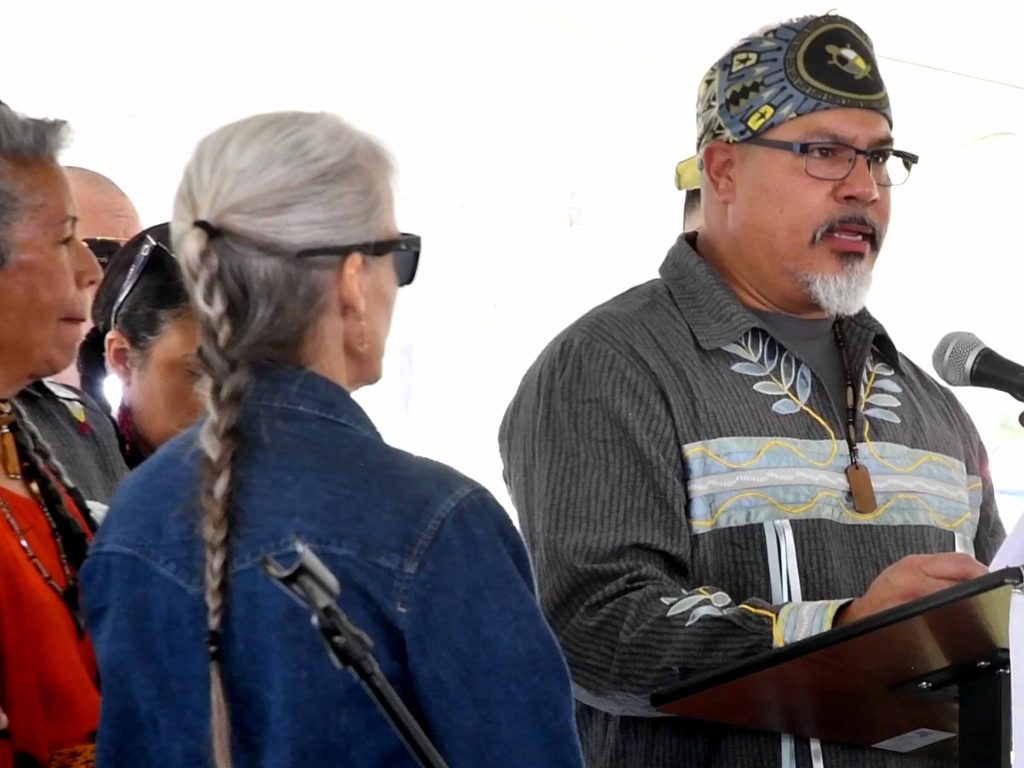
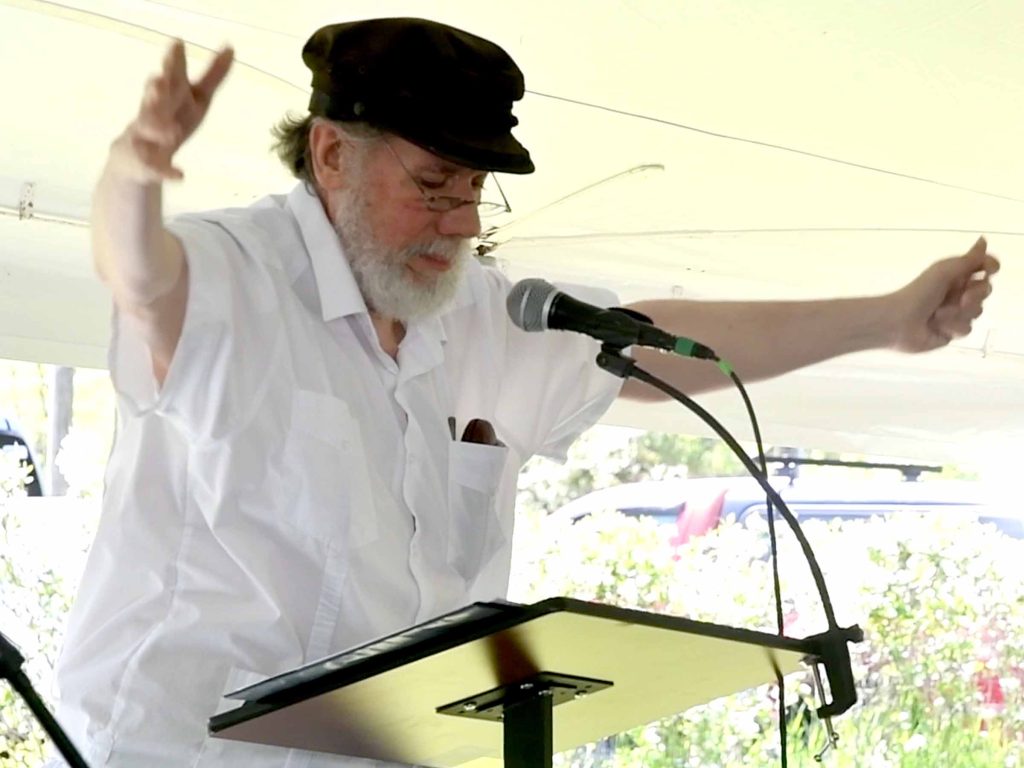
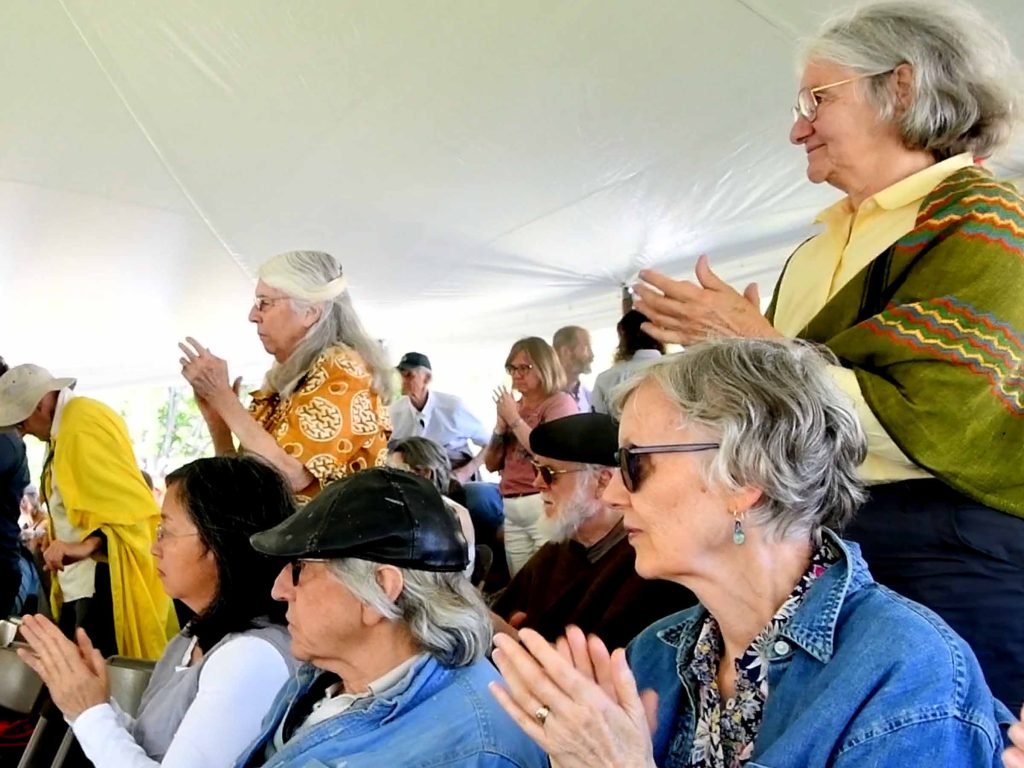
Nipmuck Tribal Council Treasurer Jose Ite Santana spoke before award-winning poet Matin Espada delivered one of his poems to an appreciative audience. Click here for a 37-minute video of the third part of the ceremony.
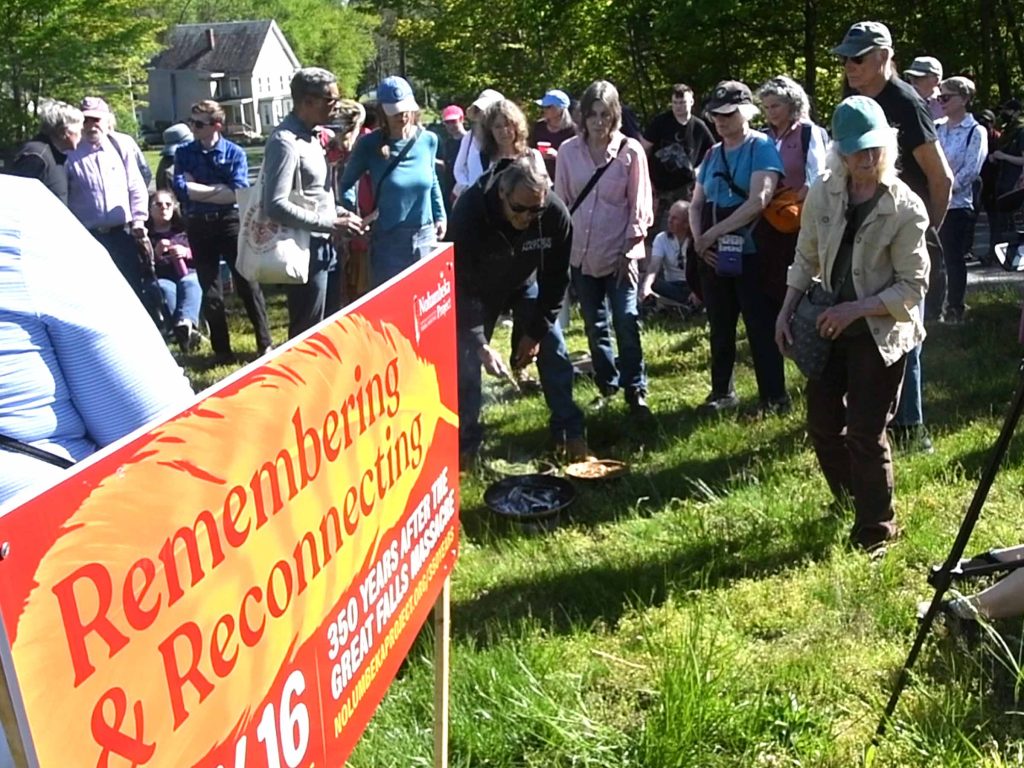
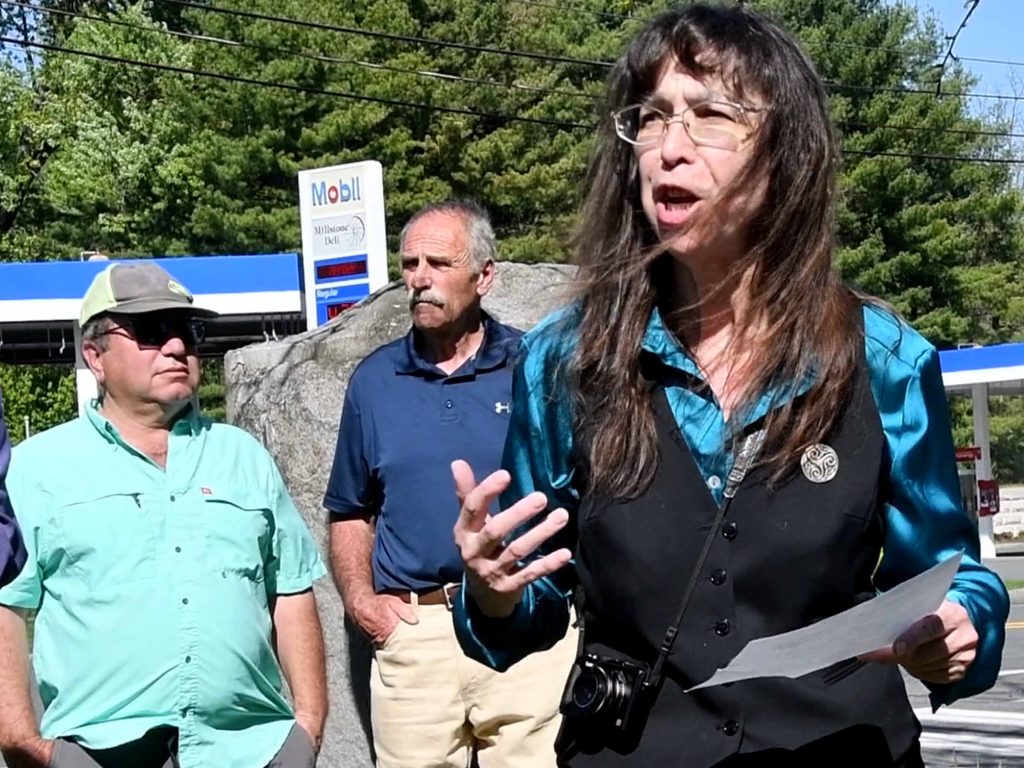
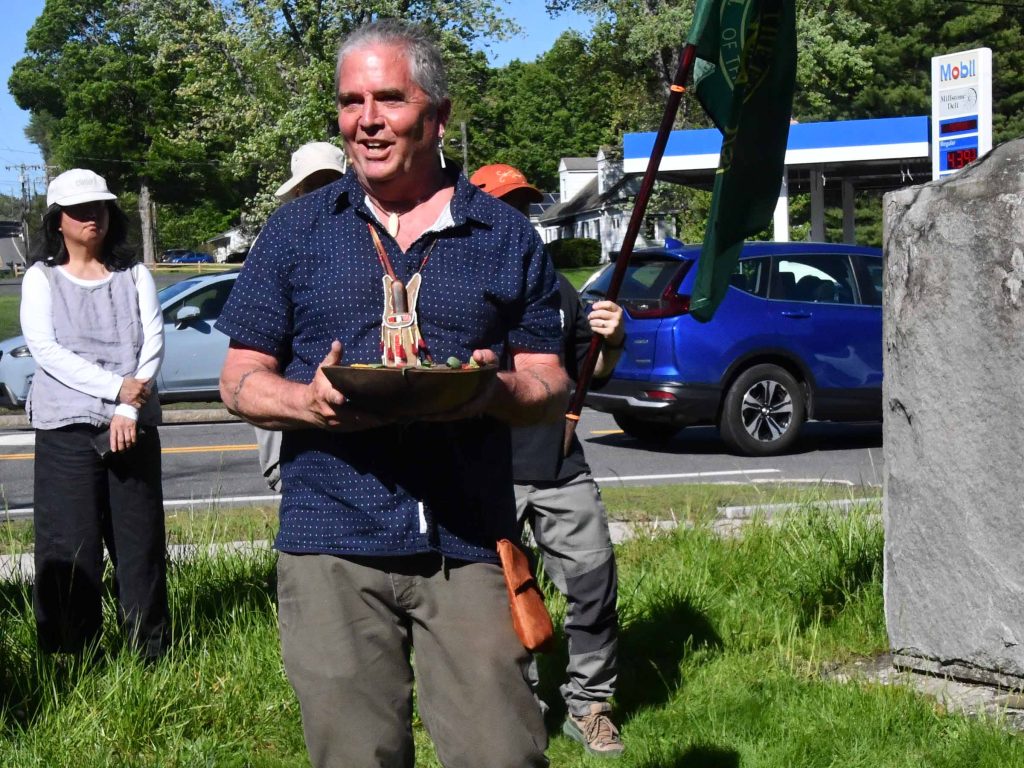
After crossing the bridge over the falls, the crowd gathered at the site of a granite marker that was placed in 1900. The plan is to place a more accurate and informative marker at the location that is now under the control of the local tribes. Click here for a 13-minute video of the final event held at the marker.