
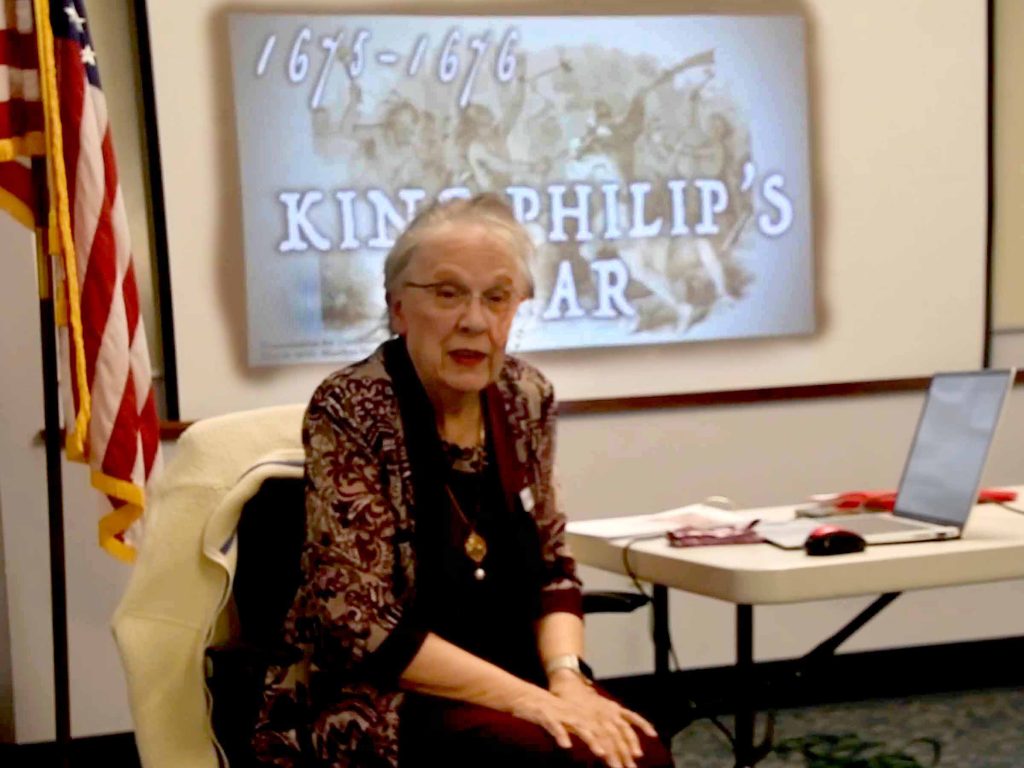
To many today, the names “Metacom,” “Narragansett,” and “The Great Swamp” are merely markers on highway signs or names on a map. But in 1675, they represented a struggle for the soul of our continent. Per capita, King Philip’s War remains the bloodiest conflict in American history—a conflict so brutal it nearly pushed the English back into the sea and forever shattered the sovereignty of the region’s Indigenous nations. On April 25, 2026 at the Cumberland Library, Marilyn Harris presented a look beyond the dates and maps to try to understand the friction that turned a localized conflict into a total war which reshaped the social and political landscape of New England. Click here for a 75-minuite video of her talk.
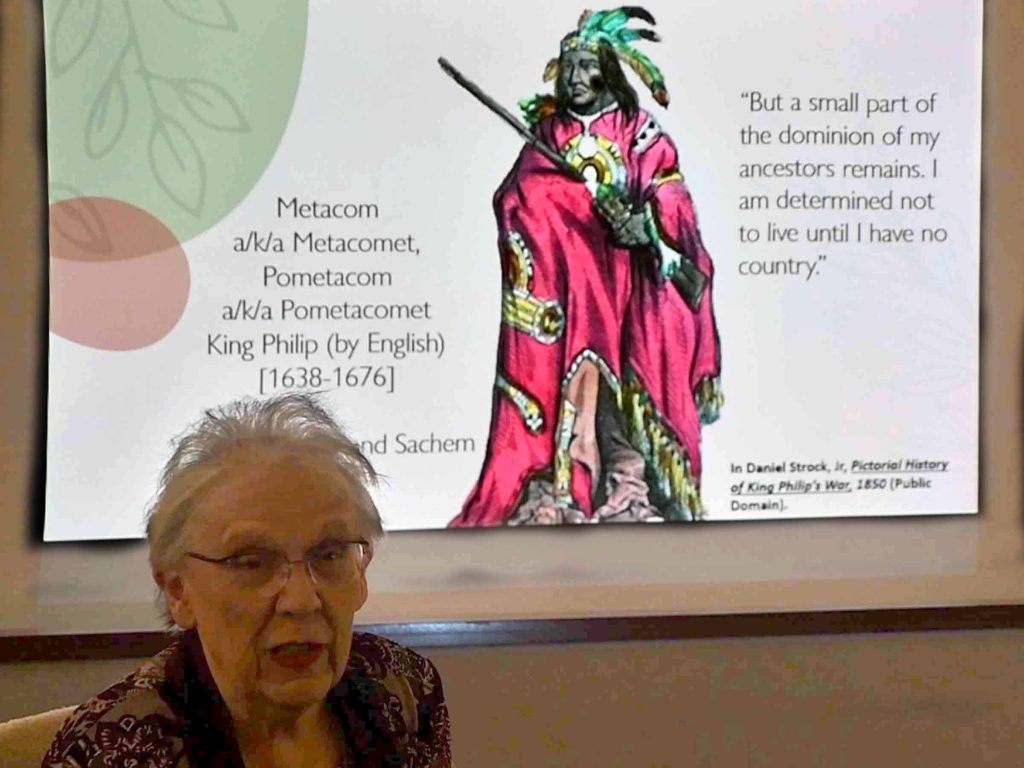
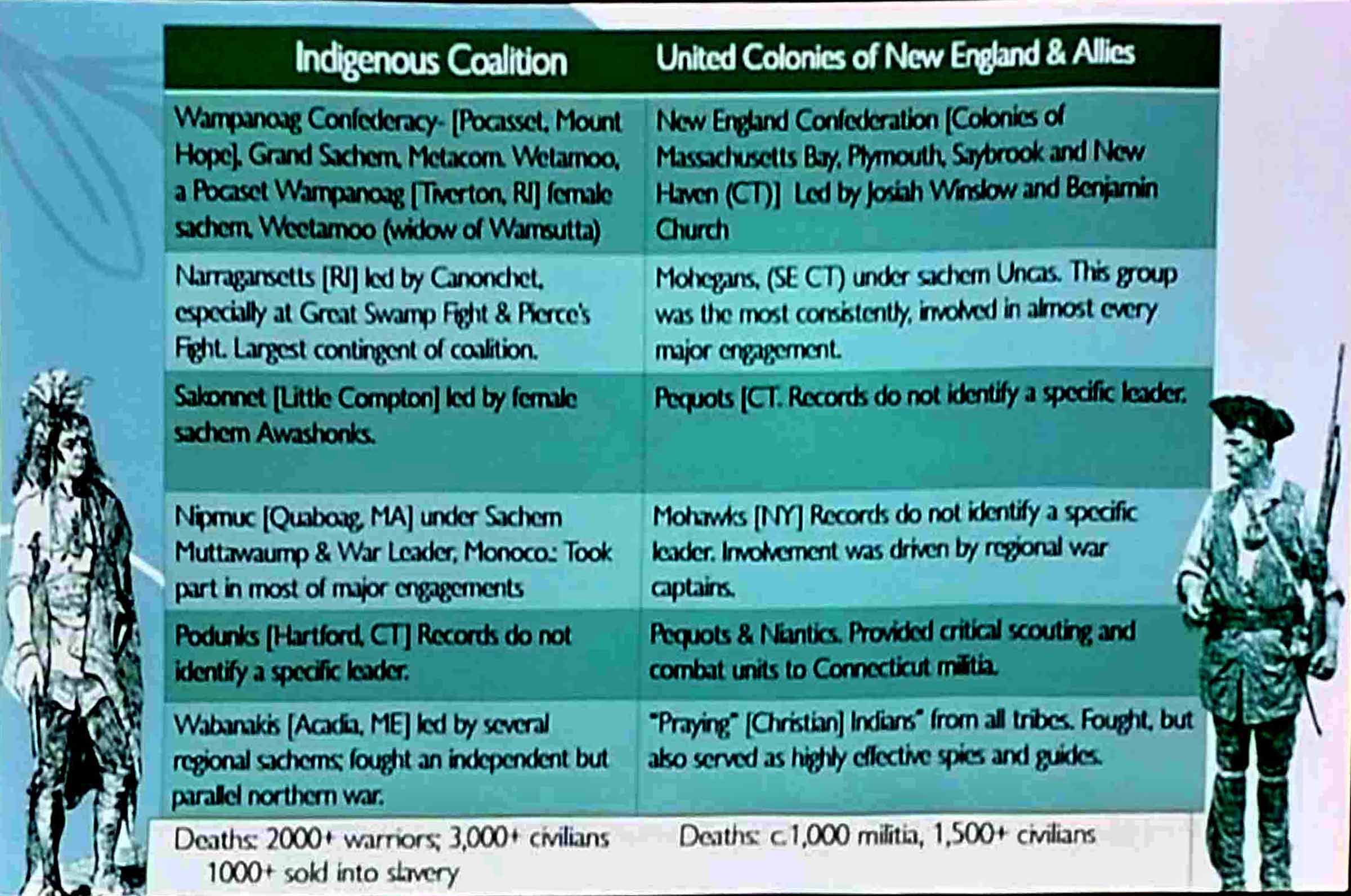
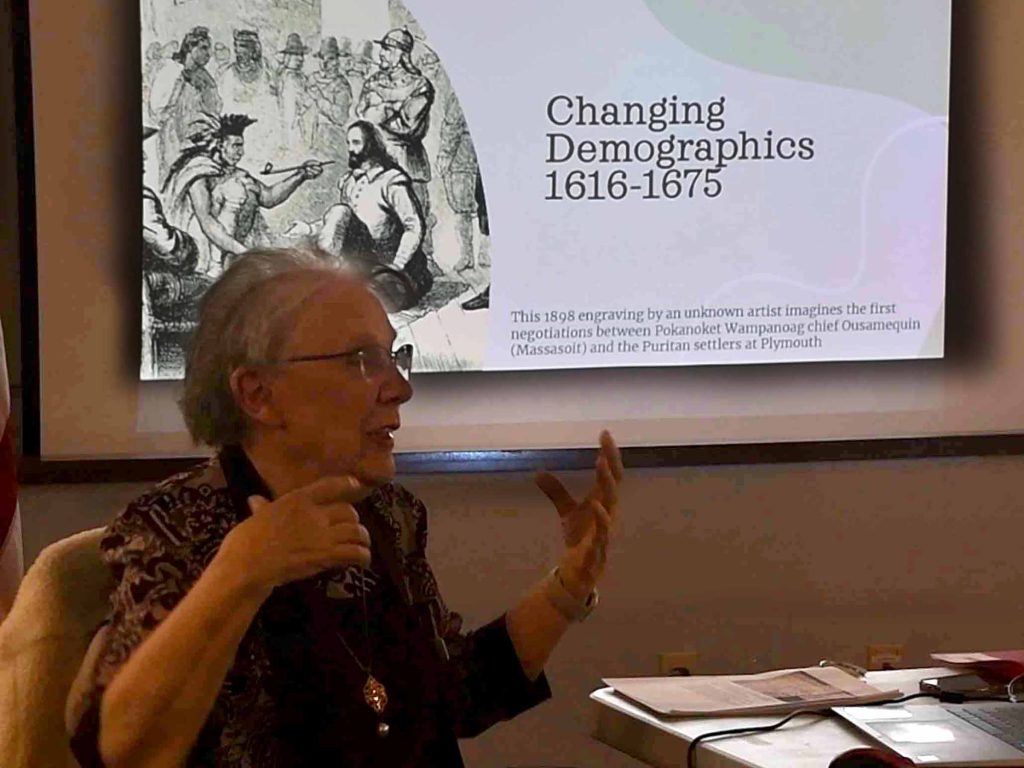
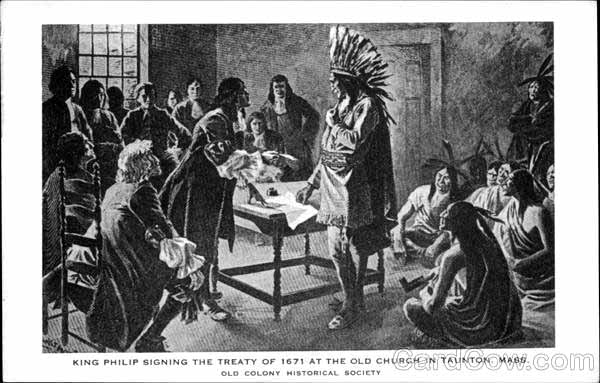
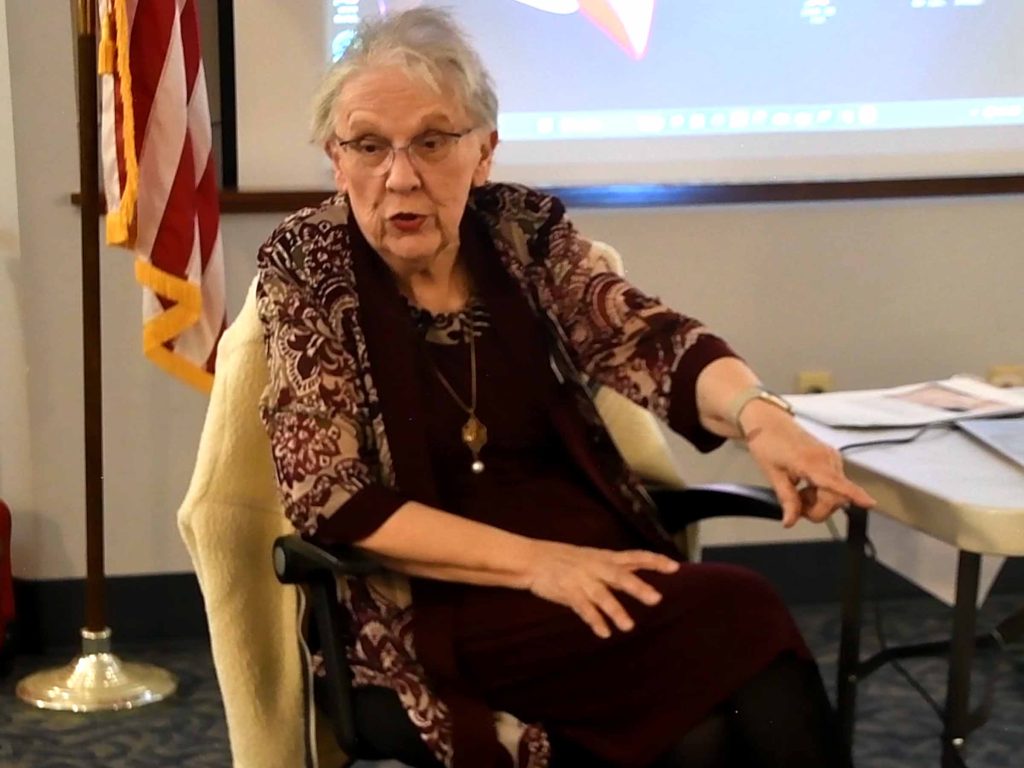
(Above) Marilyn Harris, a researcher and docent at Smith’s Castle, North Kingstown, opened her talk with an explanation of how King Philip, otherwise named Metacom, acquired his name. She then covered the differences in how the Indigenous tribes were organized in contrast to the English colonists (click on chart to enlarge it). Next she talked about the Great Dying and the changing demographics of the period.
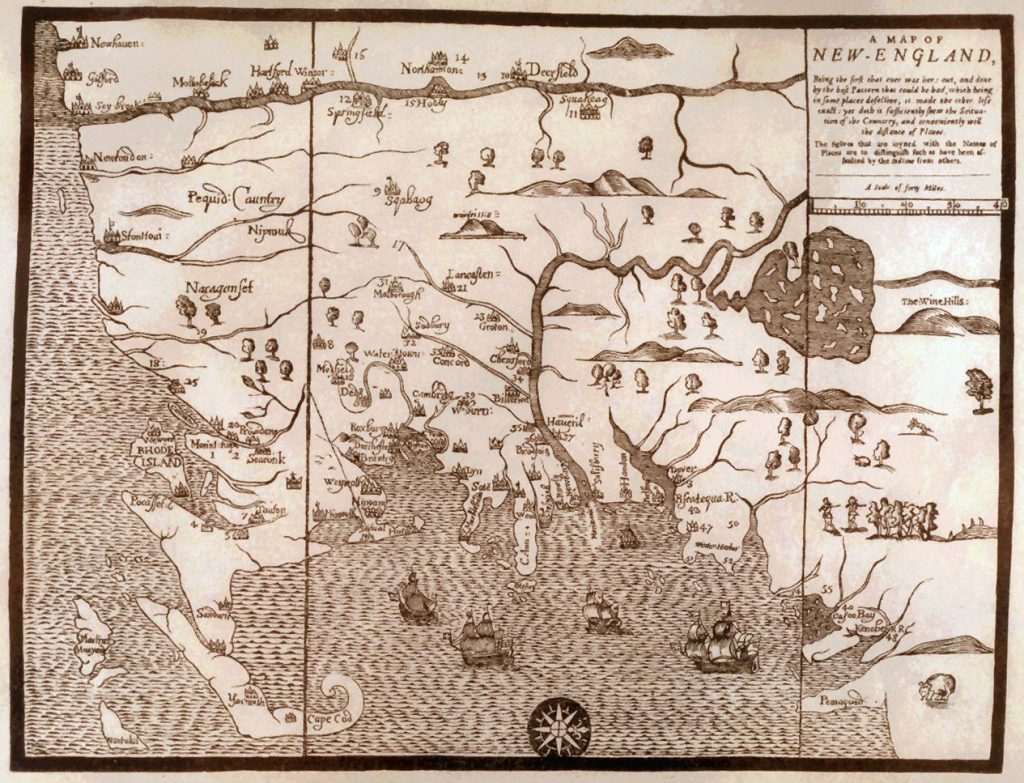
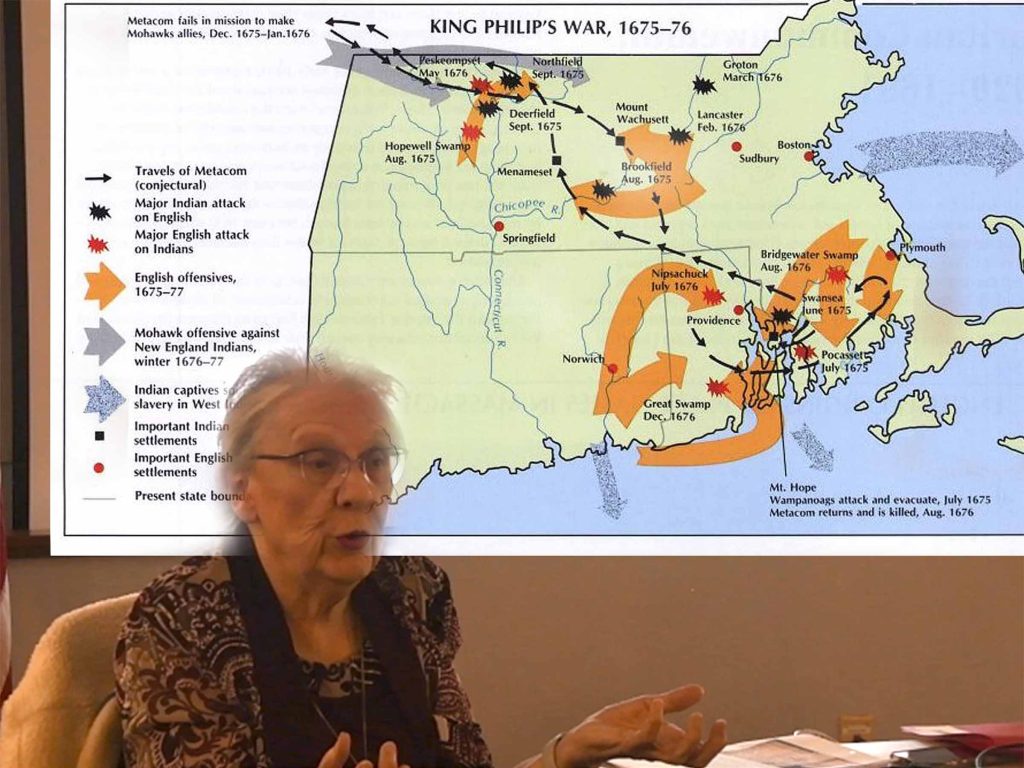
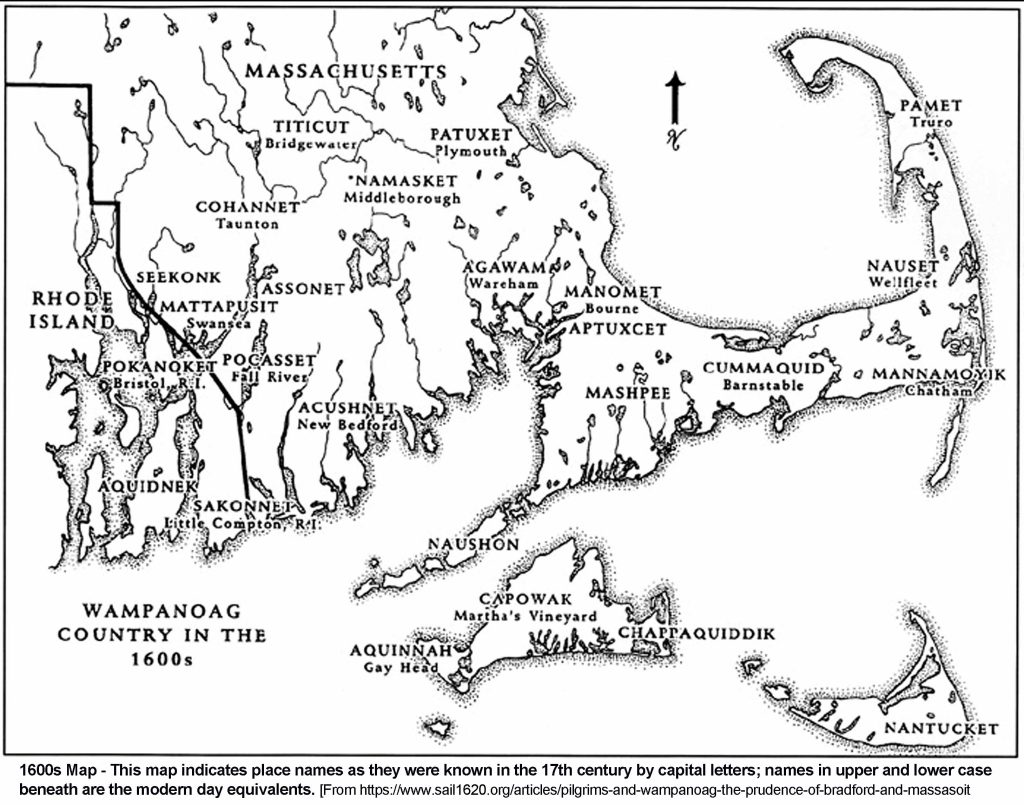
Ms. Harris began with a map of New England, the first ever printed in the New World, contained in a 1677 book, The Present State of New England by William Hubbard. She then went on to cover some of the causes of King Philip’s War, such as land greed on the part of the English and the trial of Native John Sassamon that resulted in the execution of three Indigenous men just before the outbreak of the War.
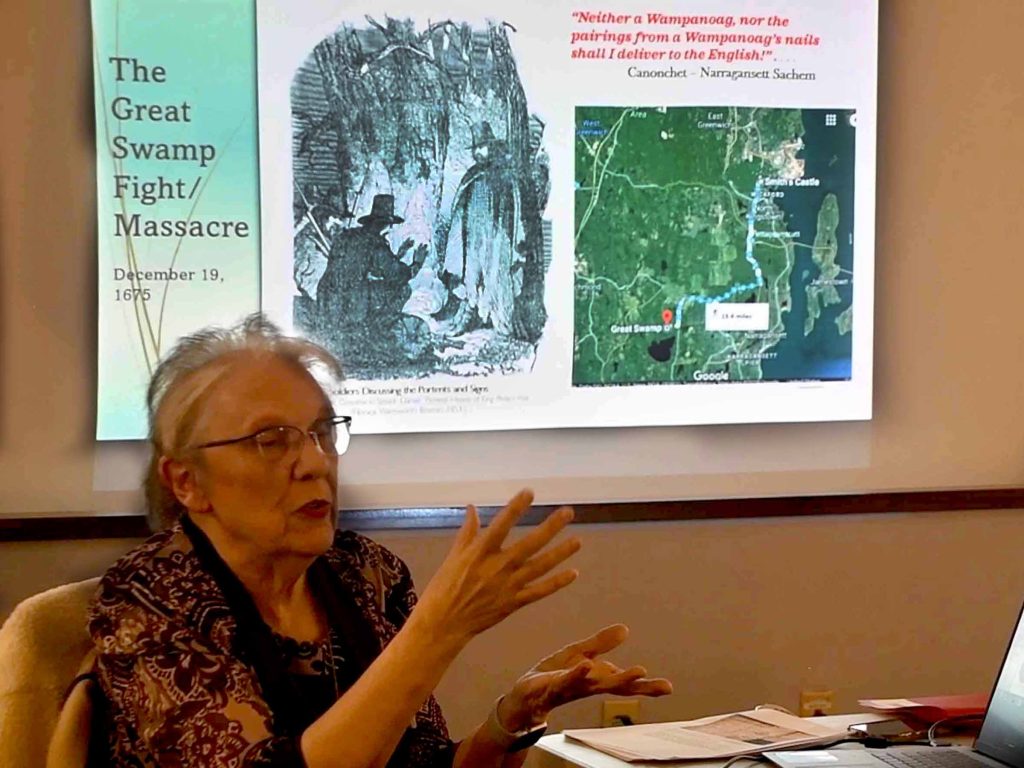
The end of the War marked a turning point that shifted the balance of power in New England toward English colonists and away from Indigenous tribes. Cumberland’s own Nine Men’s Misery monument is part of that story.