
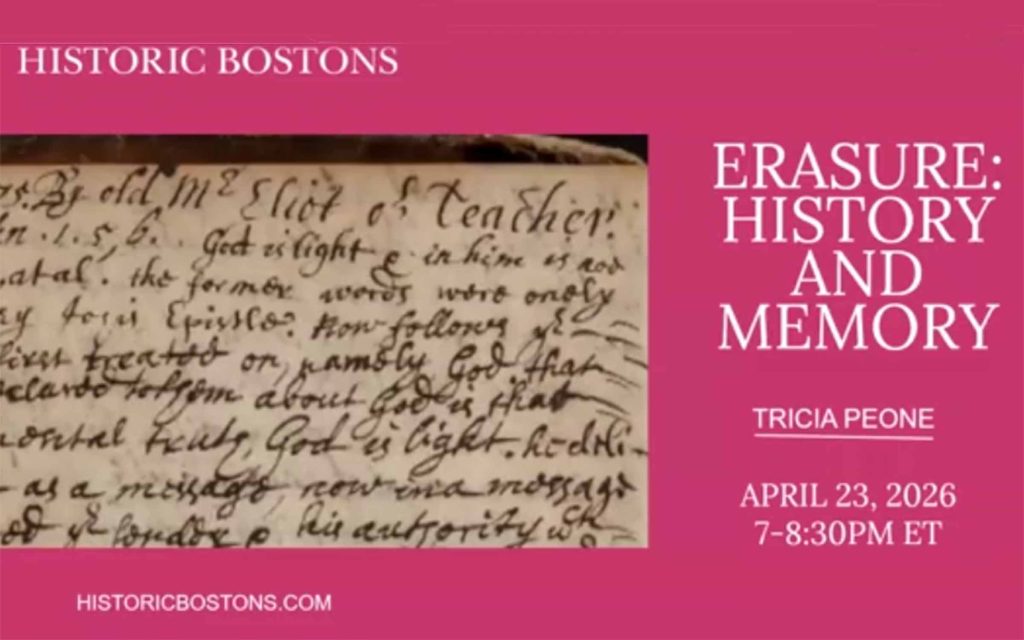
Why don’t we know more about King Philip’s War? Because, says Tricia Peone of the Congregational Library & Archives (CLA), New England’s religious and political leaders sought to frame the meaning of the war and erased Indigenous people from the story. It’s trite but true: victors write the history, and in the case of King Philip’s War, historians from Increase Mather to Edward Everett wrote narratives that offered one point of view. And the experience and voice of Indigenous people? Erased. In an online presentation on April 23, 7-8:30pm, Tricia Peone discusses legacy and memory through the lens of what survives in the archives.
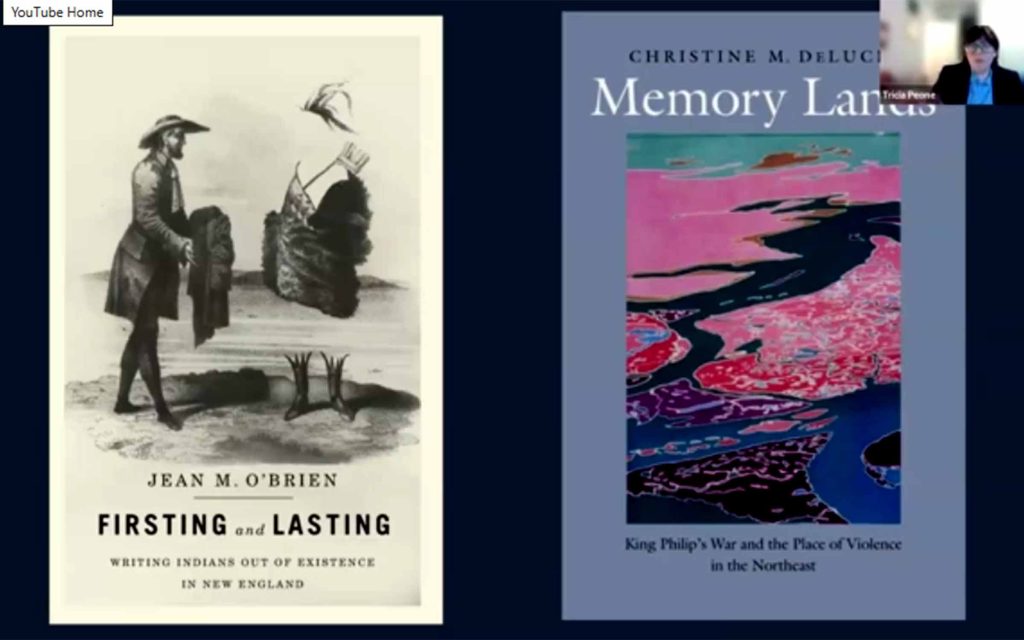
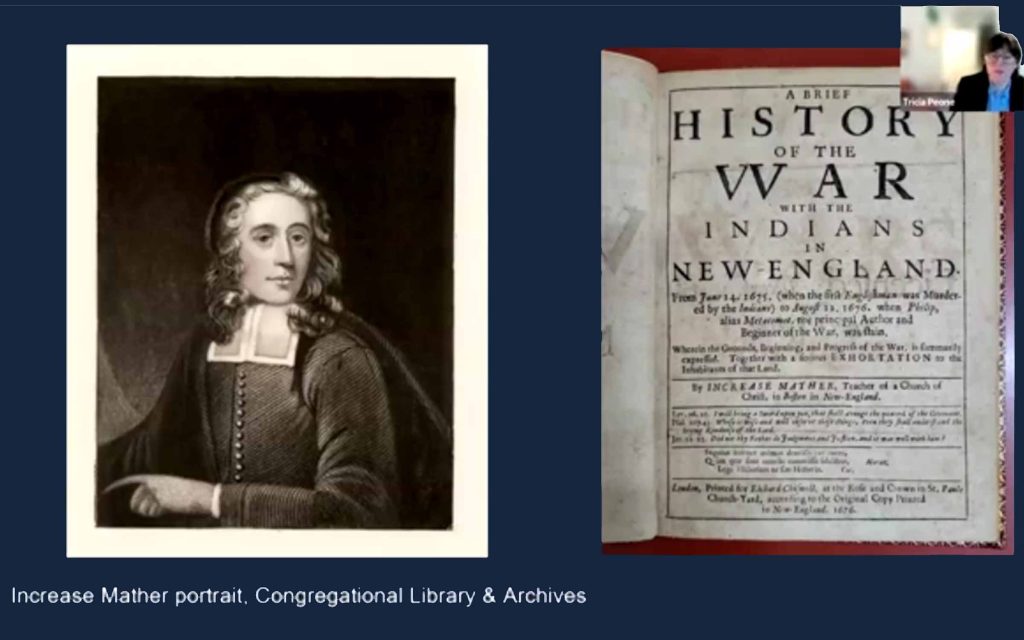
The shaping of public memory by white religious and political leaders in New England sought to reframe the meaning and legacy of the war. Through published histories as well as sermons and commemorative speeches from the late 17th through the late 19th century, they effectively erased Indigenous people. Congregational ministers such as Increase Mather interpreted the war in religious terms and described the outcome as providential. This perspective profoundly affected the way many people in New England would make meaning out of these events.
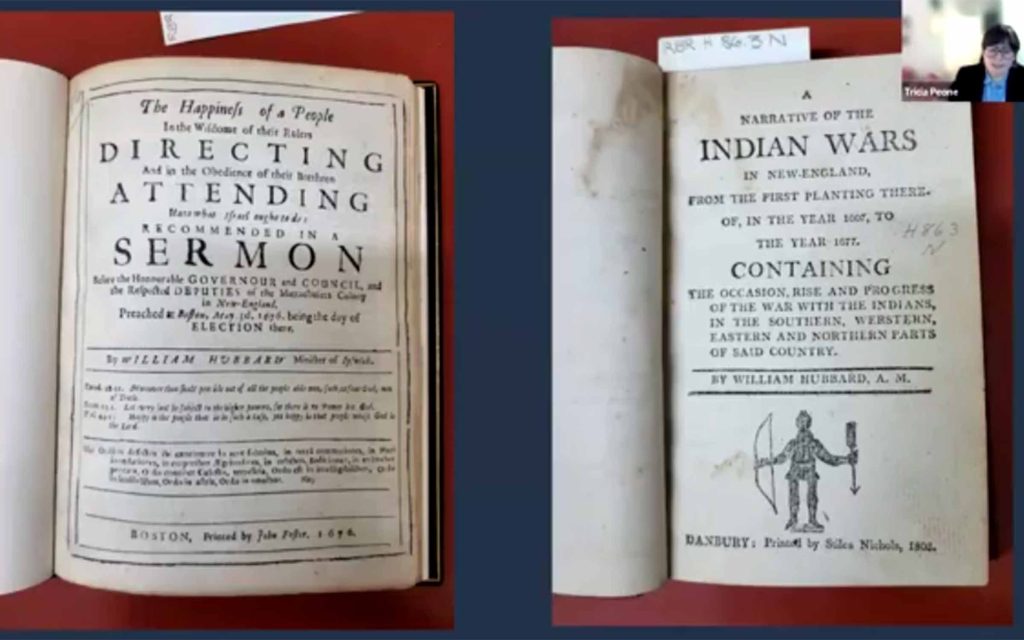
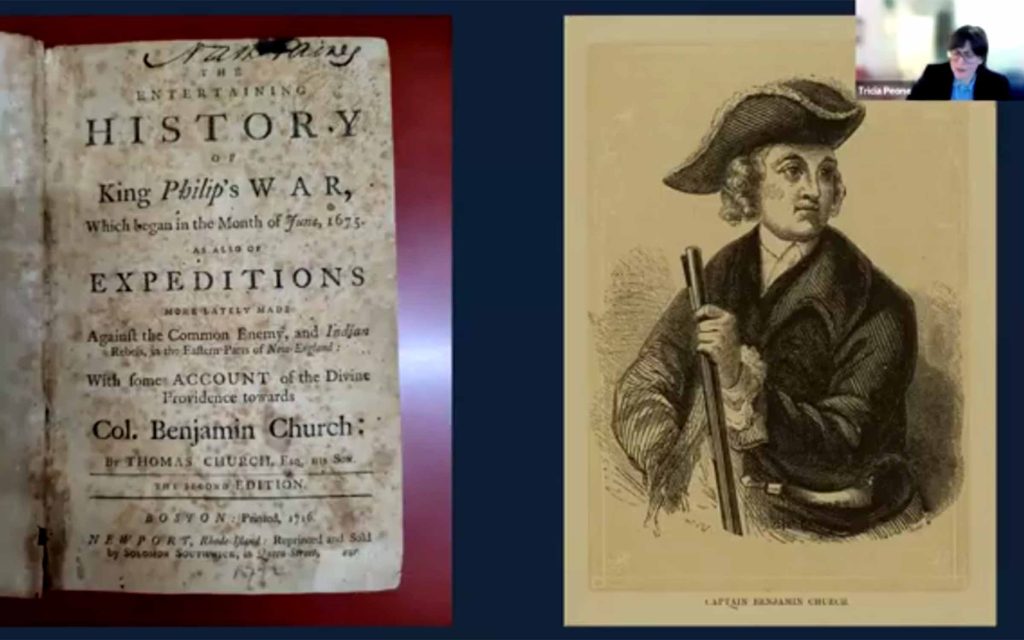
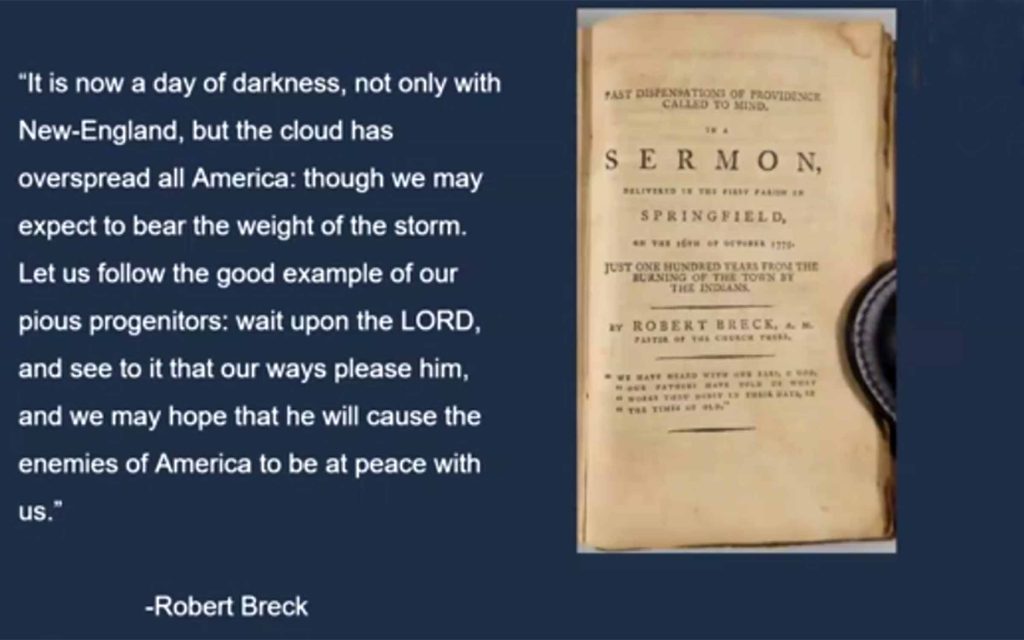
You can see the trajectory of this historical influence through a new online resource, created by the Congregational Library & Archives. It provides a comprehensive view of how a contentious history is documented and flattened to present a one-sided view.
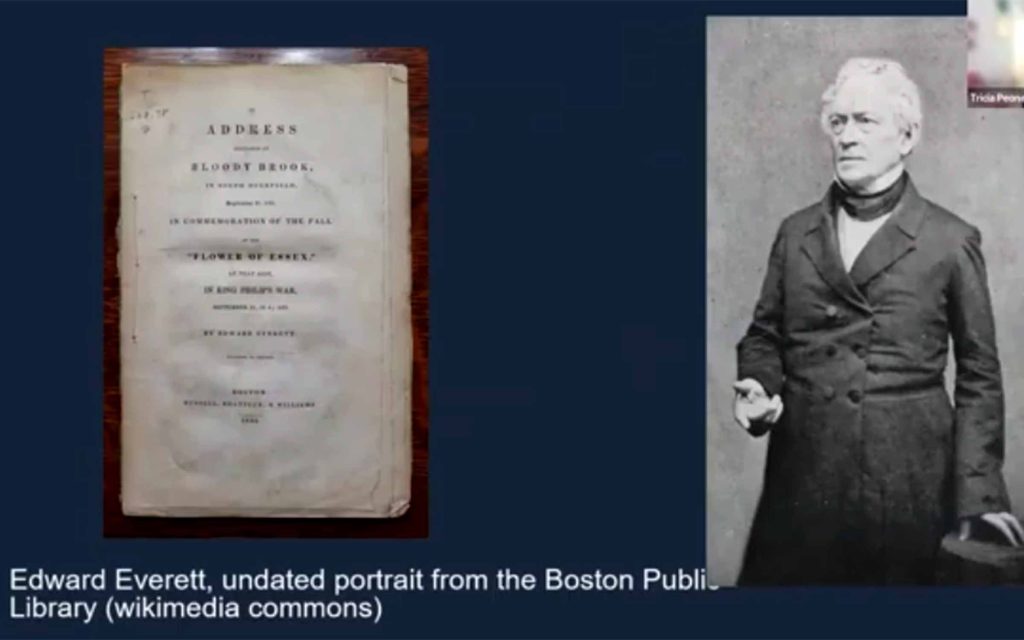
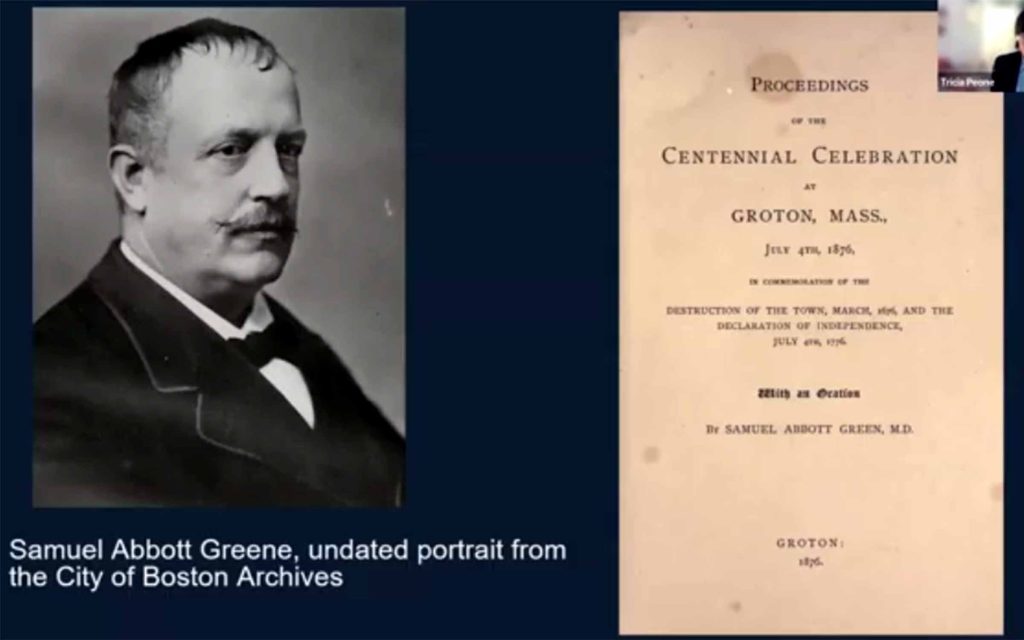
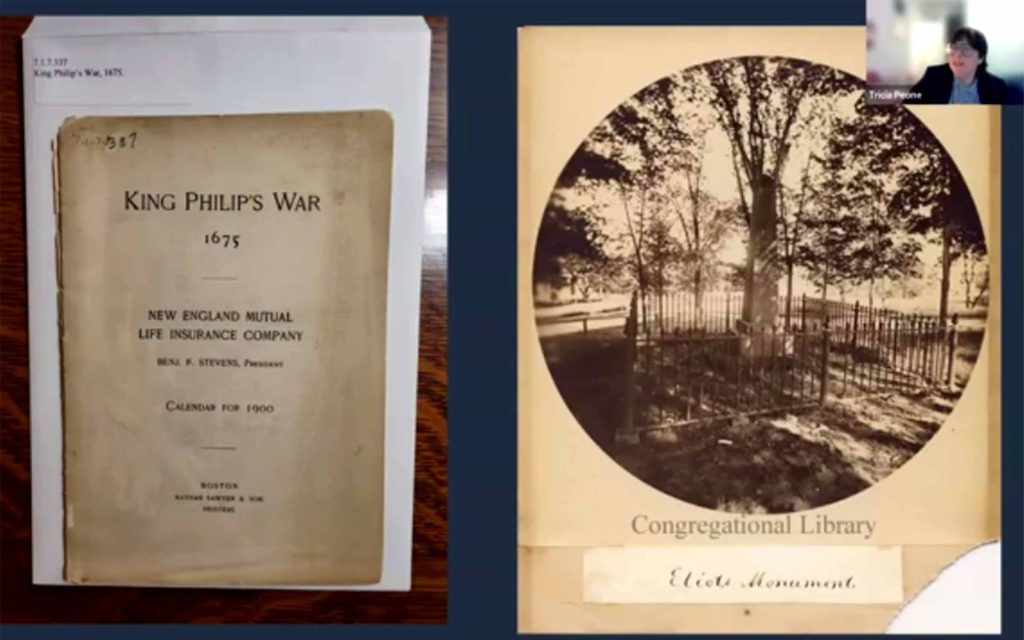
The CLA resource guide includes digitized collections of church records, histories of the war written from the perspective of the colonizers, sermons and speeches given during and on anniversaries of the war, and other documents related to King Phillip’s War.