
The 1640s and 1650s were a critical time for defining New England’s institutions and the principles that underlay them. As New England colonists sent men to fight in England’s civil wars, and read the news from the battlefield and parliament, they also faced challenges from local dissidents. Together these forces – from within and without New England – prompted the Puritans to put pen to paper, producing statements of the nature and limits of liberty, the threat of tyranny, and the proper relationship between church and state. Click here for an 86-minute video recorded on November 6, 2025 and posted by the Partnership of Historic Bostons.

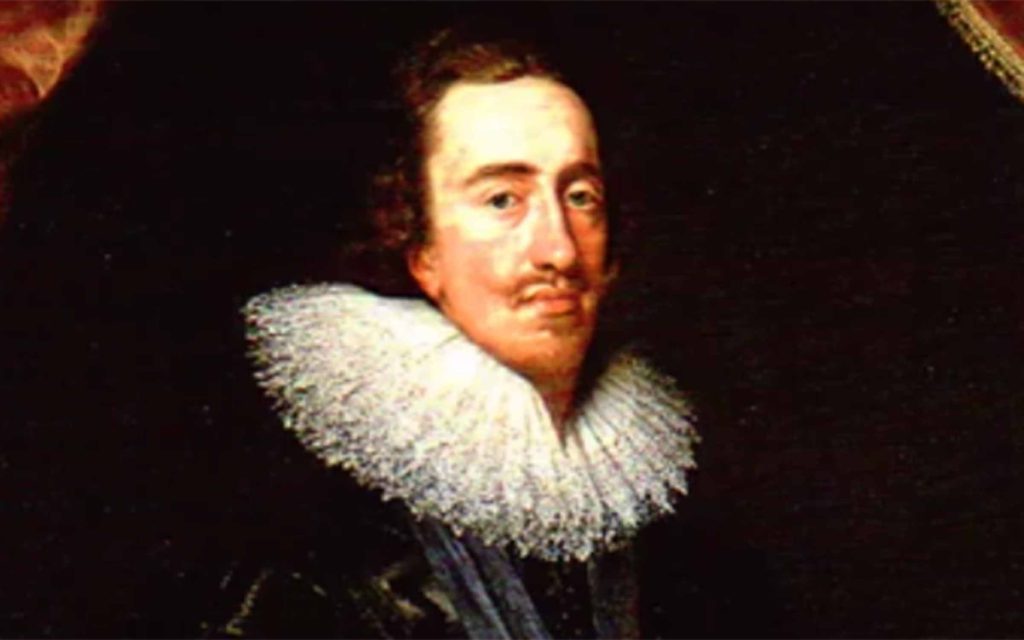
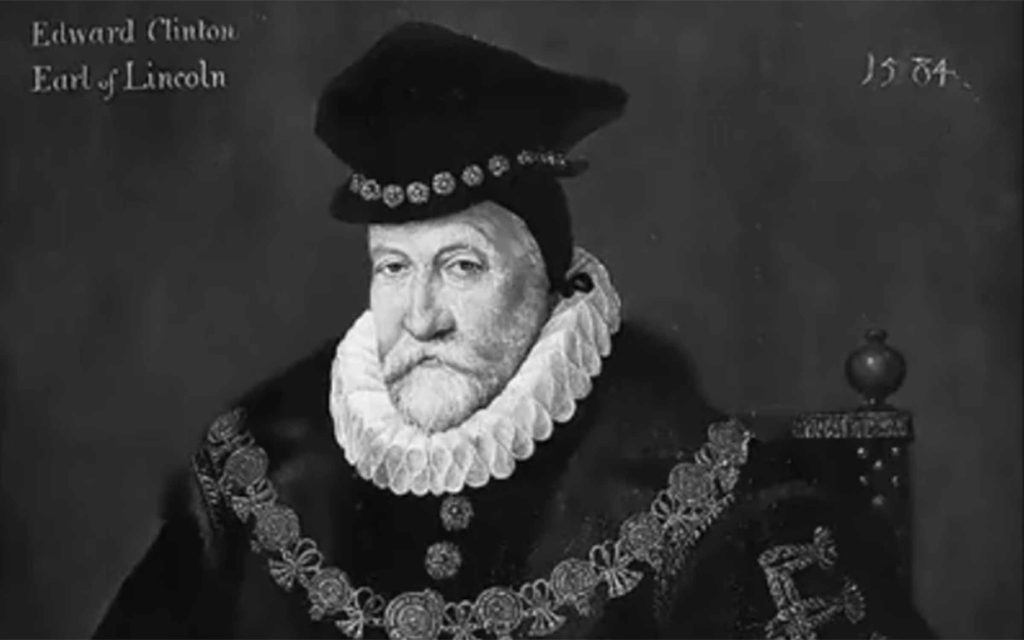
In this talk, award-winning historian Francis J. Bremer (above, left) explores these principles, first developed under the rule of King James (above, center) and Edward Charles (above, right), and how they created a new understanding of citizen rights that would inspire the colonial rebels of the Glorious Revolution in 1689 and the American Revolution in 1775 and 1776.
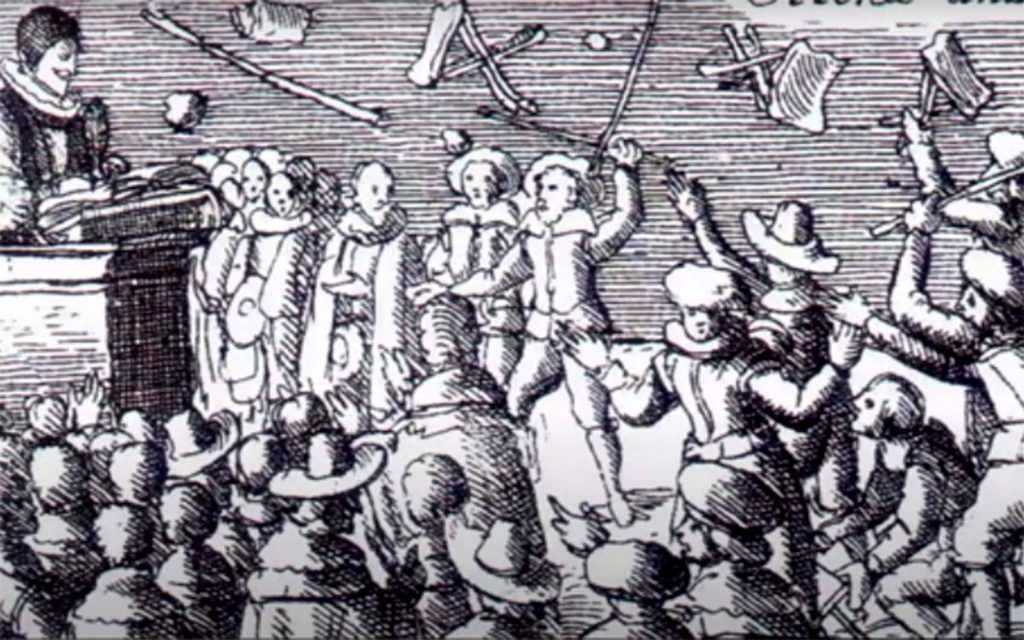
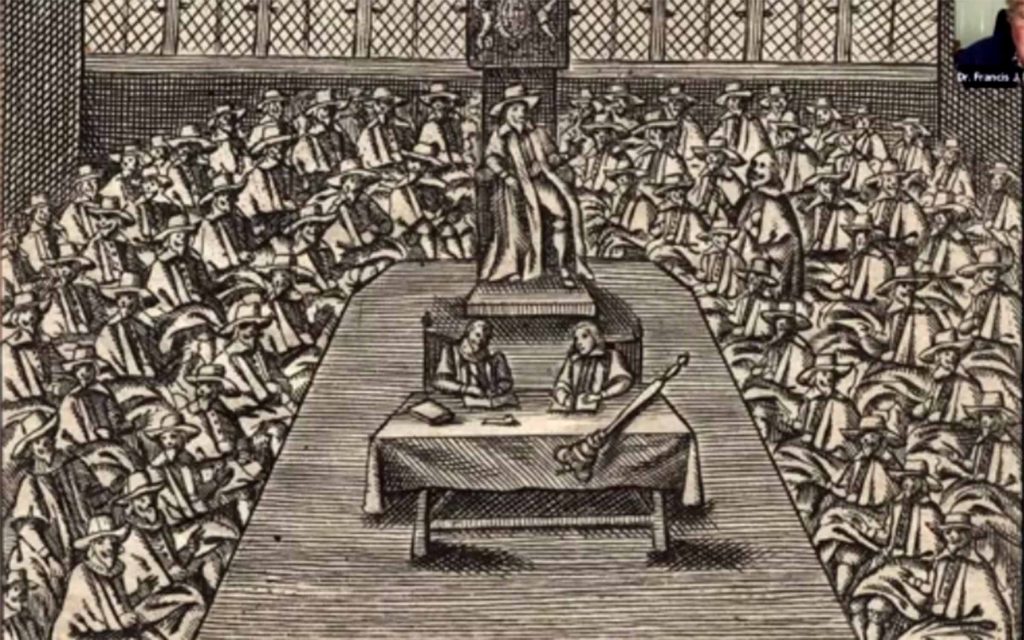
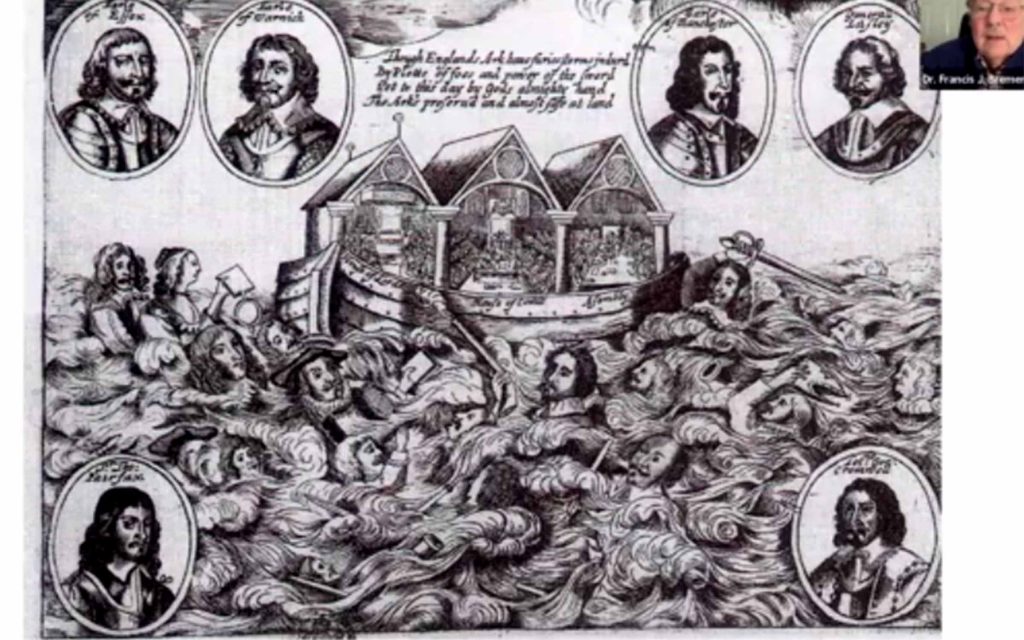
Bremer looks at how the Puritans defined the elements of what we would call early democracy. How far should the protection of the law cover all who lived in the colony – or should it it protect everyone?
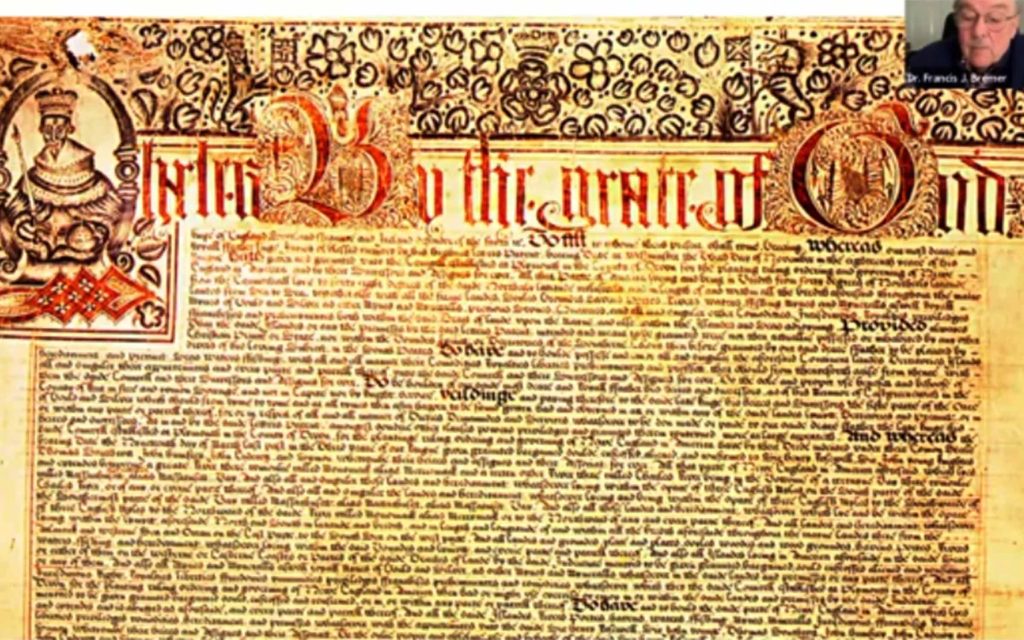
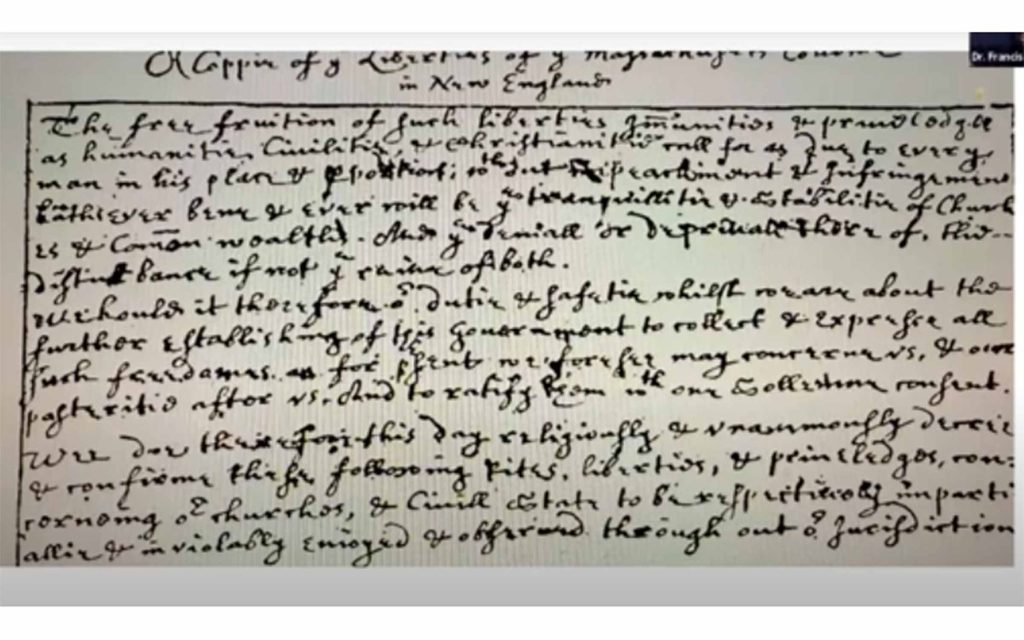
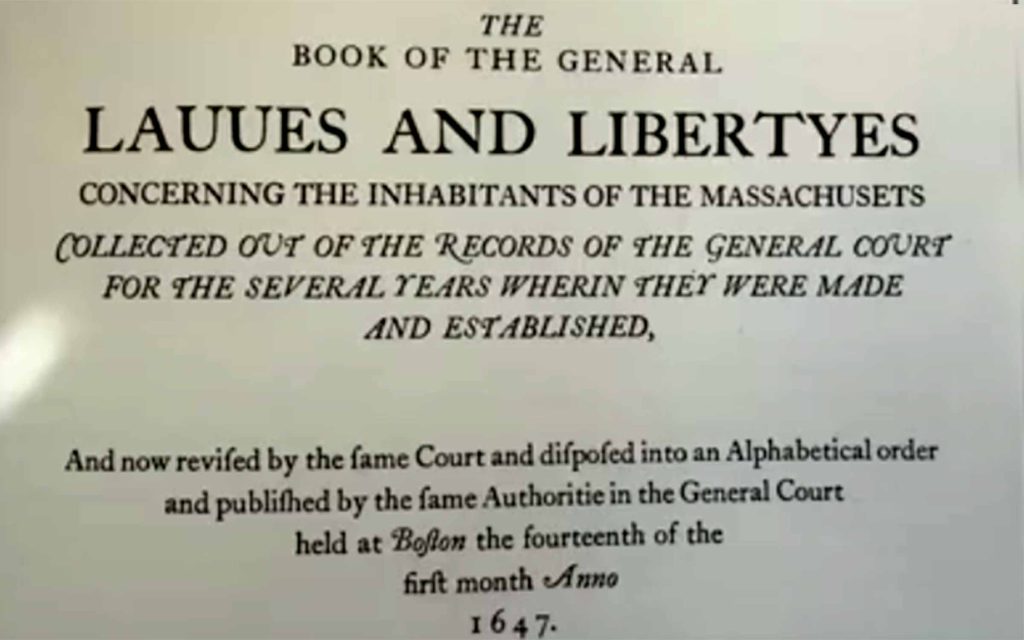
The Puritans addressed fundamental questions of what characterized a good or bad ruler, and how a bad ruler could be opposed. They questioned the degree to which Massachusetts should be an expression of what some today might call Christian nationalism – that is, how separate should be church and state. Authorized in the Massachusetts Bay Colony Charter of 1629, the outcome of that process formed the Book of the General Laws and Libertyes Concerning the Inhabitants of the Massachusets published in 1647.