
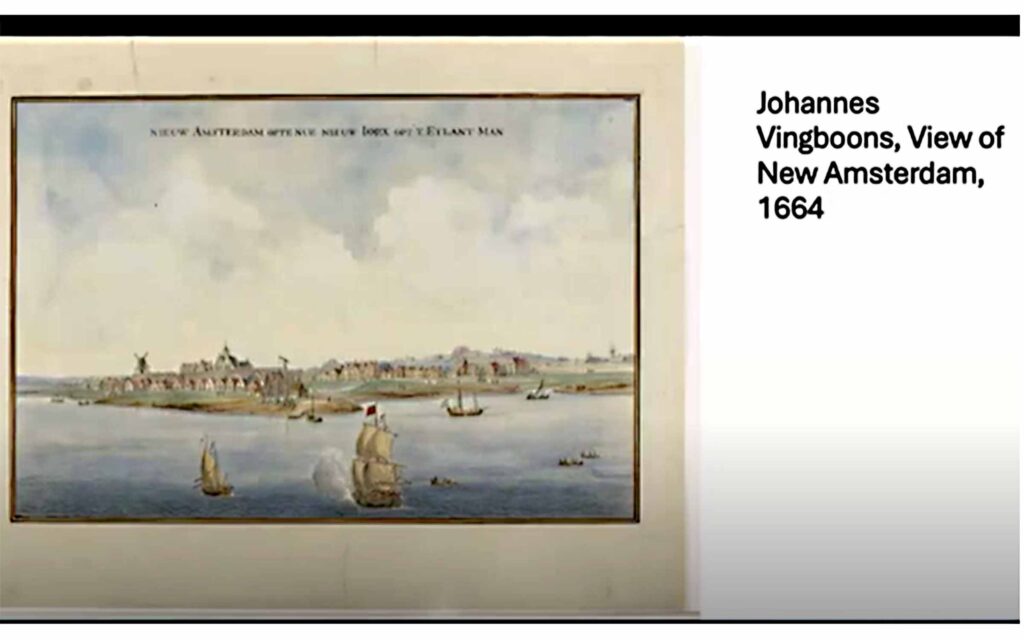
The most populous Dutch settlements in the 17th century were in Nieuw Amsterdam (lower Manhattan) and in Albany. Most Dutch records produced in the period were produced in one of those two cities. This May 29, 2024 lecture by Dr. Debra Hamer focuses on the documentary record of Upper Manhattan, looking at what records survive and what they tell us about diversity and intercultural interactions in this less well-studied area. Click here for a 57-minute video of her talk by Dyckman Farmhouse Museum.
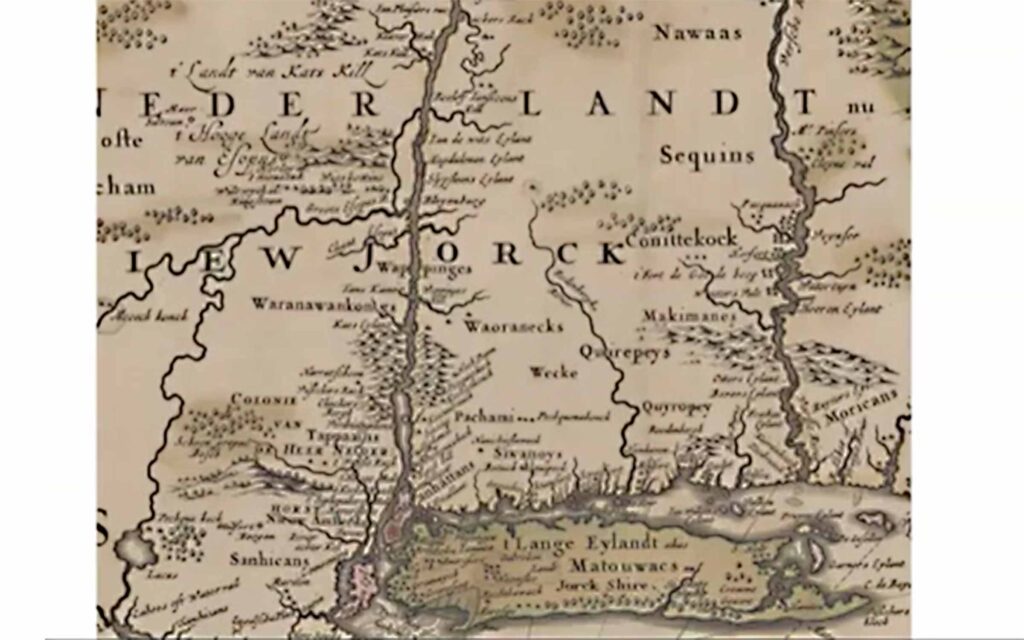
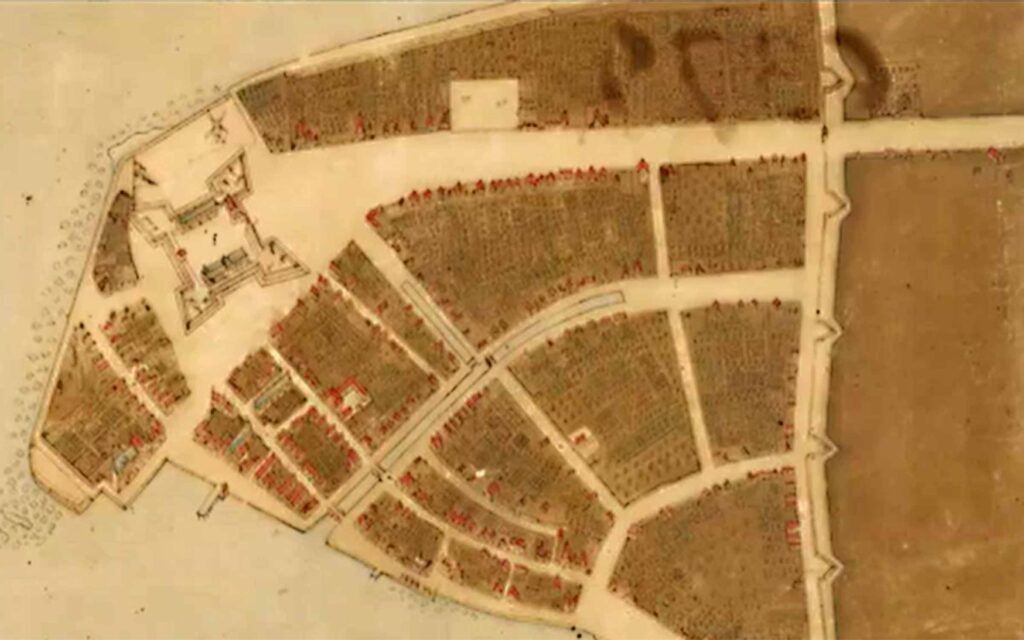
(Above) Dr. Deborah Haner, Executive Director of the New Netherland Institute, began by describing the Dutch claim to the land around Manhattan as well as the town of New Amsterdam that was located on the southern tip of the island.
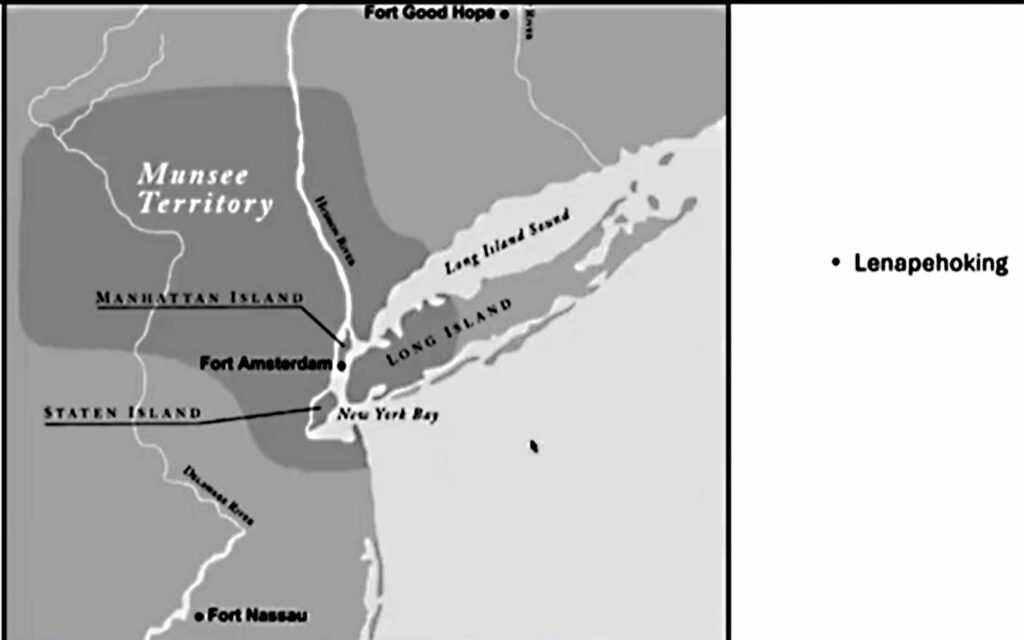
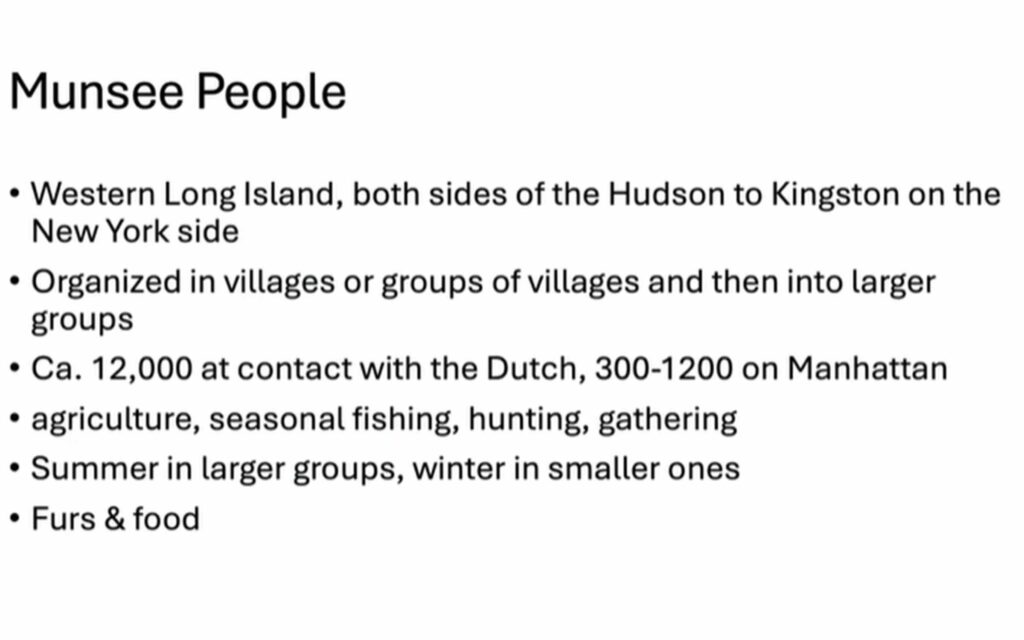
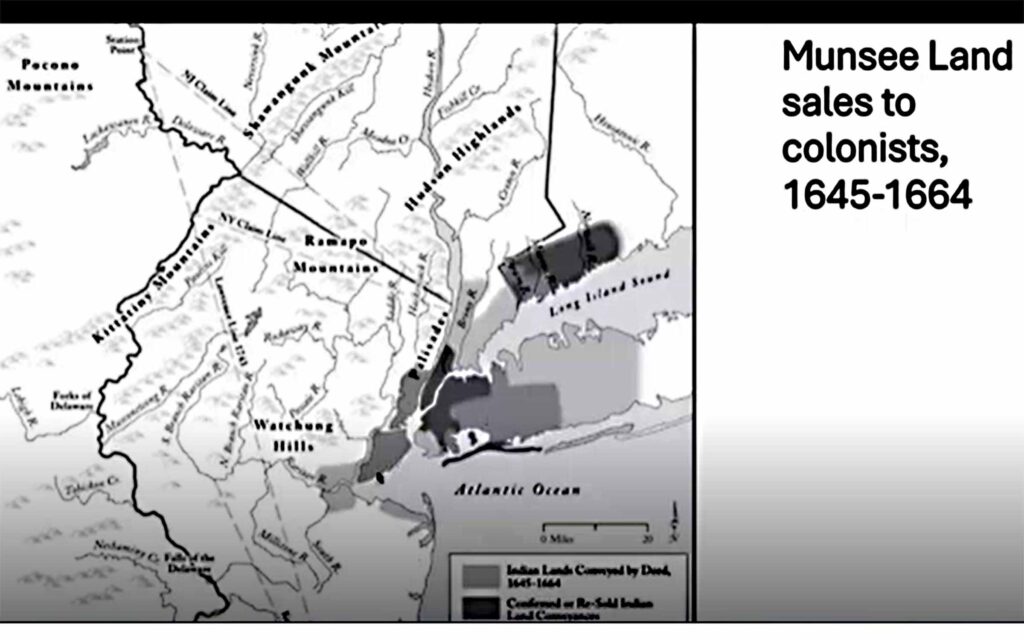
Dr. Haner also noted what is known about the Indigenous Munsee People and the land sales to the colonists between 1645 and 1664.
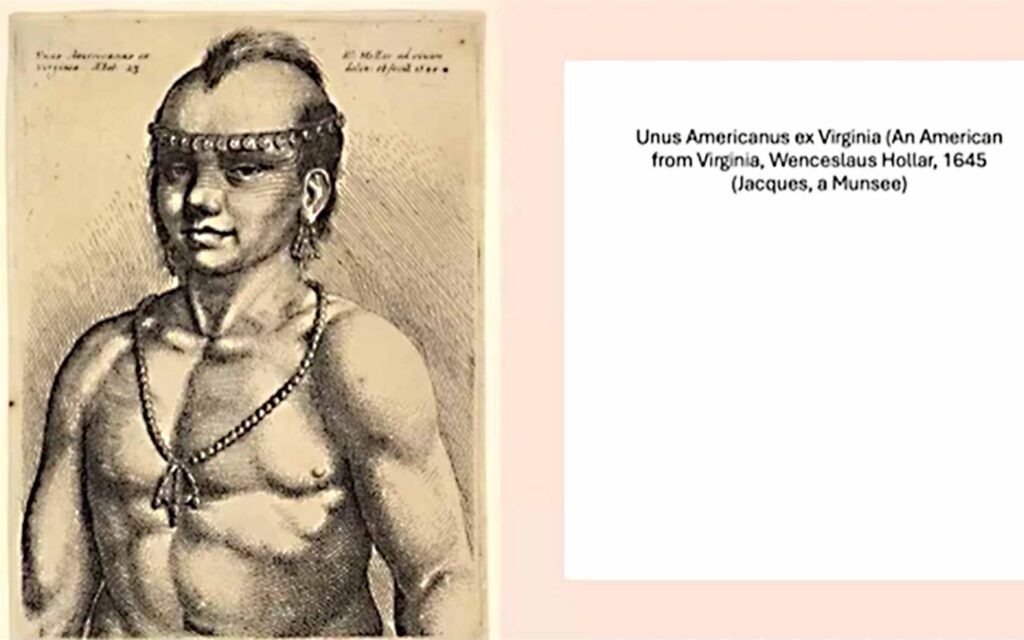
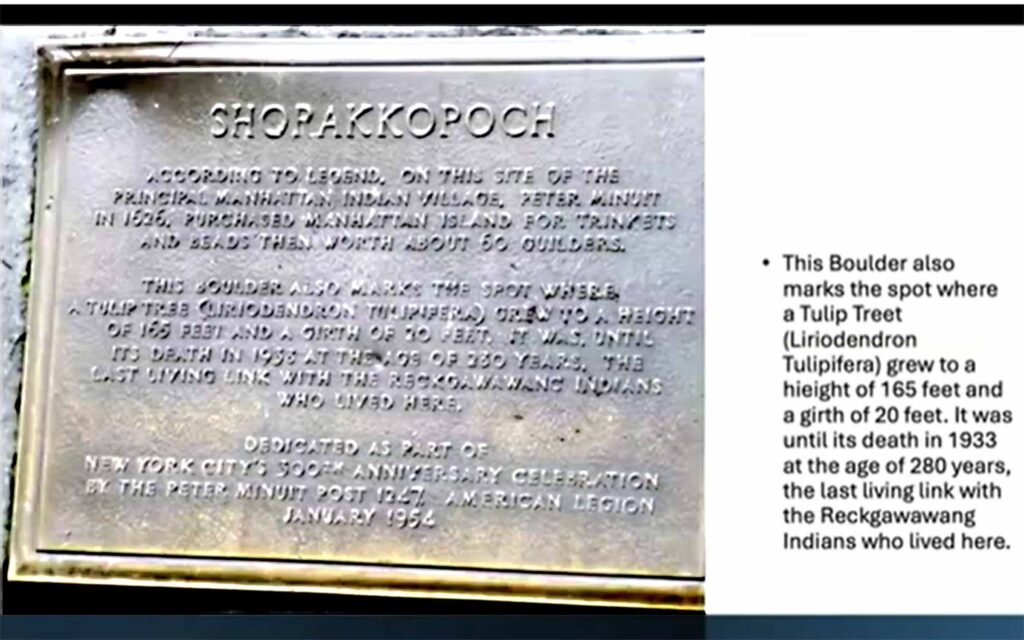
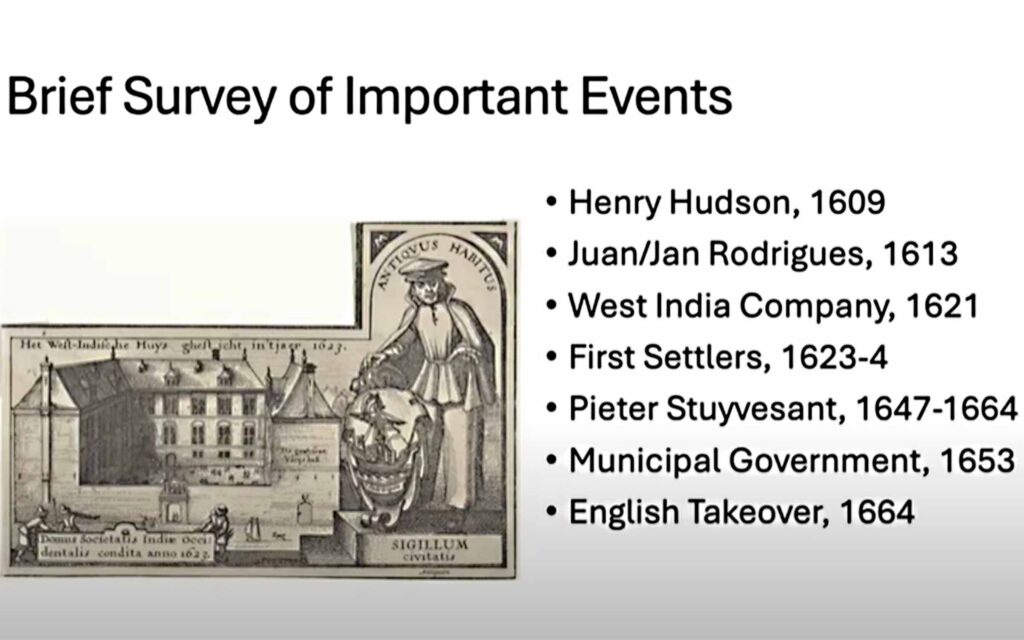
Haner also described the capture of Jacques, a Munsee depicted in a drawing by Wenceslaus Hollar in 1645, who was exhibited in Holland. Later, she talked about a tulip tree that survived 280 years until 1933, now marked by a boulder, that was the last living link with the Reckgawawang Indians who had lived in the area. She ended by noting the important events in the Dutch settlement that occured between Hudson’s exploration in 1609 and the English takeover of Manhattan in 1664.